
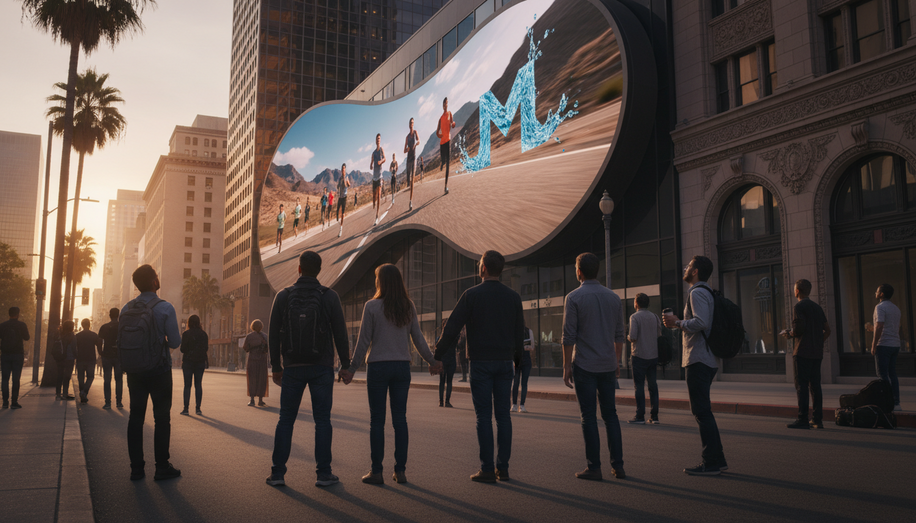

In the fleeting world of outdoor advertising, where commuters glance for mere seconds and pedestrians navigate bustling streets, brands are turning to cinematic storytelling to forge unbreakable connections. Borrowing from Hollywood’s arsenal—dramatic lighting, dynamic motion, and narrative arcs condensed into visual bursts—these out-of-home (OOH) campaigns transform static billboards and transit wraps into mini blockbusters that demand attention and linger in memory.
Consider Apple’s Olympic-timed activations in Paris and Los Angeles, which harnessed the Games’ electric atmosphere not just through placement but via evocative visuals evoking triumph and innovation. Giant screens pulsed with slow-motion athlete silhouettes merging into sleek product reveals, their golden-hour glow mimicking epic sports montages. This cinematic sleight of hand amplified foot traffic and cultural relevance, proving that aligning high-stakes narratives with real-world events can skyrocket engagement.
Paramount Pictures mastered nostalgia’s pull with its “Mean Girls” transit takeover in London, where bus shelters and taxi wraps unfurled quotable lines like “You can’t sit with us” amid glossy, film-poster aesthetics. The ads employed shallow depth-of-field effects—blurring urban chaos behind razor-sharp character close-ups—to recreate the movie’s bitchy glamour, sparking social media frenzy and bolstering the film’s box-office debut. By channeling a cult classic’s snappy dialogue and visual flair into OOH, Paramount didn’t just advertise; it scripted a communal inside joke that commuters replayed in their minds.
Dynamic elements elevate these narratives further, infusing OOH with the unpredictability of cinema. McDonald’s UK deployed weather-responsive digital billboards promoting frozen drinks, their screens blooming with icy droplets and vibrant splashes only when temperatures topped 22 degrees Celsius. This real-time adaptation echoed suspenseful plot twists, displaying city-specific heat readouts for a personalized punchline that boosted relevance and sales. Similarly, Piz Buin’s sunscreen campaign wielded ultraviolet-reactive ink on billboards, revealing gruesome sunburns as daylight waned—a chilling before-and-after reveal straight from a horror film’s makeup department, compelling viewers to confront vulnerability in seconds.
Technology amplifies this cinematic potency, blending interactivity with illusion. Pepsi Max’s London bus-stop “gallery” used street-facing cameras to superimpose fantastical scenarios—like levitating buses or erupting fountains—onto live feeds, turning mundane waits into augmented-reality thrillers. Acadia GMC’s facial-recognition displays tailored 30 video variants by age and gender, deploying targeted narratives with sweeping drone shots of rugged terrains that shifted seamlessly for each passerby, yielding 11 million impressions and 17% higher engagement among key demographics. These setups mimic a director’s multi-take precision, ensuring every glance triggers a bespoke story arc.
Guerrilla tactics push boundaries even further, hijacking environments for immersive tales. Reebok’s interactive speed-camera billboard challenged pedestrians to sprint past at 10.5 mph for free ZPump shoes, its display erupting in slow-motion victory replays and triumphant music swells upon success—pure underdog-hero montage material that rewarded participation with viral glory. Meanwhile, PLUS supermarkets in the Netherlands gamified an entire town into a life-sized Monopoly board, with building wraps and street projections narrating property trades in real time, drawing residents into a collective adventure plot.
Such techniques thrive because OOH demands narrative economy: capture in five seconds what films build over two hours. Cinematic tools like visual metaphors—a winding road symbolizing escape in travel ads—or chiaroscuro lighting to evoke mystery, distill complex brand stories into primal emotions. Strategic placements amplify this: transit ads on buses command captive audiences with repeated exposures, their wraparound panoramas unfolding like tracking shots through cityscapes. Digital out-of-home (DOOH) adds motion graphics and AR, turning kiosks into portals where QR scans extend the tale online.
Yet success hinges on execution. Brands must scout high-traffic nodes—urban hubs, event zones—for maximum dwell time, while durable large-format prints ensure visuals pop under harsh sunlight or rain. Nostalgia, timeliness, and interactivity form the trifecta: tap cultural touchstones like “Mean Girls,” sync with weather or events, and invite touch or scans to deepen the hook.
Critics might argue OOH’s ephemerality dilutes depth, but data counters: these campaigns generate buzz, recall, and conversions by hijacking the brain’s love for stories. As 2026 unfolds, with AI-driven personalization and 3D holograms on the horizon, cinematic OOH will evolve, scripting not just ads but cultural moments that make cities feel like movie sets. Brands ignoring this risk fading into the background; those embracing it seize the spotlight, one heart-stopping frame at a time.
Ensuring these cinematic narratives land with maximum impact demands precise planning and real-time insights. Blindspot’s location intelligence and audience measurement capabilities allow brands to pinpoint optimal high-traffic nodes and tailor their ‘mini blockbusters’ for specific demographics, while real-time performance tracking and ROI attribution confirm that these visually rich stories are not just seen, but felt and remembered, driving tangible results. Discover how to perfect your OOH storytelling at https://seeblindspot.com/.