

In the fast-paced world of out-of-home (OOH) advertising, timing is not just a detail—it’s the linchpin that determines whether a campaign captivates audiences or fades into the urban backdrop. Strategic placement of ads at the right moment can amplify engagement, boost recall, and drive measurable returns, while poor timing risks squandering budgets on fleeting glances from disinterested passersby. As OOH evolves with digital innovations and data-driven insights, advertisers who master timing are reaping outsized rewards, with industry benchmarks showing average returns of 497% for well-timed billboard efforts.
Consider the science of attention in OOH. Billboards along busy roadways might seem destined for split-second views, but research reveals they command an average of 12 seconds of active focus—nearly six times more than digital channels. This dwell time, however, hinges on context: ads viewed during traffic jams can hold eyes for 2-5 minutes, while those flashing past at highway speeds get under three seconds. Timing exploits these windows. Launching campaigns during peak commute hours or congestion spikes ensures maximum exposure when audiences are captive, turning potential drive-bys into memorable encounters. One study found that 30% of viewers noticing directional billboards visited the promoted business within 30 minutes, with 78% making a purchase—proof that immediacy converts.
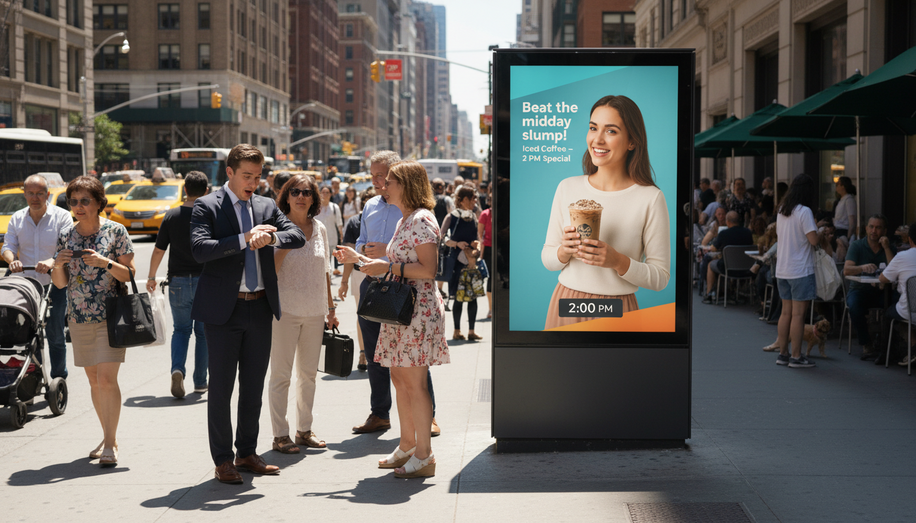
Seasonal and event-driven timing takes this further, aligning ads with consumer mindsets for heightened relevance. Pre-festival placements outperform post-event noise, as they tap into anticipation rather than saturation. For instance, Cash App’s activation around the U.S. Grand Prix in Austin concentrated billboards, murals, and wild postings in high-dwell fan zones over four weeks, generating 15.5 million impressions and priming conversions during a cultural peak. Shorter bursts like this—ideal for product launches, flash sales, or grand openings—build buzz without overexposure, serving as the industry minimum for impact. Digital OOH (DOOH) elevates this precision: dynamic content tied to real-time triggers like weather or time-of-day deals garners 73% favorable views, with 86% of consumers deeming grocery promotions useful and 81% praising weather-responsive offers. An ad for umbrellas during a downpour or iced drinks in summer heat doesn’t just get seen—it spurs action.
Duration complements timing, with data underscoring the power of persistence. A minimum 12-week run fosters brand familiarity, while 3-6 months balances cost-efficiency and recognition, and 6-12 months cements long-term awareness in competitive markets. Repeated exposure reinforces messaging: consumers need multiple impressions to internalize calls-to-action, whether QR codes or promo codes. Yet, overlong campaigns without strategic pauses can dilute impact, especially amid clutter like election-season banners. OOH’s low cost-per-thousand—$2 to $7—makes extended timing viable, delivering $6 in returns per dollar spent when synced with high-traffic periods.
Real-world metrics validate these tactics. Impressions, adjusted for location, traffic peaks, weather, and duration, provide a baseline for reach. When OOH layers onto mobile campaigns, ROI surges 316%, as timed visibility amplifies digital follow-through. Transit ads during rush hour or event proximities yield superior dwell times, while nighttime simulations account for contrast and lighting to sustain readability. Neglect these, and even premium creative flops: an ad lost in midday glare or festival overload misses its moment.
Ultimately, timing transforms OOH from static signage into a dynamic force. In 2025’s crowded media landscape, where 69% of purchases trace back to OOH triggers, advertisers ignoring it forfeit edges in engagement and sales. Forward-thinking brands simulate day-night cycles, dodge clutter seasons, and pulse campaigns around behavioral peaks—harnessing dwell time, relevance, and repetition for campaigns that don’t just advertise, but activate. The lesson is clear: in OOH, the right ad at the wrong time is invisible; the right time makes it unforgettable. Mastering this intricate dance of timing, from capitalizing on peak commute hours to dynamically adapting content for real-time events, demands sophisticated tools. Platforms like Blindspot provide the necessary precision, leveraging audience measurement, location intelligence, and programmatic DOOH campaign management to ensure every ad is delivered at its most impactful moment, driving engagement and delivering measurable returns. Explore how to elevate your OOH timing strategies at https://seeblindspot.com/