
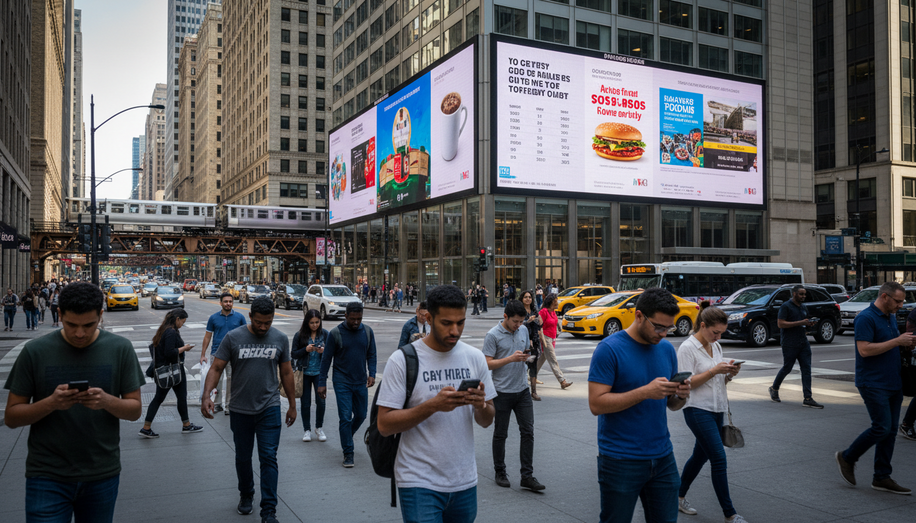

In the evolving landscape of out-of-home (OOH) advertising, location-based data has emerged as a transformative force, enabling brands to craft proactive strategies that intersect physical presence with digital precision. No longer confined to static billboards or high-traffic posters, OOH now leverages geofencing, visit-based targeting, and mobility insights to deliver hyper-relevant messages exactly when and where audiences are most receptive. This fusion of OOH’s contextual power with real-time location intelligence is driving unprecedented returns, with studies showing ad effectiveness nearly doubling through smart geographic targeting.
At its core, location-based marketing in OOH thrives on understanding audience movement patterns rather than mere demographics. Traditional targeting relied on age, income, or interests—static proxies that falter amid privacy regulations and signal loss. In contrast, location data captures dynamic behaviors: where people shop, travel, or linger, revealing high-intent moments. Programmatic geofencing, for instance, erects virtual boundaries around key sites, triggering mobile ads or digital OOH (DOOH) displays when devices enter those zones. Thumbvista’s campaigns highlight how this works in practice, pinpointing shopping centers, competitor stores, airports, and lifestyle venues as prime territories. A retail chain geofencing mall parking lots during holidays saw in-store visits surge, while an auto dealer targeting rival lots boosted test drives through switch-incentive messaging.
Proactive OOH strategies elevate this by integrating location data into the full media mix, turning passive exposures into measurable actions. Consider DOOH screens near retail hubs: paired with visit-based audience modeling, they quantify foot traffic lift by comparing exposed and unexposed groups via anonymized mobility panels. Echo Analytics reports up to 33% brand lift in European pilots, where OOH near gyms or supermarkets drove store visits, validated through H3-cell segmentation and clean-room analytics—privacy-compliant tools that aggregate data at granular hexagonal grids without exposing individuals. This attribution closes the loop, proving OOH’s role in the customer journey from awareness to conversion.
Media planning forms the backbone of these successes, demanding more than traffic volume. Effective planners map audience flows, prioritizing relevance, intent, dwell time, and trackability. A restaurant might favor office-proximate billboards at lunch hour over faster highways, capitalizing on hunger-driven decisions. For lifestyle brands, geofencing parks, trails, or marinas aligns messaging with active mindsets—”20% off gear for your next adventure”—fostering authentic connections beyond digital feeds. Transit hubs like airports offer downtime goldmines, with tailored welcomes like “Five minutes to great food” spurring impulse visits.
Yet, the true potency lies in omnichannel synergy. OOH amplifies paid social radius campaigns or Google Local Service Ads by reinforcing proximity-based relevance. Meta’s lead forms and retargeting, honed on high-value neighborhoods, pair seamlessly with nearby DOOH, converting broad awareness into CRM-ready prospects. Retail media networks extend this, using OOH to prime digital paths while measuring cross-channel lift. In 2026, this data-driven playbook treats every OOH asset—from billboards to place-based screens—as part of a unified ecosystem, prioritizing behavioral cohorts over assumptions.
Challenges persist, including data privacy and attribution gaps, but innovations like clean rooms mitigate them, enabling secure matching of ad exposures to foot traffic. Brands must also navigate seasonal fluxes and viewing dynamics, ensuring creative resonates in context—time-sensitive flash sales at entrances, purpose-aligned narratives at outdoor venues. Forward-thinking agencies are already positioning OOH as a “global operating system,” blending location intelligence with AI for predictive planning.
Real-world wins underscore the payoff. Outdoor apparel geofencing hiking trails drove dual online and store sales, embedding the brand in lifestyle moments. Landscape firms using radius targeting captured high-intent searches for “near me” services, blending OOH proximity with SEO-localized content. As privacy shifts accelerate, location-based OOH stands resilient, delivering ROAS through verifiable behaviors.
For OOH practitioners, the mandate is clear: evolve from placement-focused buys to intent-orchestrated campaigns. By harnessing geofencing around competitor sites, high-dwell hubs, and movement patterns—then attributing via advanced analytics—marketers unlock proactive precision. This isn’t just advertising in places; it’s anticipating presence, proving OOH’s enduring relevance in a location-aware world. As 2026 unfolds, those who master these strategies will not only capture attention but convert it into lasting loyalty.