
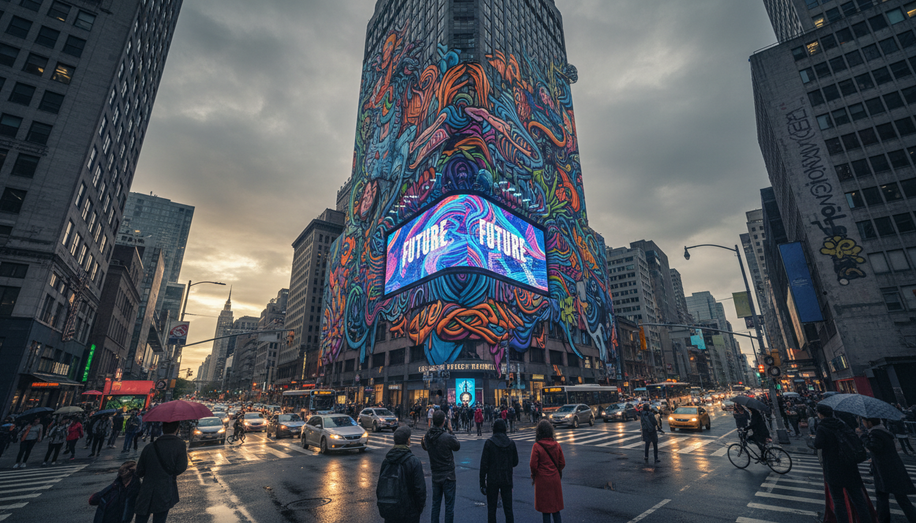

In the bustling urban landscapes where out-of-home (OOH) advertising competes for fleeting glances, brands are turning to an unlikely ally: street artists. These collaborations are transforming standard billboards and murals into cultural beacons that not only boost visibility but also infuse campaigns with authentic relevance, turning passive viewers into engaged participants.
The shift stems from a growing demand for genuineness in a marketing-saturated world. Traditional OOH ads often blend into the background, dismissed as corporate noise amid stock imagery and repetitive slogans. Street art collaborations disrupt this monotony by leveraging artists’ bold, unfiltered styles—think vibrant murals that weave brand messages into local narratives. As one analysis notes, these partnerships allow brands to co-create rather than dictate, fostering deeper emotional connections that resonate with communities valuing authenticity over intrusion. In cities worldwide, this approach has elevated OOH from mere promotion to participatory cultural events.
Consider Apple’s “Shot on iPhone” campaign, a prime example of location-specific artistry. By commissioning local photographers and artists for billboards tailored to each region, Apple didn’t just advertise its camera; it showcased authentic community imagery, sparking local pride and social media shares. The result? Heightened visibility through earned media, as passersby documented and amplified the work online. Similarly, Converse’s “City Forests” project paired muralists with air-purifying paint on billboards, merging environmental advocacy with street art’s raw edge. These installations didn’t scream sales pitches; they invited interaction, blending commerce with urban ecology to create lasting impressions.
Such successes highlight key mechanisms at play. First, visual distinction: Artist-driven designs stand out in a sea of templated ads, their originality igniting curiosity and buzz. Research into OOH trends shows these bold aesthetics drive higher recall rates, as unique creativity lingers in memory far longer than standard visuals. Second, cultural relevance: Local artists embed neighborhood stories, values, and identities into the work, earning community credibility. A mural reflecting a district’s history or struggles feels like a contribution, not an imposition, making audiences more receptive to the embedded brand message.
This relevance extends to content amplification. A single billboard can spawn multi-channel campaigns—social media reels of the creation process, PR stories on artist interviews, and local press coverage. Brands like those in public health initiatives in Atlanta and Detroit have used street artists for billboards promoting voting and vaccinations, turning ad space into canvases for social change. The fallout? Organic sharing and goodwill that traditional OOH rarely achieves.
Beyond visibility, these partnerships build emotional engagement and positive perception, particularly among younger, values-driven consumers. Murals act as visual landmarks, associating brands with memorable urban spots and strengthening community ties. When locals see their culture reflected, they form loyalties that transcend transactions. Economically, hiring regional talent supports artists and injects authenticity, often leading to ripple effects like elevated artist profiles and brand admiration within creative circles.
Yet, the strategy isn’t without risks. Tokenism—engaging artists merely for optics—can erode trust if the partnership feels insincere. Over-directing the creative process stifles the artist’s voice, diluting the very uniqueness brands seek. Misaligned placements or ignorance of local context can even backfire, alienating communities. Successful executions treat artists as co-strategists: Define core messages and timelines upfront, but leave style and storytelling open. Tie the work to broader initiatives, like donating to arts programs or hosting unveilings, to amplify impact.
Street art’s guerrilla roots add another layer, enabling surprise tactics that blur art and advertising. Brands adopting respectful collaborations—fair pay, rights protection, community input—harness this rebellious spirit for immersive experiences. In Bushwick’s Collective, for instance, street art intersects with OOH, though critics note the fine line between cultural enhancement and commercialization. When handled ethically, these efforts inspire positive change, from environmental awareness to social advocacy.
Ultimately, street art collaborations redefine OOH’s potential. Billboards evolve from transactional spaces into storytelling platforms that connect, inspire, and endure. By prioritizing authenticity and mutual benefit, brands don’t just capture eyes—they claim hearts, proving that in the art of advertising, culture is the ultimate currency. As urban spaces grow denser and digital fatigue sets in, this fusion offers a blueprint for OOH campaigns that matter, blending commerce with creativity to leave indelible marks on the cityscape.