
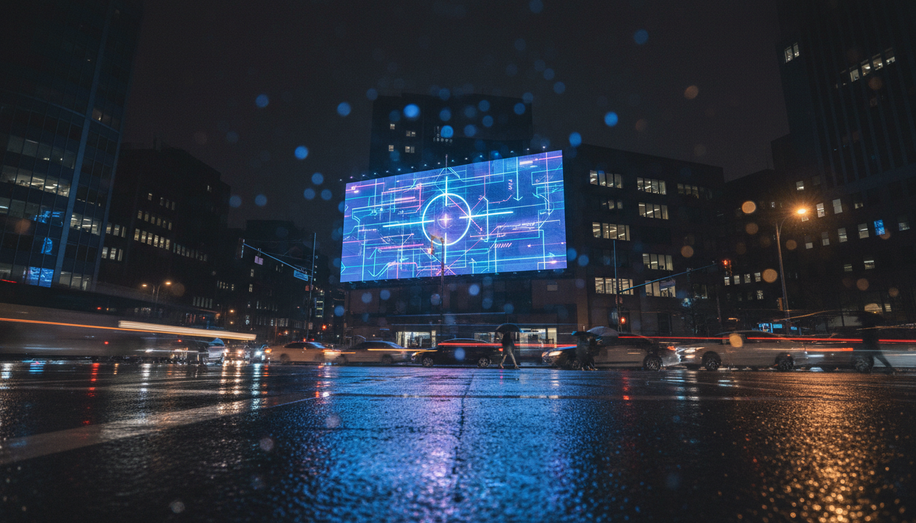

In the crowded landscape of out-of-home (OOH) advertising, where billboards once blanketed broad urban swaths with generic messages, hyperlocal targeting has emerged as a precision tool for brands seeking to maximize return on investment. By zeroing in on micro-geographic areas—neighborhoods, street-level radii, or even specific blocks—advertisers can deliver contextually relevant campaigns that drive foot traffic, boost conversions, and stretch budgets further than ever before. This shift from mass-market blasts to surgically targeted placements reflects a data-driven evolution, fueled by geofencing technologies and consumer insights that make OOH not just visible, but actionable.
Hyperlocal strategies redefine OOH’s core strength: its physical presence in high-traffic zones. Traditional OOH often wasted impressions on passersby unlikely to engage, but today’s approaches leverage geo-fencing to create virtual boundaries around key locations, triggering digital extensions or tailored static ads precisely when and where they matter most. For instance, retailers can erect digital screens or static boards near grocery stores, pharmacies, or public parks, using radius targeting of 1,000 to 1,500 feet to capture shoppers in the moment of decision-making. A coffee chain might place OOH creatives within walking distance of its outlets, syncing promotions with peak lunch hours or local events to entice immediate visits. This proximity ensures ads resonate with audiences already primed for action, turning passive exposure into measurable foot traffic.
The ROI boost comes from several interlocking advantages. First, hyperlocal OOH slashes inefficiency by concentrating spend on high-potential zones, such as affluent ZIP codes or event vicinities, rather than diluting it across cities. Brands using addressable geo-fencing, which layers first-party CRM data onto location triggers, can target households with personalized offers, attributing lifts in store visits directly to the campaign. True Impact Media notes that this method not only increases in-store traffic but also enables personalized experiences, as ads positioned near public transportation or competitors’ doors can lure shoppers with rival-beating deals. GroundTruth highlights how proximity targeting—serving OOH near where consumers have been or are headed—amplifies relevance, such as flashing weather-tied promotions during a sudden rainstorm outside a shoe store.
Creative localization further supercharges these efforts. Generic slogans fall flat in diverse neighborhoods, but hyperlocal OOH thrives on culturally attuned messaging that weaves in local landmarks, festivals, or routines. In densely populated districts like those in Greater Jakarta, advertisers profile consumers by social, economic, and behavioral traits to craft emotionally engaging ads—think a neighborhood boutique promoting block-specific discounts tied to a nearby street fair. Terraboost emphasizes pairing this with wellness-themed kiosks in retail hubs, where timing logic aligns ads with foot traffic surges, enhancing recall and shares on social media. Soofa points out that such community-rooted campaigns foster belonging, prompting organic amplification as residents discuss or post hyper-relevant OOH encounters.
Integrating OOH with digital channels elevates hyperlocal targeting to omnichannel precision. Geo-fencing around competitors or events allows brands to retarget OOH viewers via mobile for up to 30 days, using lookalike audiences to scale from ZIP codes to similar neighborhoods without losing relevance. Pairing OOH with optimized Google Business Profiles ensures seamless discovery, as geo-targeted searchers encounter consistent local promotions. True Impact Media envisions a future where mobile data informs OOH placements in real time, piggybacking on consumer paths through parks or transit hubs to deliver tailored in-store follow-ups. Attack Marketing’s field activation examples, like Lime’s safety campaigns localized across 28 markets, show how OOH near pop-up events builds trust and loyalty through hyper-relevant experiences.
Challenges persist, of course. Data privacy regulations demand careful handling of location signals, and urban clutter can overwhelm even precise placements. Yet, the metrics speak volumes: higher conversion potential from contextually perfect messaging, efficient budgeting in high-ROI zones, and stronger community ties that yield long-term loyalty. Lestari Ads underscores how micro-profiling in top districts turns OOH into a conversion engine, prompting QR scans and purchases on the spot.
For OOH advertisers, hyperlocal strategies are no longer optional—they’re essential for surviving a fragmented media world. By harnessing geo-fencing, localized creatives, and cross-channel synergy, brands achieve outsized ROI, proving that the right message in the right block outperforms a thousand irrelevant impressions. As technologies like ZTV and event-linked targeting mature, expect hyperlocal OOH to dominate, drawing crowds to doorsteps with unprecedented efficiency.
Platforms like Blindspot are poised to further accelerate this shift, providing the critical intelligence and management tools for precise execution. By leveraging advanced location intelligence and audience analytics, Blindspot enables advertisers to identify optimal hyperlocal sites and deliver programmatic DOOH campaigns with unmatched contextual relevance, driving measurable foot traffic and conversions. This integrated approach, coupled with real-time performance tracking and ROI measurement, ensures every targeted impression translates into maximum return. https://seeblindspot.com/