
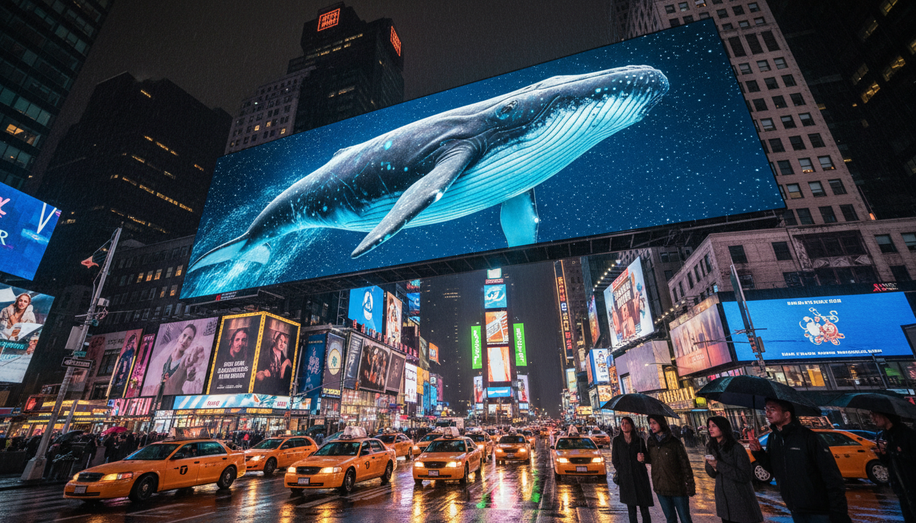

In the relentless hustle of urban streets, where commuters scroll through digital feeds and glance fleetingly at the world around them, traditional flat billboards often fade into the background. Enter 3D billboards, which thrust advertising into three dimensions, creating illusions of depth and motion that demand attention in even the most saturated environments. By leveraging physical structures, computer-generated imagery, or anamorphic projections, these displays make products appear to burst from the surface, turning passive passersby into captivated spectators.
The core strength of 3D billboards lies in their unparalleled ability to seize the gaze amid chaos. Research underscores this edge: consumers encounter 6,000 to 10,000 ads daily, yet 3D visuals pierce the noise by boosting attention and memory retention. A study by BCN Visuals found that 68% of viewers perceive brands using these ads as more premium, with 66% more inclined to make a purchase. Unlike static 2D images, which blend into the urban tapestry, 3D elements exploit movement and perspective—such as a holographic drink spilling toward oncoming traffic or a towering figure emerging from the panel—to create a visceral “wow” effect. This dynamism is amplified in crowded settings, where the billboard’s interaction with surrounding architecture and viewer motion heightens the illusion, drawing eyes from blocks away.
Beyond mere visibility, 3D billboards forge deeper emotional connections and superior recall. Their immersive quality transforms advertising from a glanceable message into a sensory event, evoking surprise, delight, or intrigue that lingers long after the moment passes. Brands report enhanced brand awareness as viewers not only remember the ad but share it—50% discuss anamorphic experiences in person, while 58% post them online via apps. This organic amplification generates buzz, positioning the billboard as a city landmark that pulls in foot traffic and media coverage. In high-traffic zones like Times Square or Tokyo crossings, where competition for attention is fiercest, such virality proves invaluable, extending reach far beyond the physical site.
Creative versatility further elevates 3D billboards, unshackling designers from flat constraints. Advertisers can experiment with elements impossible on standard panels: rotating logos, floating animations, or interactive holograms that respond to light and angle. This freedom allows for tailored storytelling—imagine a car brand launching a vehicle that seems to drive off the billboard into traffic, or a snack leaping toward hungry pedestrians. Such relevance resonates in diverse crowds, fostering emotional ties that influence loyalty and decisions. Digital iterations add layers like QR codes or augmented reality triggers, bridging physical impact with online engagement and personalized extensions.
Quantifiable gains make the case even stronger. Advanced tracking measures impressions via foot traffic data, social mentions, and hashtag surges, revealing spikes in brand sentiment and recognition post-campaign. Placing a 3D billboard en route to stores correlates with uplifts in visits and sales, offering clear ROI paths. While initial costs exceed traditional setups due to sophisticated 3D modeling and CGI, the payoff in conversion rates and recall often justifies the investment, with studies highlighting higher long-term effectiveness. For brands in premium sectors like automotive or fashion, the elevated perception alone recoups expenses by signaling innovation.
Real-world triumphs illustrate these benefits in action. Campaigns like those from global brands have turned cityscapes into conversation starters, with 3D displays of exploding perfumes or soaring aircraft halting traffic—figuratively and sometimes literally—for viral fame. In busy metropolises, where ads vie for fleeting seconds of attention, these installations not only capture it but convert it into action, from app downloads to store visits.
Looking ahead, 3D billboards are poised to evolve with technology, integrating real-time AR for viewer interactions or adaptive content tied to weather and events. As urban density grows and ad saturation deepens, their role in out-of-home advertising will expand, redefining public spaces as dynamic brand canvases. For marketers navigating crowded environments, 3D billboards offer not just visibility, but a commanding presence that turns heads, sparks shares, and drives results.