
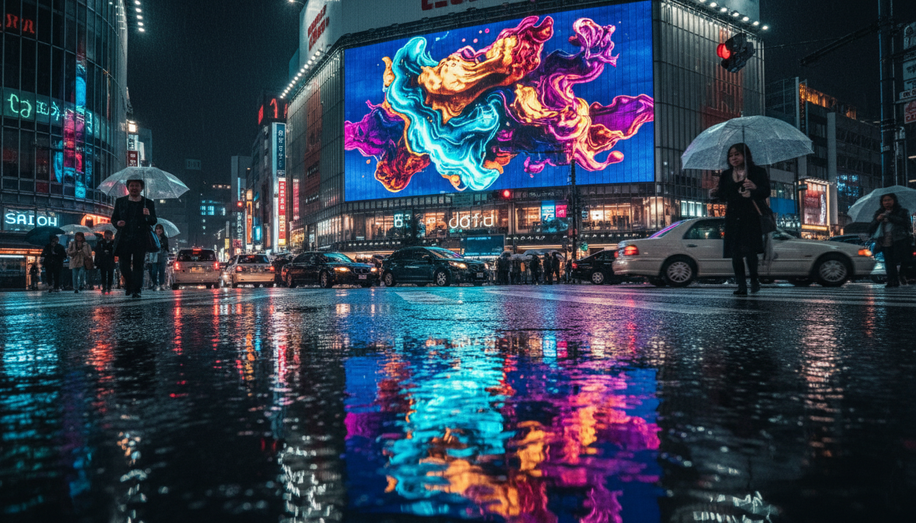

In the pulsating heart of New York City’s Times Square, where neon pulses like a living organism, digital billboards have evolved from mere advertising canvases into beacons of unbridled creativity, transforming urban chaos into mesmerizing spectacles. These towering LED displays, often irregular in shape and alive with motion, cut through the visual din of nearly 40 competing screens, demanding fleeting seconds of attention from hurried passersby. No longer static billboards, they tell stories without sound, relying on bold visuals, stark text, and environmental context to captivate audiences in environments where short attention spans reign supreme.
Urban landscapes worldwide are being redefined by this digital renaissance. In Las Vegas, the Fashion Show mall on the Strip invites shoppers to snap selfies, instantly projecting their faces larger-than-life onto eye-catching column displays at the entrance—a seamless blend of interactivity and branded allure that turns passive viewers into eager participants. Nearby, H&M commandeered Times Square screens for a pop-up runway, where volunteers strutted in store outfits, captured by cameras, and reviewed their footage before starring in the ads themselves; the campaign exploded on social media, amplifying reach far beyond the physical space. These experiential tactics exploit the high-traffic density of cities, where dense populations and constant movement offer unparalleled exposure, but demand bold, concise designs with humor, shock value, or direct calls-to-action like QR code scans to pierce the clutter.
Beyond commerce, digital billboards foster communal artistry, blurring lines between advertising and public expression. Times Square’s Midnight Moment, the world’s largest and longest-running digital art exhibition since 2012, commandeers ad boards nightly from 11:57 p.m. to midnight, showcasing works by over 100 artists and drawing millions annually into a three-minute symphony of light. In South Beach, Florida, Flamingo Point’s luxury condo garage hosts a 29-by-7-foot digital mural that pulses with art, music, and entertainment around the clock, breathing life into an otherwise drab space and enhancing resident value with dynamic colors and motion. Such installations echo global trends, from Tokyo’s tech-infused panels to London’s Piccadilly Circus interactives, where touch-sensitive surfaces, motion detection, and real-time data—like weather or traffic—create intuitive engagements that entertain, inspire, and even advocate for health, safety, or environmental causes.
Technological wizardry elevates these displays to new heights of personalization and relevance. Digital LED screens adapt content dynamically: a KitKat campaign in 2025 cleverly swapped phones for chocolate bars in everyday urban scenes, like bus stops, using simple, relatable visuals to promote breaks amid city frenzy. In another standout, runners in a desert-themed activation stepped onto a sidewalk treadmill, triggering Unreal Engine-powered backdrops that synced real-time trails, sounds, and shifting light from dawn to dusk—no two experiences identical—merging physical exertion with immersive digital storytelling. Data analytics now refine these efforts, tracking performance to optimize messages, while mobile connectivity enables instant social feeds or QR-driven interactions, forging a hybrid ecosystem where physical billboards meet digital immediacy.
Strategically placed in high-traffic zones—elevated above crowded streets, near arenas, or along highways—these billboards thrive on urban advantages: massive reach, time-sensitive adaptability, and the ability to dominate skylines. In Dallas and Las Vegas, irregular, moving-piece displays revitalize diverse cityscapes, while “dominations”—coordinated messages across multiple boards—unify narratives, as seen in sports stadiums where a single story blankets the stands. Unlike rural counterparts hampered by sparse audiences and isolation, urban digital billboards leverage competition as fuel for innovation, employing animations and LED brilliance to ensure messages are digestible in seconds.
This creative surge extends to cultural imprints, positioning billboards as open-air galleries amid commercial hustle. They command presence through enormous scale and novel designs, instilling brands—and cities—with power, assurance, and forward-thinking flair. As communities witness parking garages turned art hubs or midnight skies into galleries, the ROI ripples outward, enriching public spaces. Yet, the true genius lies in their ephemerality: in a world of endless scrolls, these beacons halt the rush, inviting shared wonder.
Looking ahead, spectacular installations signal just the dawn. From concept to completion, turnkey solutions prioritize flexibility and data insights, promising even wilder hybrids of art, tech, and commerce. In crowded urban tapestries, digital billboards don’t just advertise—they illuminate, engage, and redefine city life as a canvas for collective imagination.