
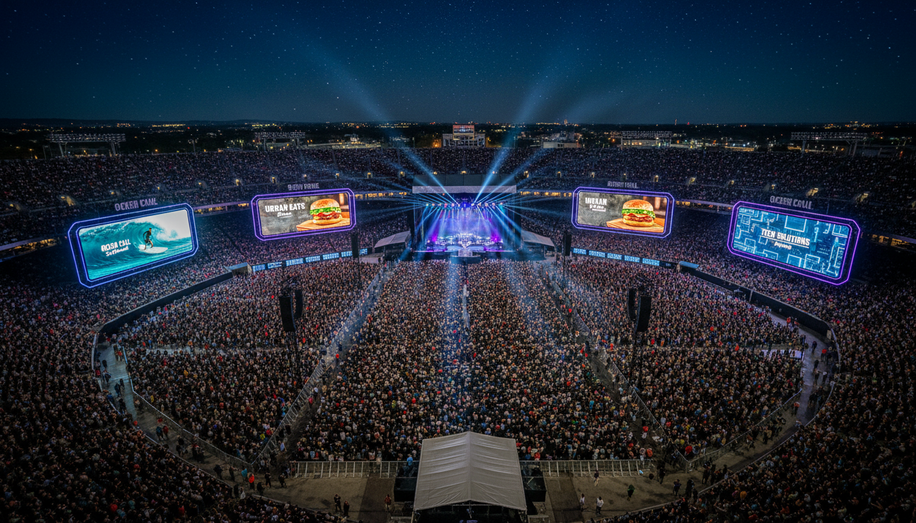

In the evolving landscape of out-of-home (OOH) advertising, location marketing has emerged as a game-changer, leveraging geotargeting to deliver hyper-relevant messages precisely where audiences congregate. By harnessing geolocation data from GPS, IP addresses, Wi-Fi signals, and mobile towers, advertisers can transform static billboards and digital signage into dynamic tools that respond to real-time consumer movements, boosting engagement and slashing waste. This precision turns broad-reaching OOH campaigns into laser-focused efforts, ensuring brands connect with the right people at the optimal moment.
At its core, geotargeting uses digital intelligence to pinpoint consumer locations, enabling advertisers to circumscribe billboard messaging within designated radii or zones. Platforms like Google Ads and Facebook Ads allow refinement down to city blocks or ZIP codes, aligning ads with local contexts such as busy street corners or shopping districts. For OOH, this means placing billboards in high-footfall areas informed by location data, where potential customers pass daily. Geofencing takes it further by erecting virtual boundaries around key sites—using GPS or RFID technology—to trigger context-aware promotions when devices enter or exit those perimeters. Imagine a coffee chain’s digital billboard near a train station activating a “10% off your morning latte” offer as commuters arrive, timed perfectly for rush hour.
Implementation begins with rigorous location research, analyzing foot traffic, demographics, and proximity to businesses. Advertisers select OOH channels like billboards, bus shelters, or digital out-of-home (DOOH) screens that match campaign goals, then layer in geotargeting for enhanced precision. Radius targeting sets eligibility around a central point, while keyword-driven geo-targeting in search campaigns amplifies visibility for location-specific queries. For broader reach, country or regional targeting tailors language and offers, but OOH shines in granular applications: a retailer might geofence a mall to promote flash sales, correlating foot traffic spikes with in-store visits.
The power of geotargeting lies in its ability to segment audiences demographically—by age, gender, income, or lifestyle—using real-time data on where people linger. This informs tailored messaging: upscale billboards in affluent neighborhoods highlight luxury goods, while family-oriented ads appear near parks or schools. Location-based retargeting extends this by following up with users who visited a site, serving reminders via DOOH as they pass nearby inventory. During events like concerts or sports games, geofencing delivers personalized fan offers, bridging physical presence with immediate action. Advanced tactics include bid adjustments for high-performing ZIP codes and weather triggers—a sunscreen promotion on a sunny digital billboard in a heatwave-struck city.
Benefits are quantifiable and compelling. Geotargeted OOH yields higher relevance, driving click-through rates and brand affinity as ads feel intuitively local, like a restaurant pitch during lunch hour. It measures success through tangible metrics: foot traffic correlations to ad placements, uplifts in e-commerce from nearby exposures, and ROI from reduced ad spend on irrelevant areas. Businesses serving specific locales see the sharpest gains, as campaigns avoid broad nets and focus on action-prone markets. Personalization amplifies this—incorporating local landmarks, events, or dialect in creatives fosters trust and urgency.
Yet, success demands testing and iteration. Start with pilot campaigns on small radii, tracking performance data to refine creatives, timing, and placements. A/B testing location-specific variables, such as city-named headlines or event-tied offers, unveils what resonates. Integrating demographics or behaviors atop geo-data creates hyper-specific personas, while tools from platforms provide granular insights into market drivers.
Challenges persist, including data privacy concerns and tech integration, but rising digital OOH adoption mitigates them. With location data more accessible than ever, geotargeting empowers OOH to rival digital channels in precision without sacrificing scale. Retailers, quick-service chains, and event promoters lead the charge, reporting engagement surges and cost efficiencies.
Looking ahead, hybrid strategies blending OOH with mobile geotargeting promise even deeper integration—billboards prompting app notifications, or vice versa. As urban mobility patterns shift and events rebound, location marketing positions OOH not just as visible advertising, but as an intelligent ecosystem that anticipates consumer needs. For brands willing to embrace this data-driven pivot, the results are clear: sharper targeting, stronger connections, and campaigns that truly move the needle.
For brands seeking to fully harness this data-driven pivot, platforms like Blindspot offer the advanced capabilities needed to navigate this intelligent ecosystem. By leveraging its location intelligence and audience measurement analytics, advertisers can achieve hyper-precise site selection and real-time programmatic DOOH campaign management, ensuring messages connect with the right people at the optimal moment. This comprehensive approach, complemented by robust ROI measurement, allows for continuous optimization and demonstrable impact in a rapidly evolving OOH landscape. Learn more at https://seeblindspot.com/