
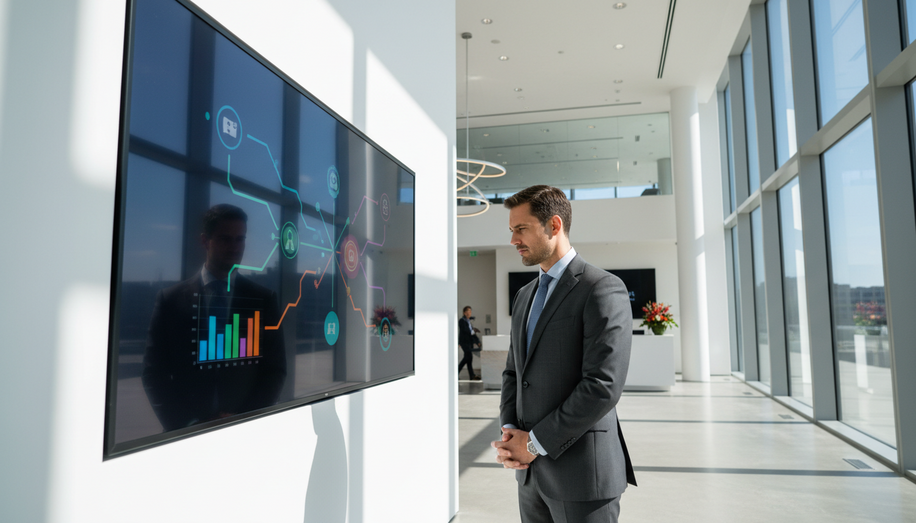

In the high-stakes world of B2B marketing, where decisions hinge on trust, precision, and visibility among elusive decision-makers, out-of-home (OOH) advertising is shedding its consumer-only reputation. Long dominated by retail and entertainment brands, OOH is now proving its mettle in reaching business professionals, industry leaders, and corporate buyers through strategic placements, data-driven targeting, and measurable outcomes. By leveraging digital billboards, transit ads, and programmatic platforms in business-dense environments, marketers are unlocking B2B potential that rivals digital channels in impact and ROI.
The shift begins with audience proximity. Business decision-makers—CEOs, CIOs, procurement officers—spend their days commuting through urban corridors, attending conferences, and navigating airports near corporate hubs. OOH excels here by placing messages exactly where these audiences cannot scroll past them. Santander, a global financial provider, harnessed programmatic digital OOH to elevate awareness of its Corporate Commercial Banking services. By deploying dynamic ads on screens in financial districts and transit hubs, the campaign targeted professionals on the move, resulting in heightened brand recall among key decision-makers. Similarly, Rice Business, a U.S. business school, launched an airport OOH campaign to drive MBA program awareness and consideration. Screens at major gateways displayed tailored messaging to executives and professionals in transit, blending high visibility with relevance to spark inquiries and applications.
Programmatic DOOH takes this further, enabling real-time optimization akin to online ads but with the unmissable scale of physical space. VIOOH’s platform powered campaigns for brands like HP Premium Notebooks, which used time-of-day and audience targeting near retail partners to reach IT procurement teams. Ads activated during business hours on screens proximate to office clusters, driving consideration for enterprise-grade laptops. This precision mirrors consumer successes but adapts to B2B rhythms: weather triggers for industry-specific relevance, geofencing around headquarters, or flight data to hit traveling execs, as seen in Don Julio’s programmatic push combining dynamic creative optimization with aviation insights.
Case studies illuminate the ROI. Twilio’s “Ask Your Developer” campaign boldly planted billboards in tech hubs like San Francisco and New York, urging business leaders to “Ask your developer if Twilio is for you.” Tied to the company’s book and developer stories, these OOH assets cut through digital noise, engaging both C-suite executives and engineers en route to work or events. The multi-channel effort amplified developer adoption of Twilio’s APIs, fueling business innovation discussions and lead generation. A legal technology firm took a conference-centric approach, wrapping transit billboards around tradeshow hotspots and nearby offices. As ads shuttled attendees during pre- and post-event hours, the campaign shattered goals with 2.2 times the targeted social shares and a staggering 329% ROI on conference-generated business.
These tactics extend beyond billboards. Betterment, a financial services platform, targeted urban professionals—many B2B influencers—with high-traffic city ads, boosting brand recognition and app sign-ups. One financial district billboard so outperformed averages that the campaign expanded, proving OOH’s lift in professional ecosystems. Santander’s banking push similarly used programmatic DOOH for corporate audiences, layering location data to ensure messages landed with bankers and financiers, enhancing service awareness without invasive tracking.
Strategies for B2B success hinge on integration and measurement. Pair OOH with QR codes for instant lead capture, as Expedia did in airports to drive traveler deals—adaptable for B2B event registrations. Employ behavioral targeting: geofencing near competitor HQs or client offices, dynamic content via weather or time triggers, and cross-channel retargeting, like American Express’s blend of DOOH and mobile. Place ads surgically—near tradeshows like CES for tech buyers, or airport lounges for global execs—as Rice Business did to convert awareness into MBA pursuits. Track via unique URLs, app downloads, or footfall lifts; Burger King’s geofenced Whopper Detour, while consumer-focused, offers a blueprint with 1.5 million downloads, showing OOH’s conversion power when fused with mobile.
Challenges persist: B2B cycles are longer, audiences fragmented. Yet data counters this. Programmatic platforms like VIOOH enable audience overweighting—prioritizing “running segment” pros for Puma or infrequent shoppers for Albert Heijn, translatable to IT pros near data centers. Emerging brands via DASH TWO have tailored OOH-digital hybrids for niche B2B, maximizing spend in competitive landscapes.
As 2026 unfolds, OOH’s B2B evolution accelerates with AI-driven personalization and AR integrations on digital screens. Brands ignoring it risk ceding ground to rivals who see highways, transit, and airports not as consumer billboards, but as boardroom runways. By targeting where professionals live and work, OOH delivers unskippable conversations that propel pipelines forward.