
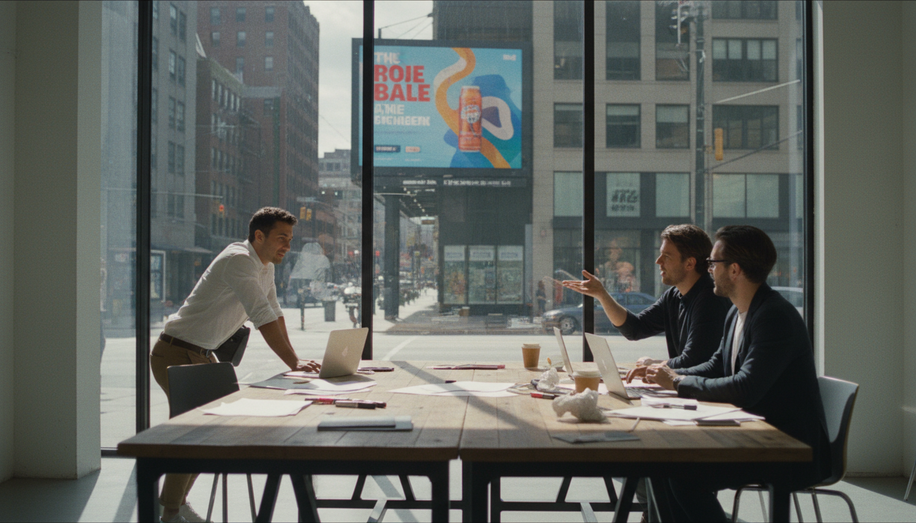

In the bustling heart of 2026’s urban landscapes, creative agencies are redefining out-of-home (OOH) advertising, moving far beyond static billboards to orchestrate campaigns that pulse with real-time relevance and sensory immersion. Once tasked with crafting bold visuals for fleeting roadside glances, these agencies now harness AI-driven dynamic content, augmented reality overlays, and multi-sensory activations to forge deeper connections with mobile consumers, turning public spaces into interactive brand narratives.
This shift demands agile strategies attuned to OOH’s digital renaissance. Digital out-of-home (DOOH) now commands over 40 percent of total outdoor ad spend, enabling agencies to swap static messages for content that adapts instantly to weather, traffic, or audience demographics. Agencies like those pioneering hyper-local targeting integrate location data and IoT-connected screens, delivering neighborhood-specific messaging—think a coffee brand triggering steaming cup visuals on rainy mornings in downtown Seattle. Such precision mirrors digital advertising’s sophistication, but with OOH’s unmatched physical presence, where 71 percent of consumers actively notice roadside displays and 56 percent share standout creatives organically.
Talent pools are evolving to match this complexity. Agencies are recruiting hybrid specialists: data scientists who double as storytellers, AR developers versed in urban psychology, and strategists blending guerrilla tactics with programmatic buying. The rise of AI squeezes traditional fees, prompting consolidation and in-housing at brands, yet forward-thinking agencies counter by embedding themselves as “OOH operating system” architects—organizing regionally while acting globally through synthetic audience modeling. Experiential experts shine in guerrilla campaigns, like pop-up holograms in city squares or AR bus shelters that gamify product demos, boosting dwell time by 20 to 40 percent and brand recall by up to 30 percent.
Tools form the backbone of this adaptation. Agencies wield AI for dynamic creative optimization, tailoring visuals in real time via machine learning that analyzes foot traffic and social sentiment. Platforms for programmatic DOOH allow seamless integration with mobile data, syncing billboard flashes to phone notifications for amplified reach. Immersive tech blurs physical-digital boundaries: 3D projections on building facades invite passersby to “unlock” virtual experiences via smartphones, while motion-sensing screens respond to gestures with personalized narratives. Multi-sensory campaigns elevate this further, incorporating scent diffusers at transit hubs for fragrance launches or haptic feedback in interactive kiosks, lodging brands in consumers’ memories through full-bodied encounters.
Sustainability imperatives sharpen these innovations. Agencies prioritize recyclable materials, solar-powered LEDs, and carbon-neutral executions, resonating with eco-conscious audiences who favor purpose-aligned brands—campaigns emphasizing authentic environmental messaging see 6 percent higher action rates. Inclusivity tools, like multilingual audio features and tactile elements for the visually impaired, ensure broad accessibility, aligning OOH with societal values amid smart city integrations.
Real-world triumphs illustrate the payoff. A recent weather-triggered DOOH series for a ride-sharing app adjusted messaging from “Rainy Day Rides” to sunny promotions, spiking engagement via social shares. Guerrilla activations, such as flash mobs synced to street projections, generate viral buzz, while mobile billboards prowling event zones deliver timed precision unattainable digitally. These cases underscore OOH’s edge in a fragmented media world, where digital fatigue erodes trust but physical ads drive website visits (26 percent response rate) and word-of-mouth amplification.
Challenges persist, including measurement standardization and tech silos, but agencies are countering with unified playbooks that fuse OOH data with cross-channel analytics. As urbanization swells outdoor dwell time in high-traffic zones like transit hubs and retail corridors, creative firms position themselves as indispensable partners, blending emotional resonance with measurable growth.
Looking ahead, the OOH horizon favors agencies mastering metaverse tie-ins and AI-orchestrated holograms, where campaigns span real streets to virtual realms. By evolving strategies for contextual relevance, upskilling talent for tech-creativity fusion, and deploying tools for immersive, sustainable impact, these agencies ensure OOH doesn’t just advertise—it captivates, converting passersby into advocates in an always-on world.