
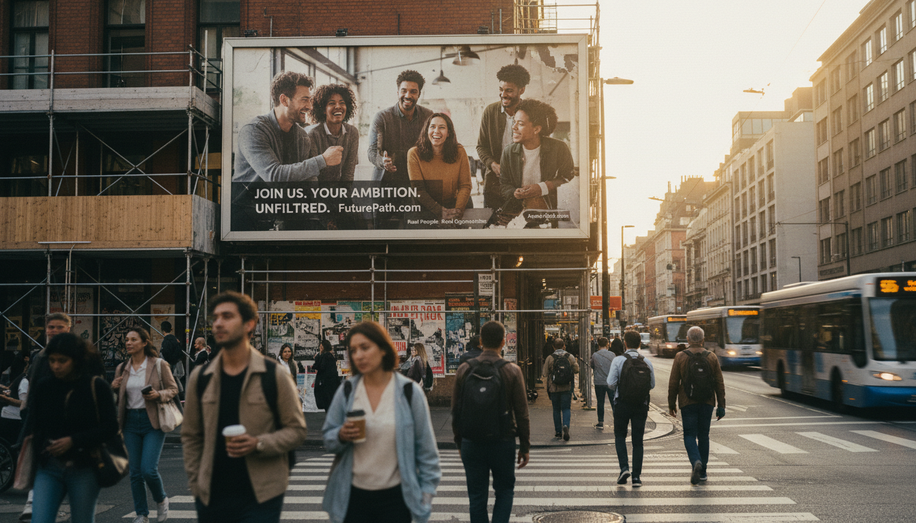

In the fiercely competitive talent market of 2026, where digital job boards overflow with listings and passive candidates scroll endlessly online, out-of-home (OOH) advertising is emerging as a bold, unmissable force for recruitment and employer branding. Companies like Amazon and Grainger have long harnessed billboards, transit ads, and digital out-of-home displays to cut through the noise, reaching job seekers during their daily commutes and routines when they’re most receptive. This analog approach doesn’t just fill vacancies; it paints a vivid picture of company culture, turning passersby into intrigued applicants eager to join a team that values innovation, community, and growth.
OOH’s power lies in its ubiquity and immediacy. Unlike fleeting online ads that compete for split-second attention, outdoor formats deliver messages 24/7, with high consumer recall rates—up to 86% according to industry data—surpassing radio, podcasts, and streaming TV. Picture a truck driver spotting a Grainger ad at a gas station, promising competitive pay and reliable routes, or a commuter on a subway platform glimpsing a poster’s bold visuals of collaborative office life. These encounters happen repeatedly, building familiarity and trust in the employer brand. Strategic placement amplifies this: billboards tower over highways for logistics roles, transit wraps target urban professionals, and posters in high-traffic pedestrian zones appeal to retail hopefuls.
Real-world campaigns underscore OOH’s recruitment prowess. Watco, a full-service supply chain firm, deployed billboards via Meadow Outdoor Advertising to staff critical positions, while Tillamook recruited dairy operation talent with eye-catching displays that reinforced their wholesome, community-rooted culture. Public sector success stories abound too. The Laramie County Sheriff’s Office in Wyoming lured Denver officers with billboards touting rural tranquility over urban chaos, sparking a surge in applications from law enforcement pros craving balance. Similarly, Plano, Texas, police used high-traffic billboards to highlight career stability and benefits, drawing diverse candidates in a tight labor market. These efforts prove OOH reaches beyond active job hunters, engaging passive talent who might ignore LinkedIn but can’t miss a massive, creative board.
Beyond reach, OOH excels at showcasing company values and culture in ways digital channels struggle to match. Concise, visually striking messages—think seven to ten punchy words paired with evocative imagery—convey inclusivity, adventure, or purpose in seconds. A tech firm might feature diverse teams brainstorming under a “Join Our Innovation Revolution” banner, QR code linking to a culture video. This not only drives applications but builds long-term employer branding, fostering loyalty among locals who see the company as a community pillar. In smaller cities, where online ads scatter broadly but imprecisely, OOH zeroes in: drivers’ ads at petrol stations, monthly billboards or bus leaflets for sustained visibility. Larger metros demand nuance—city-wide transit stickers for enduring exposure, ensuring job offers remain “unmissable.”
Cost-effectiveness seals the deal. OOH boasts the lowest cost per thousand impressions (CPMs) among traditional media, rivaling digital while delivering outsized impact. It supercharges other channels too, boosting online actions five times the expected rate by sparking curiosity that sends candidates to career sites. For budget-conscious recruiters, this means wider nets without wasteful spend, especially amid 2026’s talent wars where online hiring costs soar.
Yet success demands precision. Tailor formats to audiences: road-side billboards for blue-collar roles, digital OOH for tech-savvy millennials craving flexibility visuals. Craft calls-to-action that prompt immediate response—scannable QR codes, simple URLs, or phone numbers—turning impressions into applications. Partner with experts for data-driven placements, ensuring ads hit where targets live, work, and play.
As hybrid work blurs lines and Gen Z prioritizes purpose-driven employers, OOH stands resilient. It humanizes brands in a screen-saturated world, creating emotional connections that algorithms can’t replicate. Companies ignoring this medium risk fading into digital obscurity, while adopters like those seasonal Amazon rushes attract top talent effortlessly. In recruitment’s high-stakes arena, OOH isn’t just advertising—it’s a cultural beacon, drawing the best to your door.