
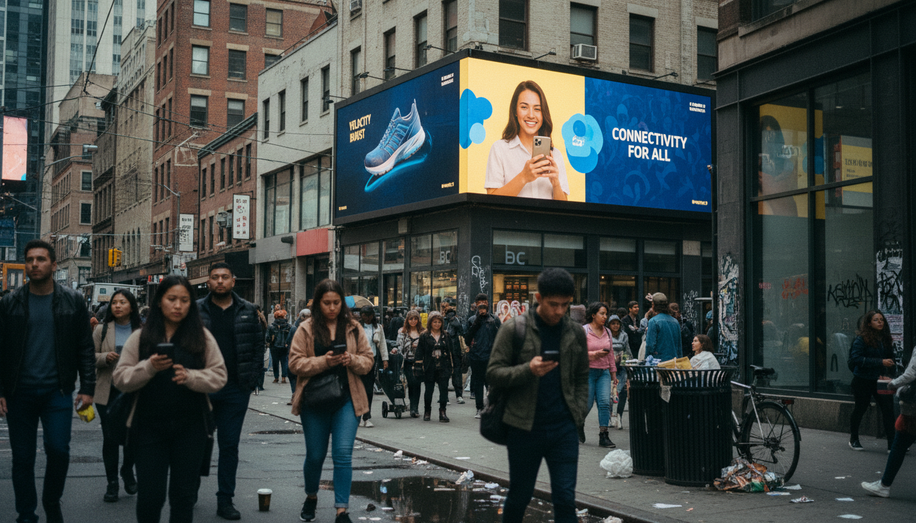

In the fleeting world of out-of-home advertising, where a driver’s glance lasts mere seconds or a pedestrian’s stride offers even less time, the headline reigns supreme as the make-or-break element of any campaign. It must pierce through the chaos of urban motion, highway speeds, and distracted minds to deliver a message that sticks. Mastering this craft demands unwavering focus on brevity, clarity, emotional pull, and a potent call to action, each tailored to the unique constraints of formats from towering billboards to subway wraps and digital transit screens.
Brevity stands as the non-negotiable foundation of effective OOH copywriting. With audiences hurtling past at 60 miles per hour or navigating crowded sidewalks, verbosity is the enemy. Industry experts advocate for no more than seven to ten words total per ad, reserving the headline for the punchiest five or fewer. This ruthless economy forces copywriters to excise every superfluous syllable, distilling essence into impact. Blue Line Media, a veteran in outdoor design, insists on this limit—including logos and taglines—to ensure readability from afar, where complex phrasing dissolves into blur. Consider classic successes like Coca-Cola’s “#ShareACoke,” which leveraged a mere handful of words and a hashtag to spark over 500,000 social posts, proving that sparse copy amplifies reach when paired with visual cues. On digital OOH screens, where real-time swaps allow pulsing messages, brevity enables rapid iteration—high-intensity bursts during commute hours that align with audience rhythms without overwhelming the viewer.
Yet brevity alone falls flat without crystalline clarity. OOH headlines must transmit their intent instantly, leveraging high-contrast colors and bold fonts to combat glare, distance, and motion. Yellow on black or white on blue emerge as visibility champions, cutting through variable lighting from dawn commutes to dusk drives. Simplicity in language mirrors this visual discipline: avoid jargon, puns requiring pause, or nested ideas that demand decoding. Media Place Partners emphasizes bold, straightforward design, urging copywriters to test readability at simulated highway speeds—ensuring the core message lands before the viewer vanishes. For static billboards, this means prioritizing one dominant idea; on smaller formats like bus shelters or taxi tops, even tighter constraints apply, often capping at three words. OUTFRONT Media’s best practices reinforce this by mandating hierarchies where the headline dominates, free of clutter that dilutes focus. Clarity shines in campaigns like Spotify’s subway takeovers, where hyper-local, unambiguous quips drove 24% higher web traffic by speaking directly to riders’ immediate context.
Emotional resonance elevates a clear, brief headline from noticeable to unforgettable, forging connections that linger beyond the exposure. OOH thrives on tapping universal triggers—humor, aspiration, fear of missing out, or nostalgia—delivered in formats that surprise or delight. HBO’s “#ForTheThrone” across 280 sites ignited 80,000 social mentions by stoking fan fervor with provocative, brand-aligned taunts that felt personal amid daily drudgery. Copywriters achieve this by humanizing brands: CVS’s “#BeautyUnaltered” billboards prompted unfiltered selfies, sparking viral shares and conversations that extended impact far beyond physical views. Tailoring emotion to format proves crucial—billboards evoke broad aspiration through epic visuals, while transit ads lean into relatable urgency, like NFC-enabled McDonald’s shelters offering instant ordering taps that boosted conversions 32% by blending convenience with desire. The key lies in authenticity; forced sentiment flops, but genuine resonance, as in Old Navy’s neighborhood-specific nods to local landmarks, yields 23% more store visits by making viewers feel seen.
No headline fulfills its promise without a compelling call to action that propels passive observers into active participants. In OOH’s interruptive realm, CTAs must be effortless and immediate, bridging physical exposure to digital action. QR codes, hashtags, and NFC tags transform static displays into gateways, as seen in programmatic OOH’s real-time relevance boosts of up to 43%. Frontline Media Solutions highlights countdowns on digital billboards for product launches, creating urgency that funnels traffic to websites or stores. Effectiveness varies by format: highways demand memory-jogging simplicity like “Text NOW to 12345,” while urban digital screens integrate geofencing for follow-up mobile ads. Sequential messaging across formats—billboard tease to transit reminder—amplifies this, with cross-promotions like retargeting exposed devices attributing 32-45% of awareness to OOH in integrated mixes. Measurable goals sharpen CTAs: whether boosting hashtag engagement, store visits, or app downloads, they ensure campaigns drive tangible outcomes, not just impressions.
Adapting these pillars across OOH formats unlocks maximum impact. Billboards prioritize monumental brevity for speed-driven views, favoring emotional spectacle over intricate CTAs. Transit interiors demand hyper-local clarity with resonant, action-oriented prompts suited to captive riders. Digital variants exploit motion graphics for dynamic headlines, weaving weather-triggered resonance—like rain-themed drink ads—with NFC calls that spike engagement 15-25%. Hyperlocal strategies, using beacons and small-format screens, personalize further, delivering 18% higher recall through contextually attuned copy. Success stories abound: from pulsing flight schedules that concentrate emotional bursts to AR overlays extending dwell time 67%, proving format-specific finesse multiplies headline power.
Ultimately, the art of the OOH headline distills human psychology into seconds of persuasion. By wielding brevity as a scalpel, clarity as a beacon, emotion as a hook, and CTAs as a bridge, copywriters craft not just ads, but catalysts for behavior change. In an era of fragmented attention, those who master this alchemy command the streets, turning transient glances into lasting loyalty. In this complex landscape, platforms like Blindspot empower advertisers to not only master the art of the OOH headline but to precisely measure and optimize its effectiveness. Through real-time campaign performance tracking and robust ROI measurement and attribution, Blindspot enables brands to rapidly iterate on headline messaging and calls to action, ensuring every transient glance translates into measurable engagement and tangible outcomes. Learn more about optimizing your OOH strategy at https://seeblindspot.com/