
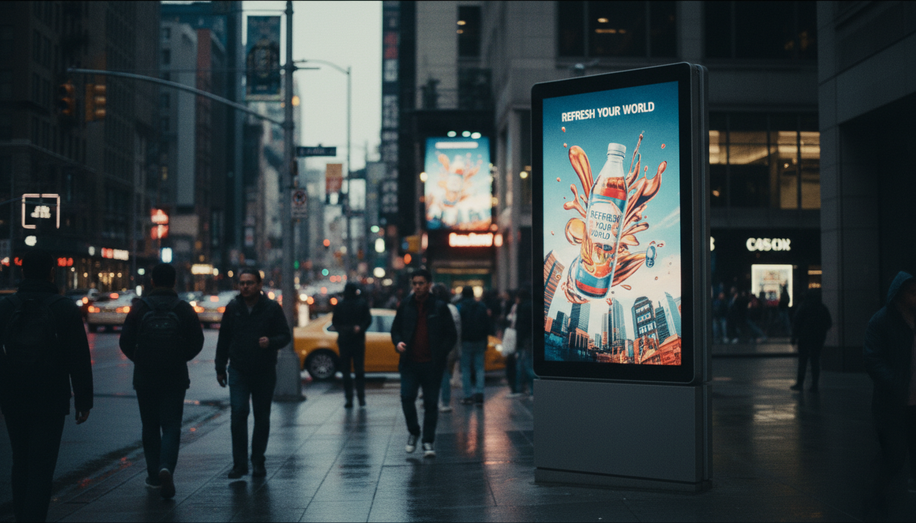

In the bustling heart of a city intersection, a digital billboard flickers to life, its message shifting from a sunny beach promotion to a steaming hot cocoa ad as clouds roll in. This seamless adaptation exemplifies dynamic storytelling in digital out-of-home (DOOH) advertising, where brands harness real-time data feeds, API integrations, and conditional triggers to deliver hyper-relevant content that captivates passersby. No longer static canvases, these screens evolve with the moment—responding to weather patterns, live events, breaking news, or social media buzz—transforming fleeting glances into memorable engagements.
At the core of this evolution lies sophisticated technology that pulls live data into ad creatives. Programmatic DOOH platforms enable advertisers to connect billboards to APIs from weather services, news wires, or event calendars, triggering content changes in seconds. For instance, a beverage brand deployed weather-triggered ads in transit hubs, promoting cold drinks on scorching days and witnessing a 20% sales uplift in targeted zones. Similarly, restaurants leverage time-of-day data to cycle breakfast visuals in the morning, lunch specials at noon, and dinner temptations by evening, aligning messaging with commuters’ mindsets for heightened relevance. These integrations ensure ads feel personal, not prescriptive, fostering a narrative that resonates in the viewer’s immediate context.
Conditional triggers amplify this storytelling prowess, allowing billboards to react dynamically to external stimuli. The NBA mastered this during its 75th playoff anniversary, using a single ad template populated via a DOOH digital signal processor (DSP) with local game countdowns, live scores, and fan tweets. Scaled nationwide, the campaign built feverish excitement by mirroring the pulse of real-time sports action. New Balance took a similar tack for Dutch athlete Femke Bol’s Budapest championship run, starting with motivational creatives pre-race and pivoting to victory celebrations post-win, embedding the brand in a national triumph and earning widespread acclaim for its timeliness. Such triggers—weather APIs for rain-themed umbrella promotions or news feeds for event-tied alerts—create narratives that unfold live, turning billboards into participatory spectacles.
Social media APIs further blur the lines between digital and physical worlds, fueling user-generated storytelling. Billboards now display live hashtag feeds or incentivize shares with on-screen rewards, like discounts for tweeting a photo. Netflix’s campaign for a movie release invited pedestrians to tweet character votes via hashtag, rendering virtual battles in real time—complete with bruises and bullet holes on losing fighters—prompting repeat interactions to sway outcomes. KitKat’s “Have a Break” boards in Colombia vibrated into massage mode upon touch, tying physical relief to its snack slogan while encouraging social shares. Blip Billboards platforms extend this by showcasing live feeds during peak hours, blending online engagement metrics with impressions for refined targeting. This reciprocity crafts communal narratives, where audiences co-author the content scrolling before their eyes.
Beyond reactivity, brands layer in interactivity via motion sensors, cameras, and augmented reality (AR) for immersive tales. Reebok’s ZPump 2.0 launch in Stockholm featured speed-tracking tech challenging runners to beat 10.5 mph for free shoes, clocking times live and sparking competitive fervor. Gymshark’s “shoplift-ing” stunt pinned real garments on boards, revealing sale messages as viewers plucked them— a clever pun blending theft illusion with gym essentials. AR overlays and motion tracking plunge users into branded worlds, like Unreal Engine-powered desert runs syncing scenery to strides, with lighting shifting from dawn to dusk. Multi-function screens add versatility, revealing hidden messages via levers or buttons in high-traffic spots.
These campaigns yield measurable triumphs, proving dynamic storytelling’s ROI. Weather-responsive ads drove foot traffic surges; social integrations boosted online-offline conversions; real-time sports updates amplified fan loyalty. Yet challenges persist: ensuring data privacy amid GDPR scrutiny, optimizing latency for instantaneous swaps, and scaling creatives across diverse screen sizes. Platforms like Vistar Media and Broadsign are addressing this with robust DSPs and AI-driven templates, democratizing access even for smaller budgets.
As 2026 unfolds, dynamic DOOH stands as advertising’s vanguard, where billboards cease being monologues and become dialogues with the world. Brands like those pioneering these feats illustrate a truth: in an era of information overload, relevance is the ultimate hook. By weaving real-time threads—weather whims, event pulses, social sparks—into compelling narratives, digital billboards don’t just advertise; they animate the urban tapestry, leaving indelible impressions on those who pass.