
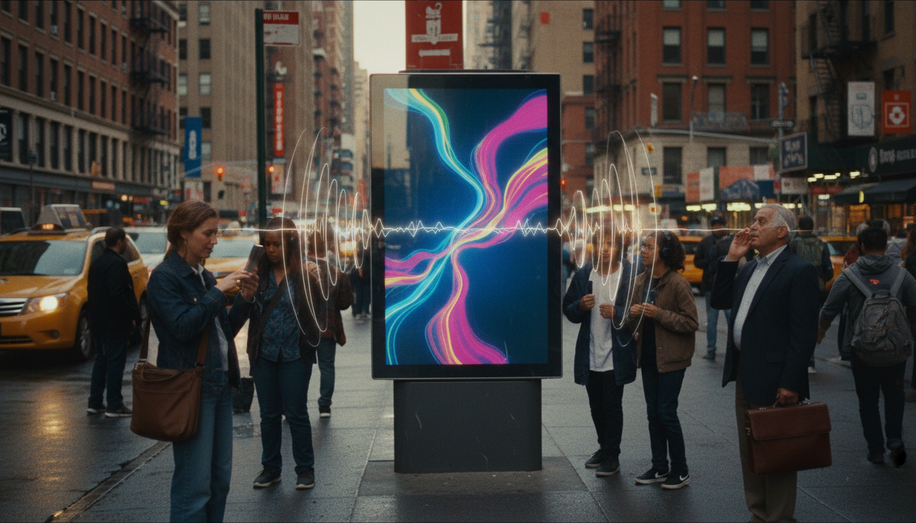

The out-of-home advertising landscape is undergoing a sonic revolution. For decades, billboards and transit ads have relied exclusively on visual communication, but forward-thinking brands are now recognizing that sound and audio elements can transform static displays into immersive, multi-sensory experiences that capture attention and drive measurable results.
The synergy between visual and audio messaging creates a powerful effect that neither medium can achieve alone. When consumers encounter outdoor advertising while listening to radio, the combination reinforces brand messaging through dual sensory engagement. Radio ads expand on visual messages through sound, adding emotional depth and context that a fifteen- or thirty-second audio spot can deliver while listeners drive past outdoor displays during their commute—often the same journey that includes shopping trips. This timing advantage is crucial; radio and outdoor ads reach consumers at a critical moment, just before they make purchase decisions.
The “theater of the mind” principle, long established in radio advertising, is now being applied directly to outdoor spaces. When audio elements reference visuals consumers have already seen in public spaces, sound helps them recreate those images in their minds, sparking imagination and deepening emotional connections. The North Face demonstrated this principle in their audio advertising campaign, “Never Stop Exploring,” which used 3D audio technology to immerse listeners in a soundscape mimicking outdoor environments. Rather than simply describing the product, the audio crafted vivid imagery—the crunch of snow underfoot, rustling leaves, whispers of wind—allowing listeners to paint personalized visual scenes and forge deeper emotional bonds with the brand.
Technology is enabling increasingly sophisticated audio integration. The simplest approach involves setting up speakers at outdoor locations, but brands are experimenting with more advanced solutions. Directional audio technology, which uses ultrasound to create a focused beam of sound, represents a breakthrough in targeted messaging. Ogilvy and All Good Fair-Trade Bananas deployed Audio Spotlight directional speakers in New Zealand supermarkets, positioning the audio to reach only customers standing directly in front of the banana display. The audio mimicked an internal voice of conscience, delivering a personalized message that felt like a private conversation. The result was remarkable: a sales increase exceeding 130 percent during the campaign.
Other innovations showcase the creative potential of audio-integrated outdoor advertising. Nike’s “Talking Billboards” in New York combined dynamic voiceovers with synchronized digital visuals, generating over 1.2 million social media impressions. When Lyft celebrated a major music festival weekend in 2017, the brand surprised New York pedestrians with an orchestrated performance using car alarm sounds layered into Despacito, one of that year’s most popular songs. These campaigns demonstrate that audio in outdoor spaces need not be informational—it can be entertainment, creating memorable moments that audiences willingly engage with and share.
Sonic branding has emerged as another crucial dimension of audio-integrated OOH campaigns. Audi’s 2025 “Engine Symphony” campaign translated the acoustic signatures of its RS models into sheet music, then displayed those musical notations across outdoor sites worldwide. The campaign reframed engine sound not as raw power but as aesthetic expression, and paired this with films showing composers at work. By positioning sound as an essential component of the driving experience, Audi elevated the entire brand perception through audio integration.
The strategic placement of these audio experiences matters significantly. Interactive digital screens in transit hubs have proven particularly effective. JCDecaux’s “OUIbot” virtual ticketing assistant, deployed in Paris train stations in 2019, engaged over 100,000 passengers through personalized voice interactions combined with on-screen visuals. Similarly, a Swiss tourism campaign for Graubünden featured an interactive digital screen at Zurich Central Station where a virtual mountain resident invited passersby to yodel for a chance to win vacation packages—the audio element of actual yodeling was what truly captured attention and drove participation.
As OOH advertising continues evolving, the integration of audio is proving to be far more than a novelty. By engaging sight and hearing simultaneously, audio-enhanced outdoor campaigns create richer, more memorable brand experiences that penetrate consumer consciousness more effectively than visual elements alone. For advertisers willing to embrace this multisensory approach, the potential to stand out in an increasingly crowded advertising landscape has never been greater.