
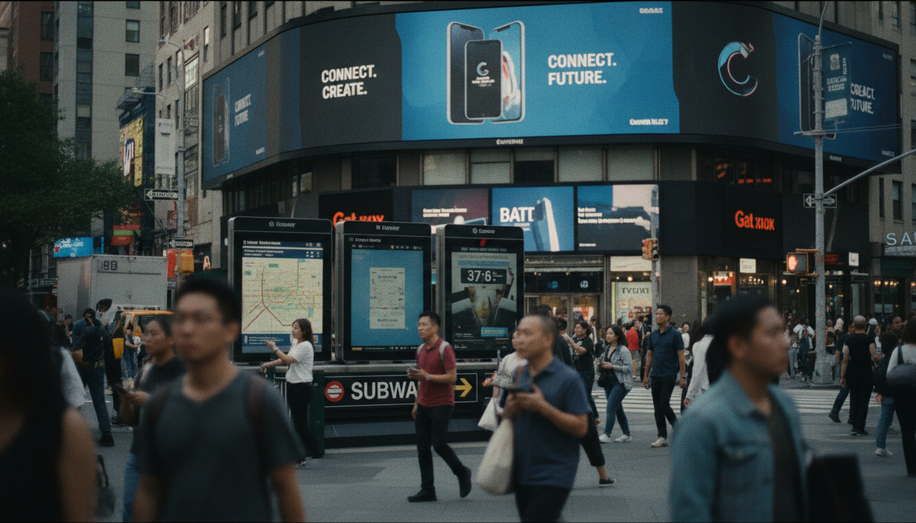

In the labyrinth of modern cities, where towering skyscrapers and winding streets conspire to disorient even the most seasoned locals, out-of-home (OOH) advertising quietly serves as an unsung navigator. Far beyond its commercial flair, OOH transforms urban chaos into coherent pathways, embedding directional cues, traffic guidance, and vital public information into the physical fabric of daily life. Billboards, street panels, transit wraps, and digital signage do more than hawk products; they anchor wayfinding systems that help millions traverse bustling metropolises with intuitive ease.
Consider the commuter dashing through a rain-slicked intersection or the tourist peering at a subway map. Here, urban panels and street furniture ads—positioned at eye level in high-traffic zones—deliver not just brand messages but essential orientation. These displays, often integrated into bus shelters, kiosks, and lampposts, provide clear arrows, distance markers, and route summaries that guide pedestrians from point A to B without the need for a smartphone. In cities like New York or London, where foot traffic surges through crowded sidewalks, such OOH elements reinforce official signage, creating a layered network of visual prompts that reduce confusion and enhance safety. Research underscores their high-frequency exposure: positioned where people pause, slow down, or gather, these panels build familiarity through repetition, turning fleeting glances into ingrained mental maps.
Transit advertising elevates this role further, turning vehicles into mobile beacons amid the flow of urban movement. Buses and trains, wrapped in bold graphics, not only advertise but direct traffic and inform riders. A brightly lit bus shelter display might alert waiting passengers to the next arrival, detours due to construction, or even emergency road closures, blending public service with visibility. This extended exposure—unlike skippable digital ads—ensures messages linger, as vehicles traverse neighborhoods, highways, and prime routes, reaching diverse demographics from early-morning commuters to late-night revelers. In high-traffic corridors, such as those in Idaho or North Carolina’s main roads, transit OOH provides geographically targeted guidance, tailoring alerts to local conditions like weather-triggered reroutes or event-specific directions.
Digital out-of-home (DOOH) signage takes urban navigation into the future, leveraging dynamic capabilities to deliver real-time public information. Screens in shopping districts, major intersections, and city centers flash animated maps, live traffic updates, and transit schedules, adapting content multiple times a day without added cost. Imagine a digital billboard at a busy highway junction switching from promotional visuals to amber alerts or evacuation routes during crises—these displays ensure maximum exposure in areas teeming with pedestrians, motorists, and tourists. Their vibrant, high-definition graphics cut through urban visual noise, boosting recall while serving as impromptu information hubs. Smart city kiosks, a rising OOH variant, exemplify this evolution: touch-enabled stations offer interactive navigation, event calendars, and even charging ports, seamlessly fusing utility with subtle advertising to foster engagement and revenue.
This public service dimension of OOH extends to traffic management, where large-format billboards and wallscapes command attention from afar. Strategically placed along highways and arterial roads, they warn of congestion, construction zones, or speed traps, creating an unavoidable presence that drivers cannot ignore or block. Unlike digital clutter, OOH’s physicality thrives in alert states—commutes, shopping runs, leisure strolls—delivering cumulative impact through repeated views. Contextual relevance amplifies its effectiveness: a winter commute billboard promoting warm beverages might double as a reminder of icy roads, making information feel intuitive rather than intrusive.
Yet, OOH’s navigational prowess shines brightest in its inclusivity. It reaches audiences overlooked by digital channels—those without smartphones, the elderly, or visitors navigating unfamiliar turf—via unskippable, 24/7 messaging in high-visibility spots. Street-level displays enable detailed, sequential storytelling: one panel at a subway exit points to nearby landmarks, the next advertises a café while noting pedestrian crossings. This builds “brand architecture” in physical space, but for public good, it constructs cognitive frameworks that make cities more livable.
Critics might dismiss OOH as mere commercial sprawl, but evidence paints a fuller picture: its placement in diverse, high-traffic areas generates local awareness, reinforces safety, and democratizes information access. As urban populations swell—projected to hit 68% globally by 2050—OOH’s role in intuitive wayfinding will only grow, powered by tech like data-driven targeting and weather-responsive DOOH. From directing a lost family to a park or guiding rush-hour traffic around accidents, OOH proves indispensable, weaving public utility into the urban tapestry.
In essence, OOH is the city’s silent conductor, harmonizing movement and information amid the hustle. By prioritizing strategic high-traffic placements, it not only enhances navigation but elevates urban life, proving that advertising, at its best, guides as much as it sells.