
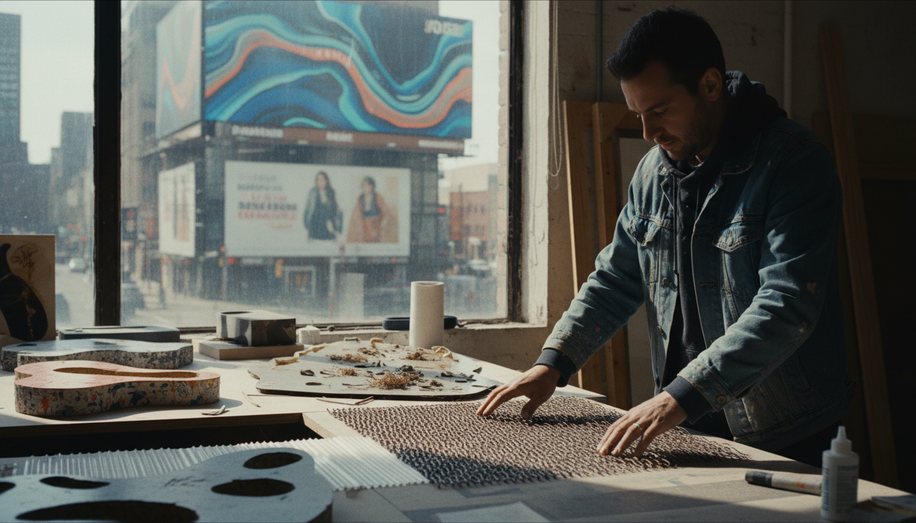

In the bustling streets of urban centers, where eyes dart between smartphones and horizons, out-of-home (OOH) advertising is shedding its flat, predictable skin. Creative teams are pioneering campaigns that transcend paper posters and glowing digital screens, weaving in tactile materials, organic textures, and multisensory surprises to forge unforgettable encounters. This evolution signals a seismic shift: OOH is no longer just seen—it’s touched, smelled, and even grown, captivating passersby in ways that static displays never could.
Consider the rise of guerrilla and ambient tactics, where everyday surfaces become canvases for innovation. Sidewalk chalk art that morphs with rain into scented messages, building projections that cast shimmering illusions onto wet pavement, or pop-up installations crafted from reclaimed urban debris—these interventions hijack public spaces with raw, material-driven energy. A campaign in a high-traffic district might deploy biodegradable vinyl wraps mimicking cracked earth, textured to evoke drought-stricken landscapes for a water conservation drive. As pedestrians brush past, the gritty surface invites interaction, turning passive viewers into participants whose fingers carry faint traces of chalk dust or earthy residue long after.
Sustainability demands have accelerated this material renaissance, with eco-conscious brands championing “living” elements that breathe life into OOH. Plant-based billboards, alive with moss and vines nurtured by embedded irrigation, not only advertise green products but embody them, their verdant textures shifting with sunlight and seasons. Recycled paper infused with wildflower seeds offers a twist: audiences are encouraged to tear off pieces, plant them at home, and watch ads bloom into gardens. Water-based inks on fabric banners release subtle herbal aromas when warmed by the sun, blending scent with sight to amplify recall. These choices align with consumer preferences—72% of Americans now pay premiums for sustainable goods—while slashing environmental footprints through compostable composites and solar-powered mechanisms.
Three-dimensional and immersive formats push further, transforming billboards into sculptural spectacles. Oversized, hyper-realistic installations protrude from frames, employing foam composites, mirrored acrylics, and fiber optics to create depth and motion. One viral execution featured a beverage brand’s bottle “erupting” from a hoarding, with cascading water features made from recycled glass beads that mimicked fizzy overflow, complete with a misty vapor for olfactory punch. Tactile invitations abound: rough-hewn wooden planks for artisanal beer promotions, soft fur-like synthetics draping transit wraps to evoke luxury coats, or metallic meshes that chime softly in the breeze. Such sensory layering—visual punch paired with touch and sound—boosts engagement, as bold textures stand out amid urban clutter and spark social sharing.
Mobile billboards amplify these innovations, ferrying material marvels through dynamic paths. Trucks clad in modular panels of interchangeable fabrics—velvet for evening glamour, rugged canvas by day—target events with precision. Energy-efficient LED underlays power subtle animations, while sustainable facings like hemp weaves reduce impact without sacrificing durability. In transit hubs, street furniture ads experiment with embedded kinetic elements: benches upholstered in memory foam that “remembers” imprints, or lampposts wrapped in thermochromic films changing color with body heat. These hyperlocal activations, informed by sensors and AI, tailor materials to context—fluffy snow textures in winter, cooling gels in summer heat—ensuring relevance that digital alone can’t match.
Yet this boundary-pushing demands strategic finesse. Creatives prioritize simplicity: one dominant idea, rendered through high-contrast materials that register in seconds amid motion. Integration with digital ecosystems multiplies impact; QR codes etched into textured surfaces trigger augmented reality overlays, blending physical heft with virtual depth. Measurement tools now track dwell time via facial recognition, proving how a scented, interactive wrap lifts branded searches by double digits.
Challenges persist—higher upfront costs for custom materials, regulatory hurdles for ambitious installs—but the payoff is clear. In 2026, OOH spend climbs as brands chase the authenticity of tangible experiences. Guerrilla planters sprouting in parking lots, fabric billboards rippling like sails, or aroma-diffusing kiosks: these aren’t gimmicks; they’re the new grammar of persuasion. By marrying innovation with sensory immersion, OOH proves that the most compelling ads don’t just interrupt—they inhabit the world, leaving marks on skin, memory, and culture alike.
However, realizing the full potential of these intricate, multi-sensory OOH campaigns requires sophisticated insights to justify investment and optimize impact. Blindspot empowers brands to overcome these challenges through precise **audience measurement and analytics** for interactive installations, paired with **location intelligence** to strategically deploy materials for maximum engagement. By delivering comprehensive **ROI measurement and attribution**, Blindspot transforms creative ambition into measurable business success, ensuring every texture, scent, and living element delivers demonstrable value in this evolving OOH landscape. https://seeblindspot.com/