
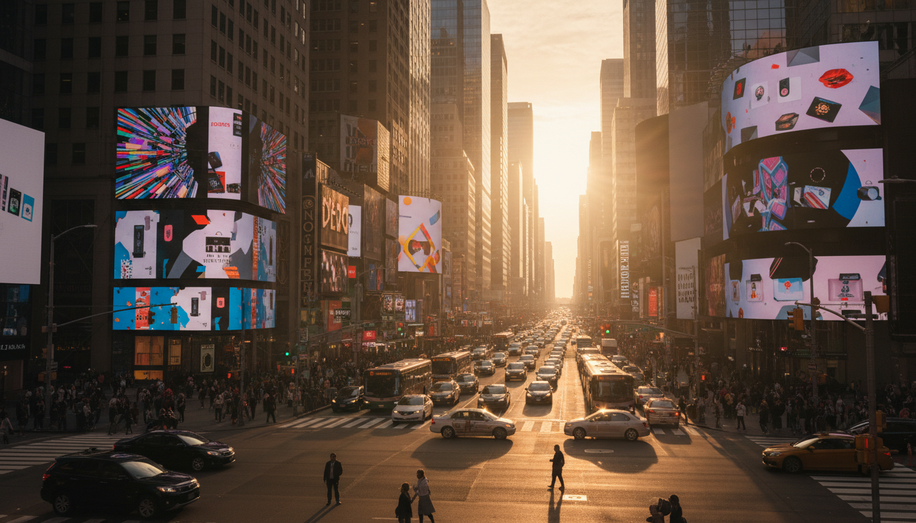

In the bustling streets of modern cities, where digital billboards flicker to life and transit screens capture fleeting glances, programmatic digital out-of-home (DOOH) advertising has emerged as a transformative force, automating the once cumbersome process of media buying and enabling real-time campaign tweaks that drive unprecedented efficiency. This technology shifts advertisers from static, manual negotiations—locking in fixed placements weeks in advance—to a dynamic ecosystem where ads are bought, sold, and delivered automatically, powered by data and algorithms that mirror the precision of online programmatic platforms. At its core, programmatic DOOH leverages demand-side platforms (DSPs) and data management platforms (DMPs) to connect buyers with inventory across thousands of screens, from urban panels and grocery stores to gyms and doctors’ offices, ensuring impressions land precisely when and where audiences are present.
The mechanics begin with planning: advertisers define their audience using real-world signals like movement patterns, points of interest, or behavioral data from mobile location histories and psychographic profiles. Platforms such as Hivestack DSP offer pre-built segments—new parents, movie lovers, pet owners—ready for instant activation, while geofencing tools allow targeting around specific retail spots or events by detecting concentrations of mobile devices. Once parameters are set, the DSP enters real-time bidding (RTB) auctions, where available ad slots on DOOH networks are auctioned in milliseconds to competing buyers. The highest bid wins, factoring in audience match, location value, and campaign goals, with transactions completing instantaneously to serve the ad without human intervention. This open RTB model eliminates the need for dozens of requests for proposals (RFPs) across multiple publishers, streamlining access to diverse inventory from a single interface.
What sets programmatic DOOH apart is its agility in execution and optimization. Unlike traditional direct buys, which demand long lead times and fixed commitments for premium placements, programmatic enables launching, pausing, or adjusting campaigns on the fly—no more waiting for manual approvals or enduring locked-in spends. Advertisers can trigger ads based on contextual triggers: show a raincoat promotion during wet weather, target gym-goers at fitness centers, or swap creatives by time of day as audiences shift from transit hubs to retail zones. Dynamic content adapts seamlessly; existing HTML5 videos or interactive formats from online campaigns repurpose effortlessly for DOOH screens, maintaining brand consistency across channels. Visual sensors from providers like Quividi further enhance this by capturing anonymized metrics—demographics, dwell times, engagement levels—feeding AI-driven insights for even sharper personalization.
Real-time analytics supercharge this loop, delivering metrics like reach, frequency, foot-traffic lift, and brand recall that traditional OOH lacks. Advertisers monitor performance instantly, reallocating budgets to high-value impressions and refining targeting mid-campaign, which minimizes waste and maximizes return on investment. Costs often prove favorable compared to manual methods, as precise allocation ensures payment only for engaged audiences, opening the door for smaller brands without massive upfront investments. While direct buys retain advantages in guaranteed share of voice (SOV) and custom creatives, programmatic excels in data-driven flexibility, complementing digital strategies with speed and scalability.
Efficiency extends to multi-network management: one platform oversees billboards across cities or countries, automating resource optimization and scaling effortlessly to campaign demands. This centralized control contrasts sharply with traditional workflows’ manual scheduling, fostering synergy with online and mobile efforts for omnichannel reinforcement—imagine a DOOH ad near a store driving immediate app downloads, tracked through unified reporting. AI integration analyzes consumer patterns in depth, predicting behaviors and automating adjustments, while partial SOV targets only relevant viewers, not “everyone” passing by.
Challenges persist, such as ensuring data privacy amid sensor use and navigating pricing variability—programmatic isn’t always cheaper, depending on commitments and premium access. Yet, as DOOH networks expand, programmatic’s momentum builds, with platforms backed by dedicated teams ensuring alignment with advertiser goals. For brands, it means media that moves with consumers: precision at scale, smarter spends, and campaigns that evolve in real time. In an era demanding agility, programmatic DOOH isn’t just automating buying—it’s redefining how outdoor advertising captures attention, drives action, and delivers measurable impact across the physical world.