
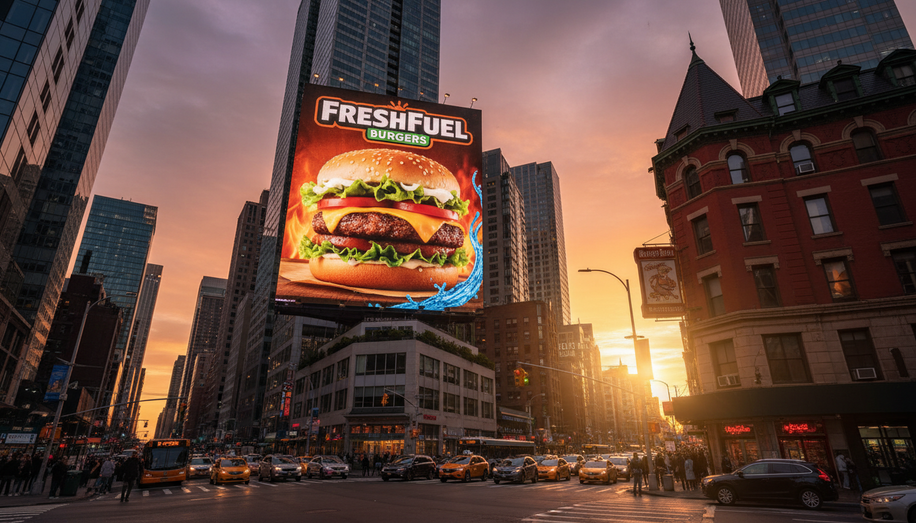

In the competitive landscape of local retail, businesses are increasingly turning to out-of-home (OOH) advertising paired with geofencing to intercept consumers heading to rivals’ doorsteps. This strategy involves strategically placing billboards, digital displays, or transit ads near competitors’ locations, then using geofencing technology to trigger personalized mobile notifications that redirect traffic in real time. By creating virtual boundaries around a competitor’s storefront or high-traffic zone, advertisers can capture mobile device data from passersby and serve tailored digital ads urging them to choose an alternative—transforming potential lost sales into immediate opportunities.
Geofencing works by leveraging GPS, Wi-Fi, or RFID signals to define precise virtual perimeters, often as small as a single store or as broad as a shopping district. When a consumer’s smartphone enters the geofence—say, within 500 feet of a rival coffee shop—a brand’s ad platform detects it and pushes a coupon, directional map, or comparative offer via app notifications, display ads, or connected TV spots. This hyper-local approach addresses OOH’s historical weakness: lack of measurability. Traditional billboards reach broad audiences but offer little insight into conversions; geofencing bridges that gap by tracking device movements post-exposure, revealing lifts in foot traffic to the advertiser’s location.
Consider a gym chain eyeing a competitor’s fitness center in a bustling urban neighborhood. The advertiser secures a prominent digital billboard on the main approach road, visible to drivers and pedestrians en route. A geofence is drawn around the rival’s parking lot and entrance, calibrated to capture vehicles slowing for turns or foot traffic within optimal viewing distance. As devices enter, the system serves a mobile ad: “Better rates than next door—10% off your first month, just 0.2 miles away!” with a map pin and one-tap directions. Data from similar campaigns shows engagement rates soaring, with retargeted users 2-3 times more likely to visit the sponsored venue.
This tactic shines in sectors like quick-service restaurants, where impulse decisions dominate. A burger joint might place OOH near a fast-food rival’s drive-thru, geofencing the queue area to hit drivers idling with offers like “Skip the line—fresher burgers 1 minute away.” Restaurants have reported 20-30% spikes in nearby visits during peak hours from such integrations, as geofencing data correlates OOH impressions with real-world redirections. Retailers in apparel or electronics apply it similarly: electronics stores geofence big-box competitors during sales events, pushing “Match any price + free setup” messages to shoppers browsing aisles.
Setting up these campaigns requires careful planning. Advertisers first map competitor locations using location intelligence tools to identify high-traffic approach paths—major roads, transit stops, or pedestrian corridors. OOH placements are then secured nearby, prioritizing visibility and dwell time, such as elevated billboards for commuters or street-level digital screens for walkers. Geofence boundaries are optimized: too broad risks irrelevant triggers, while overly tight ones miss peripheral traffic; experts recommend polygons over circles for irregular sites like strip malls. Integration with programmatic platforms enables seamless ad delivery, with real-time tweaks based on entry/exit patterns, weather, or events.
Privacy and accuracy are paramount. Regulations like GDPR and CCPA demand opt-in location services, so campaigns rely on aggregated, anonymized data from apps and carriers. Accuracy hovers at 90-95% in urban Wi-Fi dense areas, dipping in rural GPS-only zones, but advancements in beacon tech are closing gaps. Measurement comes via foot traffic analytics: pre- and post-campaign visits to advertiser vs. competitor sites, promo code redemptions, and return on ad spend (ROAS). One bakery chain, for instance, geofenced a rival’s zone around a billboard, mailed flyers within it, and tracked a 15% traffic surge via mobile pings—proving the offline-digital synergy.
Beyond direct competition, geofencing elevates OOH by enabling sequential storytelling. A consumer spots a billboard near a competitor, ignores it initially, but later—while still local—receives a retargeted ad reinforcing the message. This builds familiarity into action, especially for e-commerce hybrids blending physical stores with online fulfillment. Adaptive features allow time-of-day adjustments: morning coffee lures near office towers, evening deals near bars.
Challenges persist. High setup costs for premium OOH spots and geofencing tech demand scale—best for chains with multiple locations. Over-saturation risks ad fatigue, so frequency caps and creative rotation are essential. Yet, as mobile penetration nears 100%, the ROI justifies it: studies show geofenced OOH yields 4-6x higher conversions than standalone digital or static ads.
Forward-thinking agencies now combine this with AI-driven audience segmentation, profiling devices by visit history to rivals for ultra-relevant pitches. Picture pharmacies geofencing hospitals, offering “Flu shots without the wait” to exhausted visitors. Or auto dealers near rental lots, targeting with “Trade up today—test drives nearby.” These strategies redefine local dominance, turning competitors’ foot traffic into your gain.
As urban density grows and consumer mobility surges, geofencing-equipped OOH isn’t just redirection—it’s preemption. Businesses ignoring it risk watching rivals siphon their audience, one geofenced ping at a time.