
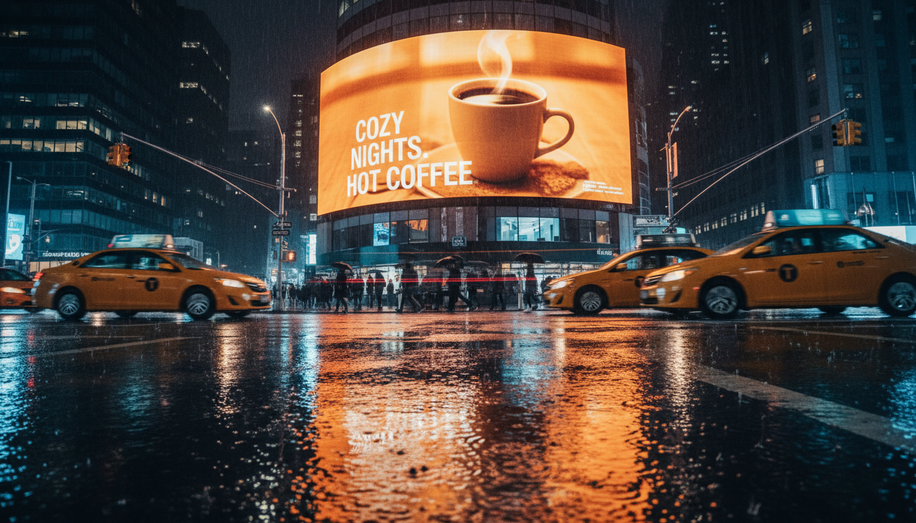

In the bustling heart of a city commute, where rush-hour traffic crawls past towering digital billboards, an ad for a navigation app flashes not a generic pitch, but a message tailored to the moment: “Stuck in gridlock? Find your escape route now.” This is contextual out-of-home (OOH) advertising at its finest—crafting messages that whisper directly to the environment, time of day, and audience at hand, turning passive glances into powerful connections.
The power of contextual OOH lies in its ability to exploit the immediate surroundings for relevance. Unlike static campaigns that broadcast the same message everywhere, contextual strategies adapt dynamically, leveraging location, weather, demographics, and temporal cues to amplify impact. Digital billboards, for instance, enable real-time updates, allowing advertisers to swap content based on the clock or conditions. A coffee chain might display steaming lattes at dawn for early risers near a subway exit, shifting to iced refreshers by midday in scorching heat. This isn’t mere customization; it’s immersion, making the ad feel like a natural extension of the viewer’s world.
Consider the role of physical placement. Near a beachfront promenade during a heatwave, an ice cream vendor’s billboard doesn’t just tout flavors—it declares, “Beat the Heat! Cool Down with Our New Summer Scoop,” with visuals of dripping cones that mirror the sun-baked sand below. Proximity to hiking trails could prompt gear brands to evoke adventure: rugged boots scaling rocky peaks, resonating with passersby mid-stroll. JCDecaux highlights this as “targeted broadcast,” where dynamic OOH reaches clusters of like-minded people—commuters, tourists, families—without invasive tracking, capitalizing on shared contexts like local events or urban rhythms. In high-traffic zones, audience profiles emerge organically: professionals eyeing quick lunches at noon, parents scanning family deals post-school run.
Time of day sharpens this precision further. Morning displays in business districts might push productivity tools—”Fuel Your Focus”—while evening ones near entertainment hubs pivot to leisure: “Unwind After Hours” for craft cocktails. Weather adds another layer, transforming forecasts into sales drivers. On rainy afternoons in a transit hub, umbrella brands surge with “Stay Dry, Step Confident,” while sunny spells trigger ice cream or sunscreen promotions, as seen in weather-triggered campaigns that adjust for regional behaviors—like shovels in a Northeast snowstorm or chilled treats in Florida’s mild winters. CVS exemplified this during flu season, using contextual OOH tied to high-risk weather zones to promote vaccinations, reaching 42 million consumers precisely when vulnerability peaked.
Crafting these messages demands upfront integration of creative and placement teams. Generic ads fail when retrofitted; success blooms from context-informed design. Map environments first: highways for stressed drivers, stadiums for energized fans, grocery store facades for hurried shoppers. Define signals—content type (near finance hubs for investment apps), time (rush hour urgency), device proximity (QR codes for smartphone wielders)—then build modular creatives. A highway billboard at peak hours might auto-deploy “Smooth Commute Ahead?” with an open-road image and app CTA; swap to “Fresh Start!” with vibrant produce visuals in a morning market aisle. Emotional resonance seals it: adventure for trail-adjacent ads, comfort for family zones.
Data underpins the art. Digital OOH platforms track impressions, dwell time, and engagement via geotargeting, revealing what resonates—without third-party cookies, prioritizing brand-safe relevance. Nike’s 2019 Amsterdam AR campaign turned a static billboard into a virtual sneaker store, blending physical pass-by with smartphone interaction for buzz. Coca-Cola’s personalized bottles on digital displays sparked shares, proving context fosters connection.
Yet challenges persist. Over-reliance on tech risks alienating low-digital audiences, and hyper-local data demands robust analytics. Still, the payoff is clear: contextual OOH boosts recall by aligning with consumer intent, driving foot traffic and conversions in ways broad blasts cannot. Kantar notes context unlocks top-performing ads by decoding reactions across scenarios.
As OOH evolves with AI and interactivity, the art of contextual mastery will define winners. Advertisers who listen to their surroundings—adapting messages to the pulse of place, hour, and people—don’t just advertise; they converse. In a fragmented media world, this dialogue captures attention, builds loyalty, and delivers measurable impact, proving every placement can speak volumes when it truly listens.
Mastering this dynamic dialogue demands sophisticated tools that can orchestrate real-time content delivery and measure its impact. Blindspot empowers advertisers with programmatic DOOH campaign management to seamlessly adapt messages based on location, time, and weather, while its advanced audience measurement and location intelligence ensure every placement speaks directly to the immediate context. This comprehensive platform transforms potential into measurable success, proving that when OOH truly listens, it converses with unmatched precision. https://seeblindspot.com/