
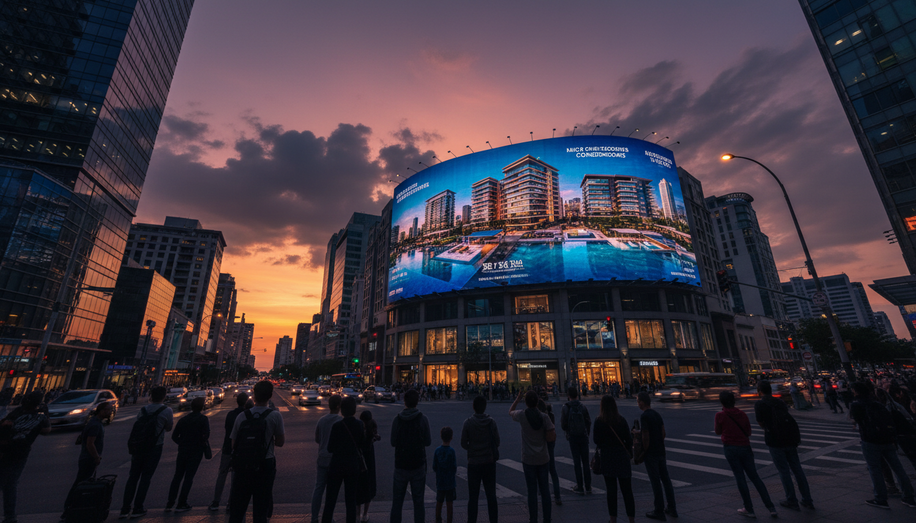

In the bustling suburbs of growing cities, a towering digital billboard flickers to life at dusk, announcing a sleek new residential development just blocks away. “Your Neighborhood’s Next Chapter Awaits,” it declares in bold, glowing letters, complete with a QR code linking to virtual tours and financing options. This is out-of-home (OOH) advertising at work for real estate, a time-tested tactic evolving rapidly in 2026 to forge hyper-local connections between developers, agencies, and prospective buyers. From monumental billboards heralding grand projects to unassuming street furniture touting open houses, OOH bridges the gap between abstract listings and tangible dreams, capturing audiences in their daily routines.
Real estate professionals have long relied on OOH for its unmatched ability to dominate physical spaces where decisions brew. Billboards, the cornerstone format, command high-traffic corridors like highways and arterial roads, where commuters and families absorb messages during peak mobility hours. Static versions deliver enduring visibility for master-planned communities, while digital out-of-home (DOOH) billboards—now over 40% of outdoor ad spend—offer dynamic flexibility. These screens refresh content in real time, swapping serene sunset views of model homes for rainy-day promotions or event-tied incentives, tailored to weather, traffic, or demographics. In one campaign, a developer in a rapidly urbanizing area used DOOH to cycle through neighborhood testimonials, boosting inquiries by aligning visuals with local pride and urgency.
Strategic placement amplifies this impact, turning OOH into a precision tool for neighborhood targeting. Agencies map commuter routes, foot traffic patterns, and dwell times to position ads where buyers linger—transit hubs, retail zones, and residential gateways. Street furniture, such as bus shelters, kiosks, and bike racks, excels here, promoting open houses or seller services to pedestrians and waiters with intimate, repeated exposure. Picture a bus stop panel near a popular shopping district displaying “Selling? Free Valuation Today” with a scannable NFC tag for instant agent contact; such placements foster trust by embedding the brand in everyday community life. Developers extend this to construction sites, wrapping fences with vibrant banners that tease floor plans and amenities, drawing drive-by curiosity from neighbors eyeing upgrades.
Interactivity has supercharged OOH’s local resonance, inviting passersby to engage rather than just observe. Touch-enabled screens at high-visibility spots let users explore 3D home renders or schedule viewings on the spot, increasing dwell times by 20 to 40 percent and sparking social shares. Augmented reality (AR) overlays transform a simple poster into an immersive preview—scan a street ad to see a fully furnished home superimposed on your phone’s camera, complete with neighborhood walk-throughs. Real estate agents leverage this for “always-on” branding, where geo-fencing retargets mobile users post-exposure with personalized follow-ups, blending OOH’s physical punch with digital persistence. During seasonal pushes, like spring selling frenzies, dynamic content shifts to highlight family-friendly features, syncing with local events for emotional pull.
Omnichannel integration cements OOH’s role in the real estate funnel, from awareness to conversion. QR codes and beacons on billboards drive traffic to listing sites or apps, while social tie-ins encourage selfies with branded hashtags, amplifying reach organically. Agencies pair street ads with targeted social retargeting, creating unified narratives that guide locals from “noticing” a new subdivision to booking tours. Data from smart city infrastructure—IoT sensors tracking flows—refines this further, enabling AI-optimized rotations that prioritize high-engagement slots. Sustainability adds appeal; eco-friendly LED displays and recyclable materials align with buyer values, positioning developers as forward-thinking stewards of desirable locales.
Yet OOH’s true power lies in its unfiltered authenticity. Unlike fleeting digital scrolls, a well-placed hoarding or shelter ad lingers in the environment, evoking aspiration amid real-world contexts—children playing nearby, familiar storefronts in view. Metrics bear this out: campaigns in premium zones not only lift brand recall but convert passersby into leads, with inbound DMs surging from credible, local presence. In 2026, as urbanization accelerates and consumers crave community-rooted homes, real estate’s OOH mastery—from neighborhood whispers via street poles to bold proclamations on digital spectacles—proves indispensable for turning proximity into possession. Agencies that master location intelligence, bold visuals, and seamless tech fusion don’t just advertise; they redefine home for those right next door.