
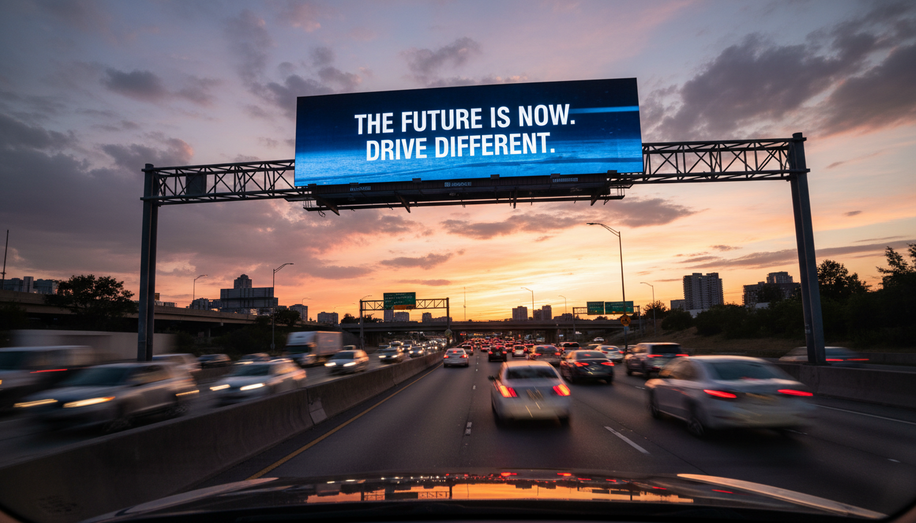

In the split-second world of out-of-home (OOH) advertising, where drivers hurtle past billboards at highway speeds or pedestrians glance up amid urban chaos, designers face a singular imperative: seize the fleeting glance. Unlike digital scrolls or static prints that allow lingering eyes, OOH demands creativity engineered for motion, distance, and distraction, turning severe constraints into a canvas for bold, unforgettable impact. This high-stakes environment—often just three seconds to land a message—rewards simplicity over complexity, forcing advertisers to distill brands into visceral punches that linger long after the view vanishes.
Readability at speed forms the bedrock of effective OOH design, where even minor lapses in legibility doom a campaign to irrelevance. Bold, high-contrast fonts dominate, shunning skinny typefaces, cursive flourishes, or subtle gradients that blur under sunlight or headlights. Experts advocate mixing uppercase and lowercase for natural flow while ensuring consistent spacing, with text sized to dominate from afar—think massive letters that “pop” against contrasting backgrounds, like vibrant yellow on deep navy. Hue and value contrasts amplify this: bright primaries reflect light effectively over distances, while avoiding low-value clashes, such as light gray on white, ensures the message pierces cluttered sightlines. As one guide notes, pigments act as “superheroes,” selectively absorbing or bouncing light to cut through visual noise.
Yet brevity elevates these technical fixes into strategic weapons. The mantra “less is more” governs copy, capping headlines at six to eight words—or ideally seven or fewer—to guarantee instant comprehension. Iconic taglines like “Just Do It” or “I’m Lovin’ It” exemplify this: punchy, benefit-driven phrases that evoke emotion or action without demanding decoding. Hierarchy reigns supreme, prioritizing a single clear message—perhaps a arresting image paired with logo and tagline—eschewing clutter that competes for attention. Overloading with details, phone numbers, or fine print invites failure; instead, OOH builds brand awareness, priming audiences for deeper engagement elsewhere.
These limitations, however, unlock profound opportunities for ingenuity. Simplicity begets boldness: vast canvases invite dynamic, larger-than-life imagery that tells stories or stirs feelings in a glance, leveraging scale to evoke laughter, curiosity, or desire. Contrast not only aids visibility but crafts drama—vibrant clashes that mimic the energy of city streets or open roads, making ads feel alive. The three-second rule transforms testing into an art: does the core idea hit immediately, leaving a memorable imprint? Successful campaigns surprise with unconventional visuals or cheeky wit, breaking norms to foster shares and recall.
Location-specific tailoring amplifies this edge, weaving OOH into the environment rather than shouting over it. Contextual relevance turns interruptions into invitations: a subway ad mocking commuter woes resonates deeply, while highway boards play to motion’s rhythm. Digital out-of-home (DOOH) elevates this further, injecting motion, real-time personalization, and interactivity. Weather-responsive messages, trending event tie-ins, or augmented reality scans via smartphone extend the glance into engagement, blurring static limits. Gamification, live social feeds, or voice activation create buzzworthy moments, driving social amplification without sacrificing roadside punch.
Even experiential twists capitalize on constraints. Pop-up installations or sensory activations at high-traffic spots transform billboards into destinations, encouraging touch, scent, or community ties that ripple online. Branding stays consistent yet adaptive—mirroring local culture or demographics—ensuring the fleeting encounter builds lasting affinity.
Ultimately, OOH’s genius lies in alchemizing brevity and speed into emotional resonance. Bold visuals, sparse words, and contextual savvy don’t just overcome the glance’s tyranny; they harness it, crafting narratives that stick amid life’s blur. In a media-saturated age, this discipline yields campaigns that don’t just advertise—they imprint, proving constraints are creativity’s sharpest tool.