
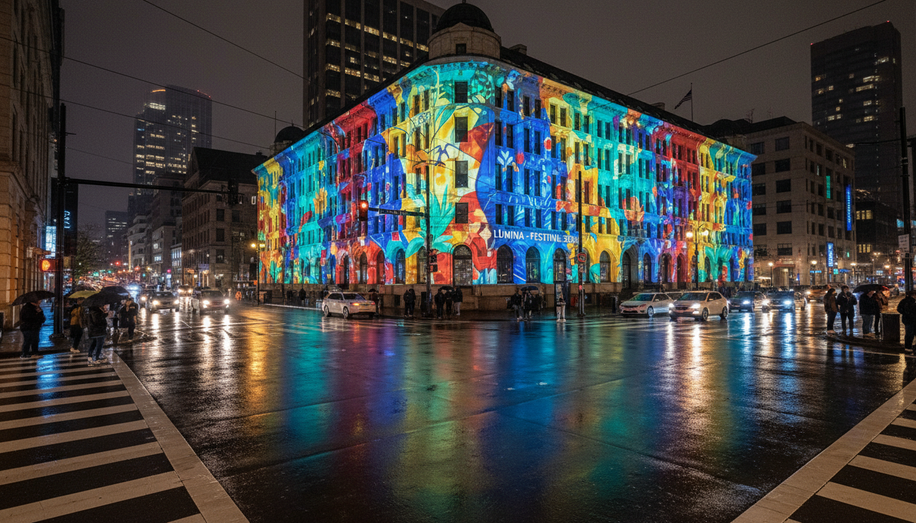

Temporary out-of-home advertising has evolved far beyond static banners and basic signage, transforming into dynamic, interactive experiences that capture consumer attention in ways permanent installations cannot. Pop-up OOH structures have become essential tools for brands seeking to create memorable moments at trade shows, product launches, seasonal activations, and guerrilla marketing campaigns, where setup flexibility and rapid deployment are paramount advantages.
The fundamental appeal of pop-up OOH lies in its ability to generate measurable impact within compressed timeframes. Unlike permanent installations that require months of planning and weeks of setup, temporary structures can be erected in hours or overnight, allowing brands to respond quickly to market opportunities and capitalize on cultural moments. This agility proves particularly valuable during major sporting events, festivals, and street-level activations where securing prime real estate for extended periods would be prohibitively expensive.
Interactive installations represent the cutting edge of temporary OOH strategy. Motion-sensing walls that trigger visual effects based on user movement have become crowd-forming anchors at trade show entrances and pop-up storefronts, generating organic social media content as participants share their experiences. Multi-user touch displays and projection-based installations transform passive observation into active engagement, allowing consumers to explore products, customize options, and interact with brand narratives simultaneously. These formats prove especially effective when integrated with lead capture systems and CRM platforms, converting foot traffic into actionable customer data.
Physical pop-up structures themselves have become increasingly sophisticated. Custom pop-up tents—ranging from compact ten-by-ten-foot footprints to large-scale commercial installations—serve as fully branded environments. Side panels can be fully printed with messaging or left partially open for visibility, while UV-resistant and wind-resistant fabrics ensure durability across varying climates. These structures transform ordinary spaces into branded experience zones, whether at corporate activations, school fundraisers, or street-level marketing events.
The design phase for temporary installations demands a fundamentally different approach than permanent solutions. Designers must account for venue constraints, power limitations, setup timeframes, and teardown requirements from inception rather than retrofitting permanent designs to temporary contexts. An eight-to-twelve-week development cycle typically encompasses goal definition, creative development, technical feasibility assessment, venue coordination, and site surveys before installation begins. This preparation proves critical; budget allocations range from under fifty thousand dollars for single-event installations to one hundred twenty thousand dollars and beyond for multi-week pop-up tours incorporating multiple screens, complex interactions, photo output integration, and analytics dashboards.
Logistics separates successful temporary campaigns from expensive failures. Trade shows typically allow four to eight hours of setup with two-to-four-hour teardown windows, while mall pop-ups require overnight installation spanning eight to twelve hours followed by four-to-six-hour breakdown. Festival activations demand one-to-two-day setup periods with same-day strike requirements, necessitating careful timeline management and contingency planning. Experienced operators add buffer time for the inevitable venue surprises, power access issues, and regulatory constraints that emerge during on-site execution.
Outdoor festival and guerrilla campaigns present distinct design challenges. Variable lighting, weather exposure, and power constraints demand rugged hardware with high-contrast visuals and offline capability. Self-contained photo booths, mobile-integrated games, and augmented reality experiences perform well in these environments where infrastructure cannot be assumed. The semi-permeable mesh materials and flexible fiberglass frames used in traditional pop-up banners allow wind passage while maintaining structural integrity, making them suitable for sports fields, beaches, and open-air venues.
The ROI case for pop-up OOH extends beyond foot traffic metrics. These installations generate user-created content, capture qualified leads, provide immediate brand exposure to concentrated audiences, and create shareable moments that extend reach far beyond physical attendees. For brands operating within competitive event environments—where neighbor brands, union rules, and safety regulations constantly create constraints—temporary installations designed with venue realities in mind deliver measurable outcomes that justify experiential budgets.
As consumer attention becomes increasingly fragmented, the concentrated engagement window provided by event-specific, temporary OOH installations continues to drive adoption across sectors, from technology product launches to consumer packaged goods sampling to grassroots political campaigns.