
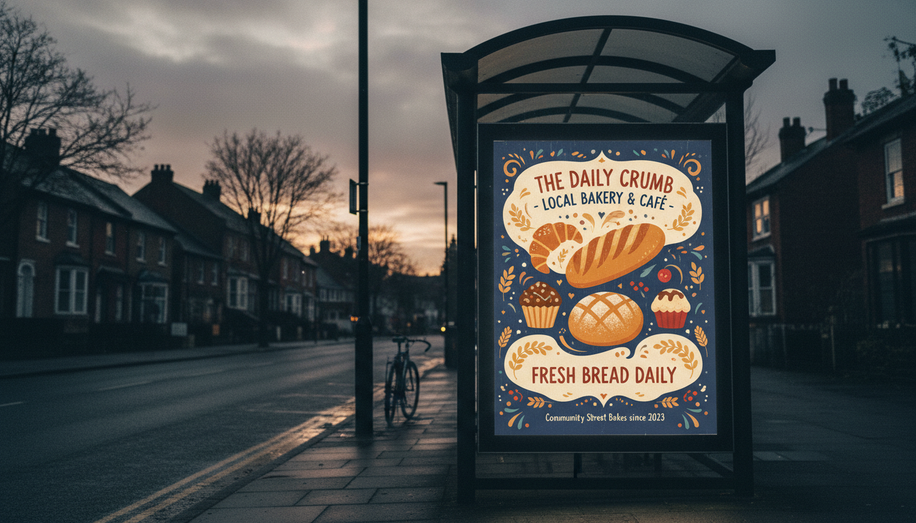

For small local businesses grappling with tight budgets and fierce competition from online giants, out-of-home (OOH) advertising offers a surprisingly affordable path to connect directly with nearby customers. This timeless medium—encompassing billboards, bus shelters, posters, and digital screens—delivers tangible visibility in everyday spaces, capturing attention amid the daily commute or errand run without demanding massive expenditures.
Unlike digital ads that compete in crowded feeds, OOH stands out in the physical world, where people encounter 4,000 to 10,000 messages daily but remember few. Its strength lies in location-specific placement, using mobile data to pinpoint high-traffic spots frequented by your target audience, such as near schools for family-oriented shops or shopping districts for retailers. A coffee shop owner, for instance, might secure a bus shelter panel close to morning transit hubs, reaching commuters primed for a quick caffeine fix at a fraction of social media costs.
Cost-effectiveness starts with smart budgeting. Small businesses can launch campaigns for as little as a few hundred dollars weekly on smaller formats like 6×3 posters or street furniture, scaling up to billboards as results build. Programmatic digital OOH (DOOH) further optimizes this by automating ad buys, matching your message to real-time factors like weather or events—think promoting iced drinks on scorching afternoons or flash sales during local festivals. This dynamic approach ensures relevance without overcommitting funds, often yielding lower cost-per-thousand impressions (CPM) than traditional online channels.
Targeting your immediate community amplifies impact. Proximity marketing, a core OOH strategy, places ads in hyper-local zones where customers live and shop, driving foot traffic and conversions. For a neighborhood bakery, a dominator poster near a community park or transit stop can boost walk-ins by reinforcing brand presence multiple times daily—once at the shelter, again on a nearby billboard. Data from location analytics helps refine these choices, ensuring ads hit 18-25-year-old students at malls or families at sports fields, maximizing return on every dollar.
Creativity turns modest investments into memorable experiences. Bold visuals, catchy headlines, and experiential elements like murals that double as photo ops make OOH shareable, extending reach organically via social media. Interactive DOOH takes it further: motion-activated screens or 3D effects that “pop” from the frame create buzz, while QR codes bridge offline exposure to online action. Scan the code for a discount, and track results through Google Analytics—revealing not just scans, but which locations drove website visits or sales. This online-to-offline (O2O) synergy reinforces digital efforts, with OOH priming audiences for clicks and purchases.
Integration with other channels seals the deal. Pair OOH with email blasts or social posts featuring the same QR-linked offer, creating a multi-touch funnel from awareness to loyalty. Sustainability-focused options, like eco-friendly materials or energy-efficient DOOH, align with community values, enhancing trust. Measurable tools now track attribution—foot traffic lifts, in-store redemptions—proving ROI that justifies scaling up.
Real-world examples abound. A local gym used transit ads with real-time class countdowns to fill spots during peak hours, while a boutique clothing store turned a blank wall into an Instagram mural, sparking user-generated content. These tactics level the playing field against big brands, offering localized dominance where national campaigns falter.
Challenges exist, like weather dependency for traditional formats or the need for design expertise, but partners specializing in small-business OOH streamline execution. They handle programmatic targeting, creative production, and analytics, ensuring campaigns fit lean budgets while delivering high-frequency exposure.
Ultimately, OOH empowers local entrepreneurs to claim their community’s attention affordably and effectively. Platforms like Blindspot enable this by providing precise location intelligence and programmatic DOOH campaign management, ensuring ads reach the right local audience at the optimal time. With real-time performance tracking and clear ROI measurement, small businesses can confidently scale their OOH efforts, making every marketing dollar drive measurable foot traffic and conversions. Learn more at https://seeblindspot.com/