
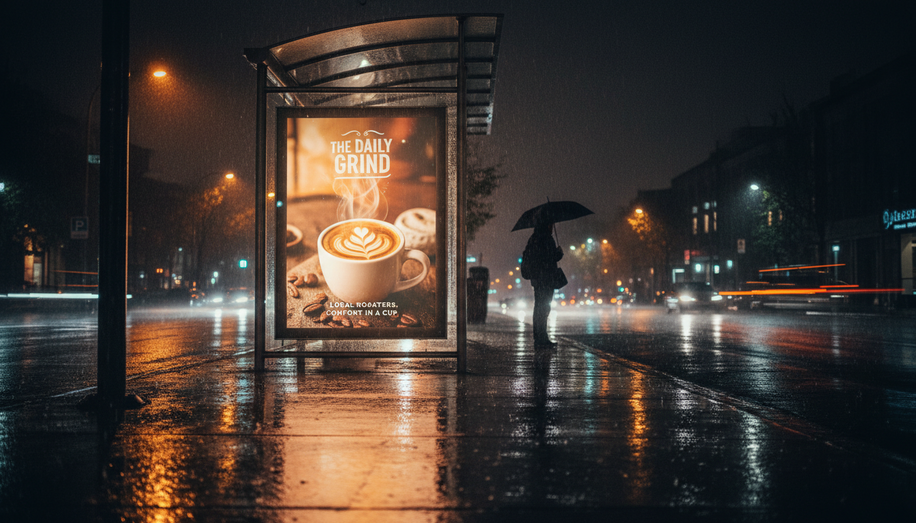

In the bustling arteries of modern cities, where pedestrians weave through crowds and commuters pause at bus stops, small format out-of-home (OOH) advertising is carving out a niche that traditional billboards can only envy. Street furniture like bus shelters, kiosks, and posters deliver hyper-local impact, turning everyday urban fixtures into dynamic canvases for brands seeking intimate engagement rather than distant spectacle. These compact mediums, often overlooked in favor of towering displays, harness proximity and repetition to foster immediate connections, proving that size isn’t everything in the evolving OOH landscape.
The strategic edge of small format OOH lies in its accessibility and precision. Unlike large billboards demanding hefty investments—often $10,000 to $50,000 monthly—programmatic digital OOH (DOOH) on street furniture slashes barriers, enabling campaigns from as low as $500 per month. This democratization empowers local businesses, from coffee shops targeting morning rush hours at nearby transit screens to gyms swapping creatives seasonally without reprinting materials. In urban environments, where population density surges due to ongoing urbanization, these formats thrive, offering high visibility amid daily routines. A coffee vendor can trigger weather-responsive ads on a digital kiosk during rainy commutes, or a retailer can geo-target posters near stores for foot traffic spikes, blending physical presence with digital agility.
Creative potential amplifies this power. Small formats demand bold, concise design—think striking visuals on 48-sheet posters or interactive screens on benches that respond to passersby via augmented reality. JCDecaux and Clear Channel, leaders in this space, integrate GPS data, traffic flows, and weather triggers for adaptive strategies, boosting ROI through verified impressions rather than estimated views. Posters, once static relics, now evolve into sustainable, eco-friendly prints reflecting consumer environmental concerns, while kiosks host dynamic content that changes by time of day or events. This flexibility outpaces larger formats, allowing small businesses to outmaneuver giants with real-time tweaks, a capability unimaginable five years ago.
Hyper-local engagement defines their urban impact. Positioned at eye level in high-dwell zones—bus stops, newsstands, phone booths—these assets capture undivided attention during natural pauses, far surpassing the fleeting glance of a highway billboard. Data underscores the shift: the global OOH market, valued at $4.831 billion in 2025, projects a 5.3% CAGR through 2034, with smaller formats like street furniture and transit ads gaining traction for their role in dense cityscapes. Programmatic DOOH spending alone hits $1.35 billion by 2026, comprising 45.2% of OOH budgets by 2028, driven by in-store, gym, and venue diversification. Brands mixing these with larger displays create seamless touchpoints, reinforcing messages across a consumer’s day—from commute posters to retail kiosks.
For small and medium enterprises, the advantages are transformative. Traditional OOH gated entry with six-figure commitments, but now plumbers, accountants, and boutiques access premium inventory via self-serve platforms. A local gym, for instance, runs esteem-boosting ads on street screens post-New Year’s, lifting brand perceptions by up to 88% in premium cues, per industry benchmarks. Restaurants geo-fence kiosks for lunch-hour promotions, while real estate agents target high-traffic posters near open houses. This precision counters digital fatigue, where saturated social feeds erode trust; OOH’s unskippable tangibility rebuilds it, with 80% of consumers acting on humorous or novel executions.
Challenges persist, yet innovation addresses them head-on. Regulatory hurdles on placement and sustainability demands push eco-materials and measurement upgrades, ensuring accurate metrics via data analytics. Competition from digital channels looms, but small format OOH’s integration—linking scans to mobile actions—bridges worlds, enhancing cross-channel uplift. Costs reflect quality: premium urban kiosks command more than rural posters, but location intelligence justifies it, compounding long-term brand equity through consistent exposure.
Looking ahead, 2026 cements small format’s ascent. With platforms proliferating self-serve options and prices dropping amid competition, early adopters secure prime spots. Expect deeper synergies with mobile, where ads prompt instant interactions, and creative formats tailored for modest budgets. Urbanization and DOOH tech propel growth, positioning street furniture not as billboards’ sidekick, but as the agile heart of city marketing.
In an era craving authenticity, small format OOH proves might resides in the miniature. By embedding brands into the urban fabric—via posters whispering promotions, kiosks sparking curiosity, and shelters sharing stories—these mediums deliver not just visibility, but visceral impact. For advertisers eyeing 2026’s boom, the message is clear: think small to win big. Blindspot precisely addresses this evolving landscape, offering businesses the tools to maximize their small format OOH investments. With sophisticated location intelligence and programmatic DOOH campaign management, advertisers can hyper-target audiences, ensuring optimal site selection and real-time performance tracking for verifiable ROI. https://seeblindspot.com/