
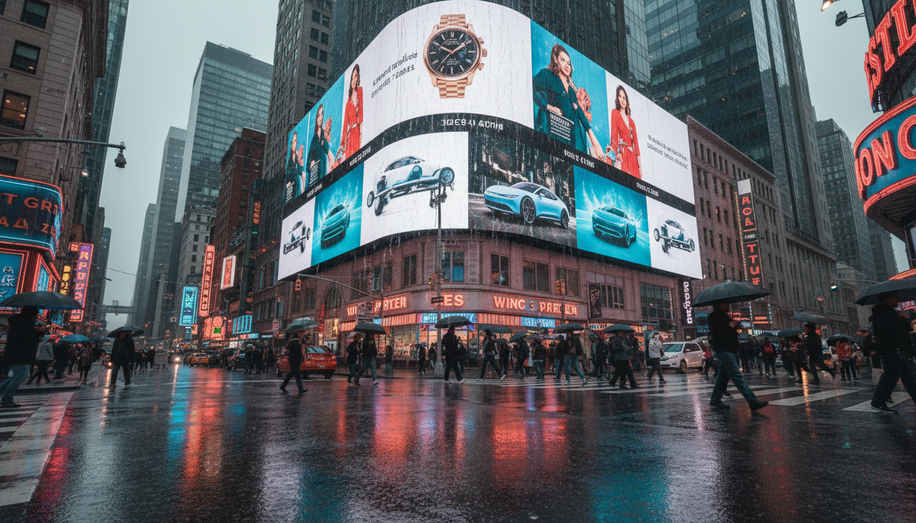

In the high-stakes world of out-of-home advertising, Demand-Side Platforms (DSPs) have emerged as the indispensable tools sharpening advertisers’ competitive edge in programmatic digital out-of-home (DOOH) campaigns. These platforms streamline the purchase, management, and optimization of ad inventory across vast networks of digital screens, transforming fragmented buying processes into automated, data-driven powerhouses. By leveraging real-time bidding, advanced targeting, and machine learning, DSPs enable brands to deploy campaigns with unprecedented precision, efficiency, and adaptability, ensuring messages land exactly where and when they matter most.
At the heart of a DSP’s value lies its ability to automate the entire campaign lifecycle, from planning to measurement. Traditionally, securing DOOH inventory involved laborious negotiations with multiple media owners, haggling over prices, and manual placements—a process that could stretch weeks. DSPs eliminate this friction through real-time bidding algorithms, where advertisers bid on impressions in milliseconds across interconnected supply-side platforms. This automation not only slashes time-to-market but also optimizes costs by dynamically adjusting bids based on performance data. For instance, a campaign can launch seamlessly, with DSPs handling approval, activation, and delivery, allowing marketers to pivot swiftly in response to market shifts or consumer behavior. As one industry analysis notes, this efficiency accelerates rollout, enabling faster results and positioning programmatic DOOH as a growth driver projected to reach $29.8 billion globally by 2029.
Beyond automation, DSPs empower advertisers with granular targeting that turns broad-screen networks into precision instruments. By integrating anonymized mobile location data, historical audience insights, and machine learning, DSPs identify specific demographics and behaviors in real time. Advertisers can geofence a one-mile radius around gyms to serve fitness class promotions or daypart campaigns to hit commuters during peak hours from 6-10 a.m. and 5-8 p.m. Weather triggers, movement patterns, and even contextual cues—like displaying athletic gear near sports stores—further refine delivery, ensuring ads align with the viewer’s immediate environment and mindset. This shift from one-size-fits-all messaging to tailored creatives boosts relevance; machine learning even generates post-campaign insights to predict audience movements, refining future targeting.
The real buyer’s edge shines in dynamic management and optimization, where DSPs provide unparalleled flexibility. Unlike static traditional OOH, programmatic DOOH via DSPs allows instant creative swaps, bid adjustments, and inventory scaling based on live metrics such as impressions, foot traffic lifts, or engagement rates. A brand might retarget Instagram users who saw a DOOH ad for a nearby smoothie shop, measuring conversion lifts through geofencing. Performance dashboards offer clear attribution—far superior to ambiguous traditional metrics—enabling optimization toward top-performing screens or creatives. Interactive elements, dynamic content tied to events like sports scores, and real-time adaptations keep campaigns fresh, driving higher recall and action; studies show DOOH prompts responses from 76% of viewers.
This optimization extends to omnichannel synergy, amplifying DSPs’ impact. Programmatic DOOH acts as a “brand anchor,” building trust through tangible, large-format presence in commute paths or neighborhoods, while DSPs tether it to digital ecosystems. A gym promotion might run on screens near health food stores, followed by retargeted social ads within 24 hours, proving ROI via trackable foot traffic. Contextual relevance—blending ads into physical spaces without intrusion—enhances perception, with consumers trusting OOH at rates up to 58% and two-thirds searching online post-exposure. Brands like those leveraging Perion’s platforms have seen 40% impression lifts worldwide, reaching 79 million views through such precision.
For advertisers, DSPs democratize access to premium DOOH inventory on familiar programmatic platforms, reducing production costs with short-term commitments and flexible scaling. No longer confined to lengthy contracts, buyers can pause underperforming elements or surge spend during high-impact windows, maximizing budgets amid volatile conditions. This agility fosters experimentation: test weather-responsive creatives for retail or time-based messaging for events, all while accessing comprehensive metrics like viewability and audience reach.
Critically, DSPs address privacy concerns through anonymized data handling, ensuring compliance while delivering insights. As programmatic DOOH matures, these platforms are redefining outdoor advertising’s future, blending unskippable physical scale with digital measurability. The result? Campaigns that not only capture attention in the moment—nudging gym-goers toward smoothies or commuters to dentists—but also drive bottom-line conversions, elevating DOOH from awareness tool to performance engine.
In an era where consumer journeys blur lines between physical and digital, DSPs give buyers the edge to outmaneuver competitors. By automating drudgery, hyper-targeting audiences, and enabling relentless optimization, they unlock programmatic DOOH’s full potential: efficient, impactful advertising that resonates in the real world.