

()
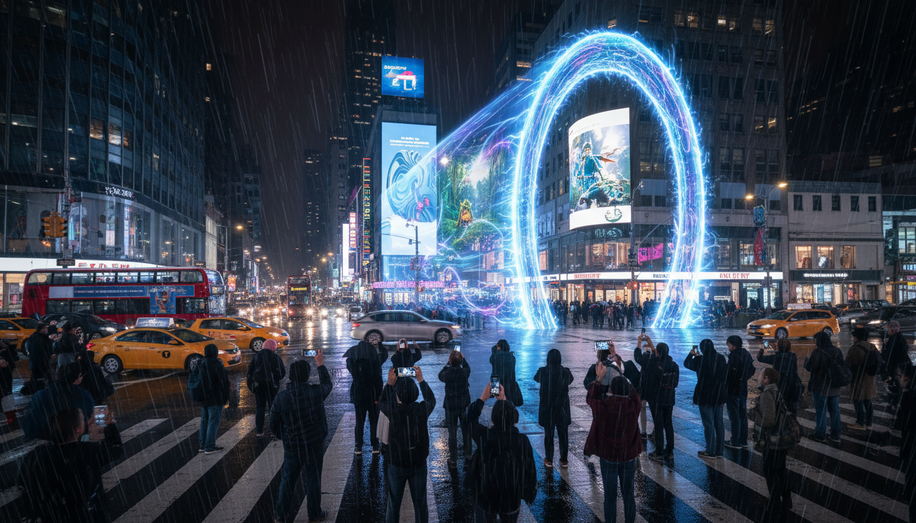
In the bustling streets of Miami, a Verizon mural once stood as a static artwork, its vibrant depictions of skyscrapers and neon circuits blending local flair with futuristic branding. But point a smartphone at it, and the scene erupts: 3D creatures scamper from the walls, vehicles zip through animated cityscapes, and digital vines weave through glowing tech motifs, all powered by Snapchat’s WebAR and BrandXR’s platform. This is the new frontier of out-of-home (OOH) advertising, where augmented reality (AR) and virtual reality (VR) shatter the passive gaze, inviting audiences to overlay digital layers on physical ads or plunge into fully immersive brand universes.
OOH has long thrived on visibility—billboards commanding attention from highways, murals injecting color into urban voids. Yet traditional formats often fade into the background amid digital distractions. AR and VR change that equation, transforming static surfaces into portals of interaction. By scanning a QR code or using a dedicated app, passersby unlock experiences that merge the tangible world with hyper-real digital enhancements. Verizon’s 2024 campaign across Hialeah, Midtown Miami, and Coconut Grove exemplified this, tailoring AR activations to each locale: Hialeah’s cultural portraits morphing into 3D community visions, underscoring the telecom giant’s connective power. Such integrations not only captivate but extend engagement beyond the moment, fostering emotional bonds through multi-sensory elements like animation, audio, and even haptic feedback.
Consider Vodafone’s AR billboards, which have redefined high-traffic spaces from Germany to beyond. A seemingly ordinary hoarding springs alive via mobile camera: 3D graphics burst forth, interactive text dances, and mini-games offer prizes, all fueled by real-time data like weather or local events for hyper-personalized relevance. In one German rollout, eight QR-enabled billboards invited scans that launched gamified 3D worlds, turning commutes into branded adventures. These aren’t gimmicks; they’re strategic evolutions. AR’s visual punch—towering holograms, dynamic overlays—delivers what static ads can’t: dwell time. Passersby linger, interact, and share, amplifying reach through Instagram reels and TikTok virality.
Burger King’s audacious “Burn That Ad” campaign in Brazil took rivalry to interactive extremes. Users downloaded the app, aimed at competitors’ billboards, and watched them virtually incinerate—revealing a Whopper coupon in the flames. This cheeky AR hijack not only stole attention but drove foot traffic with immediate redemptions, proving OOH’s potential for direct conversions. Similarly, Ally Bank’s Monopoly-themed treasure hunt scattered 36 AR-enabled game board squares across six U.S. cities. Scanning unlocked WebAR animations of Mr. Monopoly dispensing points and cash prizes, blending financial literacy with playful immersion to build brand affinity.
VR pushes further, inviting full detachment into brand-crafted realms. While AR augments reality, VR constructs alternate ones—think stepping into a virtual showroom via a mural’s QR code, trying on clothes from a fashion billboard, or navigating a product’s 360-degree universe. Electrifly Detroit’s 2024 festival embedded AR in 15 murals, where the Electrifly app unleashed animations, narrated stories, and explorable 3D art layers, courtesy of BrandXR’s seamless platform. Jackson Family Wines elevated retail OOH with Siduri’s holographic WebAR: scanning in-store billboards summoned a photorealistic founder hologram, chatting wine nuances via Microsoft Mixed Reality tech.
These technologies shine in analytics, too. Brands track scans, interaction durations, and hotspots, refining campaigns on the fly—far surpassing impression counts. Programmatic DOOH platforms like Taggify’s integrate AR with geo-data, weather triggers, or trends, ensuring ads feel alive and contextual. Social amplification follows naturally: immersive moments beg sharing, contests reward posts, and viral loops extend OOH’s lifespan.
Challenges persist—technical accessibility demands intuitive apps or WebAR to sidestep downloads, while design must sync physical assets flawlessly with digital overlays. Yet the payoff is clear: NHS’s AR blood donation simulator let users “give” virtually, witnessing life-saving impacts for profound emotional resonance. As 5G proliferates and devices evolve, AR/VR-OOH hybrids will proliferate, from holographic bus shelters to VR pop-up worlds at transit hubs.
The horizon beckons. OOH isn’t dying; it’s digitizing, layering realities to forge unforgettable connections. Brands ignoring this risk invisibility in a world where ads must not just be seen, but lived.