
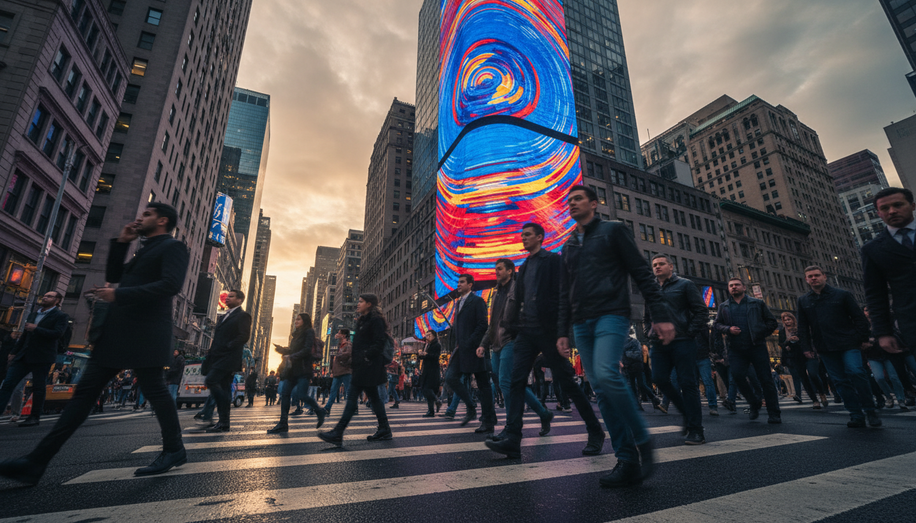

In the bustling arteries of modern cities, out-of-home (OOH) advertising has long prioritized drivers hurtling past billboards and transit riders glued to their seats. Yet pedestrians, those nimble navigators of urban sidewalks, represent an overlooked powerhouse audience—comprising up to 40 percent of city-center footfall in major metros, according to industry estimates. These walkers, weaving through crosswalks and lingering at intersections, offer advertisers a rare chance for prolonged engagement, unhurried glances, and even tactile interactions that fleeting motorists can never provide.
Pedestrians differ fundamentally from vehicular audiences. Unlike drivers, whose eyes dart in split seconds amid traffic hazards, or commuters absorbed in phones on buses, walkers move at a human pace—about three miles per hour—affording them 5 to 10 seconds per ad exposure, sometimes more at bus shelters or plazas. This dwell time transforms passive viewing into active absorption. Bus shelter ads, for instance, capitalize on this perfectly: positioned at eye level in high-footfall zones like shopping districts, they snare not just waiting transit users but streams of passersby. With digital screens delivering real-time updates, these spots serve compelling messages when minds are idling, boosting recall through repeated visibility.
Strategic placement is the linchpin for pedestrian capture. OOH pros emphasize “location, location, location,” urging advertisers to map foot traffic patterns via pedestrian analytics tools that track movement in real time. Prime real estate includes sidewalk-facing bus shelters, pedestrian bridges, and urban plazas—spots where sightlines are unobstructed and local context amplifies relevance. Visibility checks are non-negotiable: fonts must scale boldly for 20-30 foot reads, colors contrast sharply against concrete backdrops, and obstructions like poles or signage must be scouted. One expert tip: query if the ad blends into nearby buildings or demands attention through spotlights and glow-in-the-dark elements, ensuring it pops amid the urban clamor.
Creativity tailored to the pedestrian psyche elevates mere visibility to memorability. Interactive elements shine here, as walkers can pause to engage without risking life or limb. Motion-sensor billboards that respond to approach, augmented reality overlays for virtual try-ons, or touchscreens at shelters invite participation, forging emotional bonds and shareable moments. A clothing brand’s virtual fitting station, for example, turns a stroll into an experience, spiking engagement and social media buzz. Similarly, functional ads—like shelters doubling as charging stations or murals blending art with branding—add utility, making pedestrians feel served rather than sold.
Emotional resonance and storytelling further hook this audience. Pedestrians, often in contemplative modes between errands or meetings, respond to narratives that mirror their daily grind: a series of connected wallscapes unfolding a commuter’s triumph as one walks a block, or audio-infused mobile billboards piping motivational soundscapes. Studies affirm emotional ads lodge twice as deeply as humorous ones, so tap universal urban feels—hustle, discovery, community—via psychographically targeted creatives. Know your walker: young professionals crave aspirational vibes, families seek relatable warmth. Consistent branding across formats reinforces instant recognition, vital when exposure lasts mere heartbeats.
Unexpected tactics amplify impact. Inflatables towering over plazas draw gazes from afar, funneling foot traffic like beacons at festivals or retail strips. Guerrilla-style murals in alleys or glow-under-blacklight installations surprise, standing out from ad-saturated norms. Mobile elements, such as billboard trucks parked provocatively in pedestrian-heavy squares, encourage selfies and virality, turning bystanders into amplifiers. Pair these with community partnerships—health campaigns via fitness club tie-ins—to build trust and relevance.
Digital OOH supercharges pedestrian strategies with agility. LED screens rotate messages based on time, weather, or trends, optimizing for lunch-hour crowds or rainy-day lingerers. Real-time data from impressions trackers lets campaigns pivot, pausing underperformers while scaling winners. Yet analog charm persists: tangible 3D product extensions, like oversized replicas dangling from shelters, grab multisensory attention in ways pixels can’t match.
Challenges persist—pedestrians multitask with phones, dodging distractions like cyclists and vendors—but solutions abound. Simplicity rules: direct headlines, minimal text, one bold call-to-action. Test for pedestrian nuance: clever wordplay suits leisurely strollers, blunt imperatives fit hurried types. Measure success via footfall lifts, branded searches post-exposure, or geo-fenced app pings.
Ultimately, pedestrians demand OOH evolve from shouty spectacles to sidewalk symphonies—conversational, contextual, captivating. By decoding their rhythms, advertisers unlock urban engagement’s next frontier, proving the street-level viewer isn’t unseen, but underserved. In a world accelerating toward digital isolation, these human-scale encounters remind us: the best ads walk with us.