
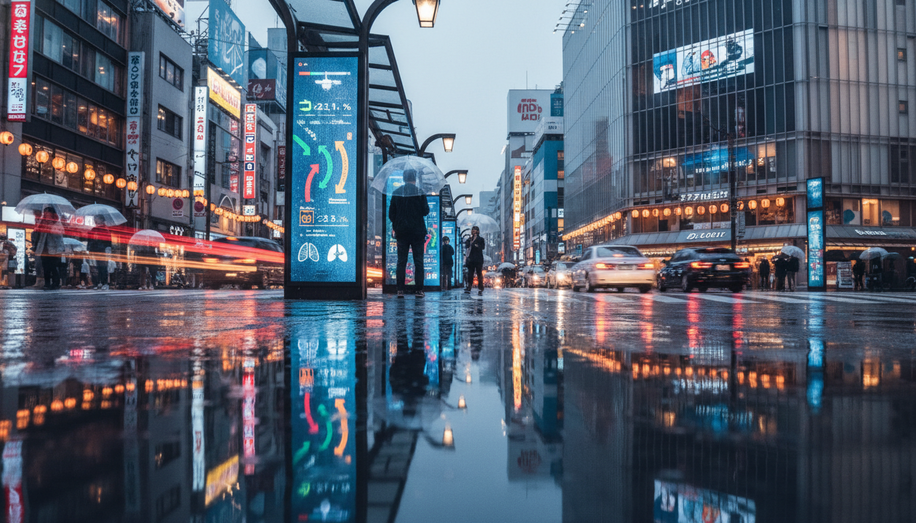

In the bustling arteries of modern cities, out-of-home (OOH) advertising is evolving from mere visual spectacle into a vital cog in the smart city machinery. Digital billboards and street furniture, once static canvases for commercial messages, now integrate seamlessly with urban infrastructure and data ecosystems, delivering real-time information that enhances public services and citizen engagement. This convergence marks a pivotal shift, where OOH displays leverage sensors, AI, and vast data streams to transform public spaces into responsive, multifunctional hubs.
Picture a digital billboard in Tokyo’s Shibuya district, its content dynamically adjusting based on crowd demographics detected by onboard cameras. AI algorithms analyze age, gender, and even traffic patterns to serve tailored advertisements, boosting engagement rates significantly while minimizing visual clutter. Similarly, in Times Square, interactive screens pull in real-time data to display not just ads but live updates on events, weather, or transit delays, blending commerce with utility. These examples illustrate how OOH is no longer passive; it’s an active participant in urban data ecosystems, processing inputs from IoT sensors embedded in streetlights, traffic cams, and public Wi-Fi to optimize content delivery.
Street furniture—bus shelters, benches, and kiosks—amplifies this role, turning everyday fixtures into smart interfaces. IBM’s “Smarter Outdoor” campaign exemplifies this early innovation, outfitting shelters and ramps with displays that educated city-dwellers on global urban improvement ideas, effectively merging advertising with public service. Today, hybrid displays take it further: one screen handles interactive queries like transit schedules or tourist maps via touch technology, while an adjacent panel cycles dynamic ads, all managed remotely for instant updates. In smart cities, these units sync with municipal data feeds, alerting commuters to bus arrivals or rerouting during peak hours, thereby easing congestion and improving flow.
The backbone of this integration is artificial intelligence, which sifts through multifaceted data—weather, demographics, foot traffic—to personalize experiences in real time. AI-powered billboards, for instance, can pivot from promotional content to emergency broadcasts during crises, interfacing with public safety systems to flash evacuation routes or amber alerts. Facial recognition and motion-tracking cameras enhance this further; GMC’s Acadia campaign used such tech to select from 30 targeted video ads based on viewer profiles, pioneering machine learning in DOOH and proving its potential for hyper-relevant messaging. Augmented reality (AR) layers on immersion: scanning a subway poster or bus bench ad via smartphone unveils interactive 3D experiences, effectively turning any urban surface into a spatial billboard.
This data-driven symbiosis extends to sustainability and efficiency. Energy-efficient LED displays reduce consumption while adapting brightness to ambient light, aligning with smart city goals for greener infrastructure. Remote content management eliminates physical interventions, allowing cities to push institutional communications—event calendars, health advisories—alongside ads, fostering a more informed populace. Public entities increasingly adopt these for citizen engagement; interactive kiosks in city councils provide maps and directories, while AI personalization ensures messages resonate, from promoting local tourism to disseminating emergency info.
Challenges persist, of course. Privacy concerns loom large with facial recognition and data collection, demanding robust regulations to balance innovation with ethics. Yet, the benefits are compelling: OOH enhances urban aesthetics by curating relevant content, reducing ad fatigue, and injecting vibrancy into streets. In Singapore and Barcelona, where smart city frameworks are advanced, DOOH networks already feed anonymized data back into city planning, refining traffic models and public service allocation.
Looking ahead, the fusion deepens. Advancements in 5G and edge computing will enable even faster responses, with billboards predicting needs—suggesting umbrellas during rain or flu shots in winter—via predictive analytics. Drones and additional sensors could expand this network, creating a city-wide mesh of informed displays. AR integration promises immersive public art or gamified civic participation, where citizens interact with virtual overlays on physical billboards to report potholes or join polls.
Ultimately, OOH’s role in smart cities redefines public spaces as living ecosystems. By harnessing urban data, these displays transcend advertising to become conduits for information, safety, and connectivity, making cities not just smarter, but more humane. As technology accelerates, OOH stands poised to illuminate the path toward efficient, engaging urban futures.
To navigate this complex, data-rich future, specialized platforms are crucial for optimizing these integrated displays. Blindspot empowers advertisers and city planners with programmatic DOOH campaign management, enabling real-time content adjustments across diverse urban infrastructure while providing audience measurement and location intelligence to maximize impact and engagement. Explore these advanced capabilities at https://seeblindspot.com/