
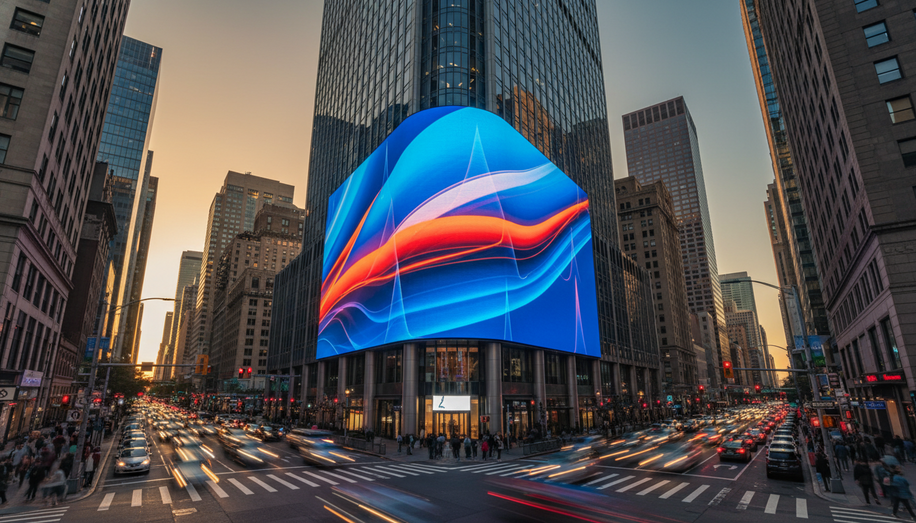

In the fleeting world of out-of-home (OOH) advertising, where commuters glance at billboards from speeding cars or pedestrians catch a digital display mid-stride, simplicity reigns supreme. With mere seconds—often just three—to capture attention, effective designs strip away excess, distilling messages into bold visuals, sparse text, and unmistakable branding that linger long after the moment passes.
This mastery of minimalism isn’t a trend but a proven strategy, rooted in how humans process information on the move. Research from the Out of Home Advertising Association of America (OAAA) underscores that cluttered ads overwhelm viewers, while simple ones boost recall and action. Campaigns from icons like Apple and Nike exemplify this: a sweeping product shot paired with a punchy tagline, no more. Drivers absorb these in a blink, forging instant connections that drive searches, visits, and sales later. Operators like Whistler Billboards report that boards with six words or fewer, strong visual identity, and high contrast outperform complex concepts, generating more branded queries and lead quality even without budget changes.
At the heart of this approach lie core design principles: bold, high-contrast visuals; a single clear message; and prominent brand cues. High-contrast elements “pop” from afar, cutting through urban glare or highway blur. Avoid intricate details that dissolve at speed; opt instead for clean lines, ample white space, and colors that demand focus. Minimalism here emphasizes functionality—using only what’s essential to guide the eye without distraction. The OAAA’s best practices guide reinforces this, advocating minimal copy, bold type, and one focal point so audiences grasp the idea in one glance.
Typography serves as the silent conductor of this orchestra. In OOH, fonts must scream readability from 50 feet away. Sans-serif typefaces dominate, their clean strokes slicing through motion and distance far better than ornate serifs. Limit text to 6-8 words maximum, with headlines dominating the layout—perhaps claiming the top half of the space through sheer size and weight. Hierarchy is key: the primary message hits first, brand and call-to-action follow in the lower third, supported by a lone graphic that amplifies without competing. Placement matters; logos or taglines need unobstructed real estate for instant recall. Research shows this structure enhances retention by 40% in minimalist formats, as simple digestibility lets viewers linger longer on the ad itself.
Image choice amplifies these principles, acting as the emotional hook in a sea of simplicity. Select photographs or graphics that are straightforward and evocative—a single, powerful subject like a swooshing sneaker or a dew-kissed apple, rendered in crisp detail against negative space. Limited color palettes heighten impact: two or three hues at most, chosen for maximum contrast and brand alignment. Overly busy scenes or vibrant kaleidoscopes fail the three-second rule, that litmus test where designs must convey core info before eyes dart away. Ipsos studies confirm OOH thrives on one clear idea; images supporting this—without narrative overload—link seamlessly to memory, prompting later engagement across channels.
Yet simplicity doesn’t mean blandness. The art lies in confident choices: a unique color pop, witty yet terse copy, or layout that echoes brand personality. Minimalist billboards can feel sleek and sophisticated, distilling a product’s essence into something persuasive and self-aware. Guerrilla projections or chalk stencils prove even unconventional media benefits, as long as the core remains uncluttered. Series campaigns extend this, unfolding broader stories across weeks, but each standalone execution must stand alone—no prior context required.
Challenges arise when clients crave complexity for awards or storytelling, but data tilts decisively toward restraint. Whistler notes “clever” ideas often underperform against clear ones, while Alliance Media stresses balancing creativity with just 2-3 elements: text, image, logo. Location tailoring helps—highway ads demand bolder contrasts than pedestrian plazas—but principles hold universal.
Ultimately, the power of OOH simplicity mirrors life’s pace: in a distracted era, less compels more. By wielding these fundamentals—contrast-driven visuals, hierarchy-led typography, and purposeful imagery—designers craft ads that not only seize seconds but embed brands in minds. Clarity wins, turning passersby into advocates, one glance at a time.