
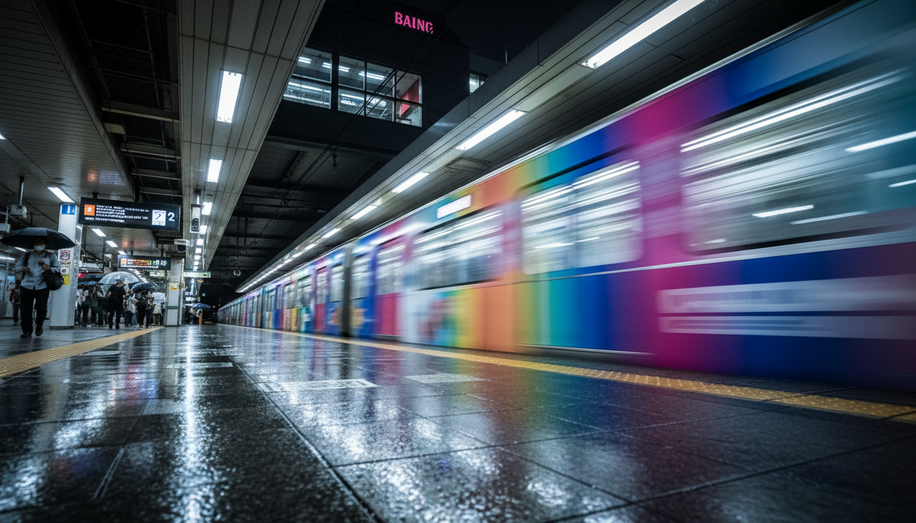

In the pulsating heart of urban life, where commuters weave through crowded streets and subterranean tunnels, transit advertising emerges as a dynamic force for brands seeking to capture attention on the move. Vehicles like buses, trains, and taxis transform into rolling billboards, while transit hubs pulse with digital screens and posters that ensnare waiting crowds. This form of out-of-home (OOH) advertising thrives on captive audiences—riders with little escape from the messages surrounding them—and leverages sequential messaging to build narratives over time, turning passive glances into lasting impressions.
Consider the bus, a workhorse of cityscapes that not only ferries passengers but parades ads before pedestrians, drivers, and cyclists alike. Full wraps or panel placements on buses ensure visibility across fixed routes, often traversing business districts, malls, and residential neighborhoods. With 62% of U.S. jobs within a half-mile of transit stops, these mobile displays hit engaged urbanites at peak times, offering repeated exposure that boosts recall. A 2022 study pegged transit shelters’ cost per thousand impressions at a mere $2.18, underscoring the medium’s efficiency for broad reach without breaking budgets. Taxis amplify this with rooftop and door ads slicing through traffic jams, their agility allowing precise targeting in dense cores where traditional billboards fade into the clutter.
Trains and subways elevate the game with in-vehicle screens delivering prolonged dwell times—averaging 15 to 45 minutes per trip—under minimal distractions. Here, sequential messaging shines: ads rotate or unfold across multiple screens, telling a story from awareness to action as riders progress along routes. Digital out-of-home (DOOH) networks enable this sophistication, syncing content by time of day, weather, or traffic, which can yield 2-4 times higher engagement than static creatives. One ed-tech campaign across metro panels, rickshaw wraps, and bus shelters near universities generated 1.2 million impressions and a threefold spike in local app downloads within 45 days, proving the power of multi-modal coordination.
Transit hubs—those bustling nexus points of platforms, shelters, and concourses—extend reach beyond riders. Large stations churn millions of monthly impressions, ideal for brand launches amid shopping districts and offices. Static posters at shelters snag pedestrians in steady streams, while dynamic digital displays adapt in real-time: promoting umbrellas during rain or event tie-ins amid disruptions. This adaptability fosters relevance, with campaigns triggering 5-15% lifts in store visits when geo-fenced to routes. Exterior vehicle ads further spill over, exposing non-riders to branded spectacles as buses rumble past high streets.
Yet, these opportunities come laced with challenges. Standing out demands creativity amid visual overload; a bus wrap must intrigue from afar before hooking interiors. Route selection is critical—prioritizing high-exposure paths like business loops or school runs ensures frequency without waste, but mismatched demographics dilute impact. Regulatory hurdles, from wrap durability in harsh weather to content approvals, add layers, as do measuring elusive metrics like pedestrian impressions. Post-pandemic urban recovery has revived ridership, but fluctuating volumes require flexible buying, such as programmatic DOOH for automated, traffic-responsive placements.
Sequential strategies address these by crafting narratives that evolve. A coffee chain might start with morning scent-evoking visuals on bus exteriors, transition to loyalty app prompts inside trains, and culminate in hub QR codes for instant redemptions. Integrating digital layers—hashtags, AR scans, or geo-targeted social boosts—turns static sights into interactive loops, with passengers snapping and sharing wraps for organic amplification. Localized tailoring, like multilingual creatives for diverse neighborhoods, deepens resonance, fostering community ties without alienating.
For urban brands, the calculus is compelling: low CPMs, 24/7 visibility, and precise geo-targeting at a fraction of digital ad costs. Transit OOH weaves into daily rituals, unblockable and immersive, expanding beyond riders to entire ecosystems. As cities densify, savvy advertisers will lean into dynamic, story-driven campaigns—on vehicles and hubs alike—to not just reach, but move audiences toward action. The road ahead promises even greener wraps and AI-optimized rotations, ensuring transit remains a cornerstone of OOH impact.