
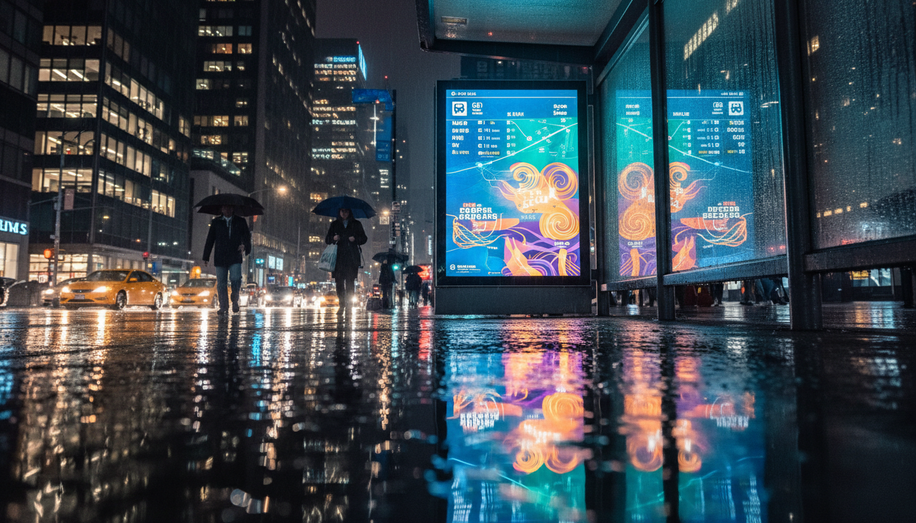

In the bustling arteries of modern urban landscapes, out-of-home (OOH) advertising is evolving from mere billboards into a vital cog in the smart city machinery, seamlessly blending commercial messaging with essential public services. Digital out-of-home (DOOH) displays, once static canvases for brands, now harness real-time data from IoT sensors, AI analytics, and high-speed 5G networks to deliver context-aware information, turning advertising infrastructure into dynamic urban enhancers. This integration not only boosts brand engagement but also elevates city life by providing commuters with traffic updates, weather alerts, and event notifications alongside targeted promotions.
Smart cities, defined by their fusion of IoT-enabled infrastructure, real-time data processing, and AI-driven management, create fertile ground for DOOH’s expansion. Screens embedded in metro stations, bus shelters, airports, and city centers pull live feeds from urban systems—adapting content based on traffic congestion, rainfall, or peak-hour crowds—to ensure relevance. A digital billboard in a rain-soaked square might shift from a sunny-day sunglasses ad to an umbrella discount, while a transport hub kiosk alerts waiting passengers to delays before pitching nearby coffee deals. This responsiveness, powered by programmatic buying akin to digital ad platforms, allows advertisers to purchase inventory dynamically, optimizing reach in high-traffic zones like corporate parks or expressways.
Beyond commercial appeal, DOOH screens serve as public information hubs, disseminating real-time civic data that aligns advertising with community needs. In environments equipped with sensors tracking passenger flow or air quality, displays can toggle between emergency alerts and branded content, fostering a symbiotic relationship between municipalities and marketers. For instance, interactive kiosks in shopping malls sync with weather APIs to promote localized deals during morning rushes, enhancing pedestrian experiences while driving foot traffic to retailers. Such dual functionality transforms OOH from an intrusive element into a value-adding asset, where ads fund infrastructure upgrades that benefit residents.
Data lies at the heart of this synergy, enabling advertisers to tailor campaigns with precision. By analyzing audience behavior through geofencing, QR codes, and augmented reality overlays, DOOH captures insights on preferences and dwell times, informing omnichannel strategies. A fitness app might target gym-nearby commuters at rail stations via location-based ads, bridging physical exposure with app downloads. Real-time optimization further amplifies impact: campaigns adjust messaging amid shifting urban dynamics, like promoting snacks near grocery aisles based on footfall patterns. This data-driven approach yields measurable results, from higher recall rates to conversion lifts, as brands leverage CRM insights from platforms like Google Ads to select hotspots such as metro hubs or business districts.
Strategic partnerships propel this integration forward, uniting tech firms, governments, and advertisers in collaborative ecosystems. Local authorities provide urban planning data and infrastructure access, while tech providers supply AI and connectivity; advertisers contribute creative firepower. These alliances yield innovations like AI-powered billboards that predict crowd flows or weather-responsive displays, ensuring ads resonate without overwhelming public spaces. In community-centric models, campaigns align with city goals—such as sustainability drives promoting electric vehicles during low-emission hours—building goodwill and long-term viability.
The multichannel ripple effect extends DOOH’s influence, synchronizing OOH with social media and mobile for cohesive narratives. A QR-linked billboard ad might trigger personalized retargeting on users’ phones, creating immersive journeys from street to screen. This holistic connectivity not only widens reach but also enriches urban fabric, as smart city frameworks enable seamless data sharing across touchpoints.
As urban populations swell and cities invest billions in connectivity, DOOH stands poised to redefine public spaces. By embedding advertising into smart ecosystems, it funds technological advancements while delivering enriched experiences—real-time utility wrapped in engaging commerce. Challenges remain, including privacy concerns around data use and equitable access to premium inventory, yet the trajectory is clear: OOH is no longer on the periphery but woven into the smart city’s intelligent pulse, promising mutual gains for brands, citizens, and municipalities alike.