
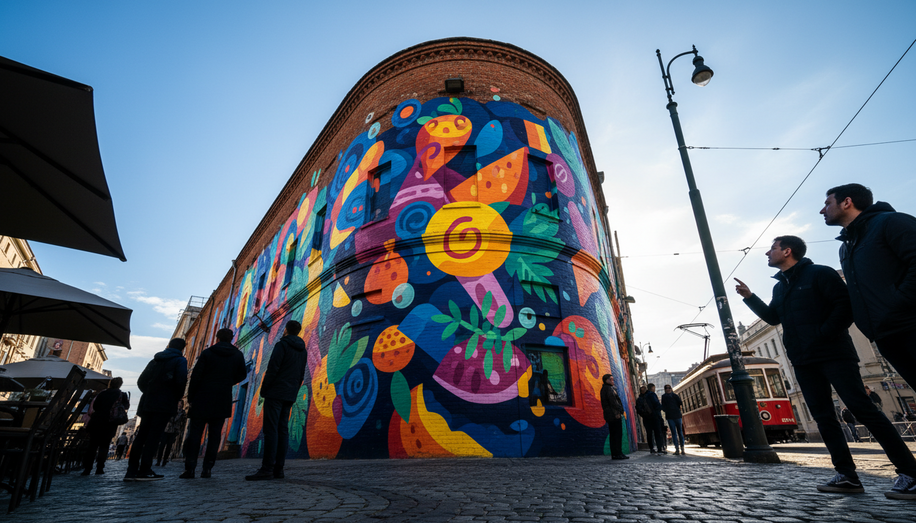

The blank walls of urban neighborhoods are becoming canvases for brand storytelling, where the line between advertising and authentic public art has grown increasingly blurred. As out-of-home advertising evolves beyond traditional billboards, brands are discovering that large-scale murals offer something far more powerful: a way to embed themselves into the cultural fabric of communities while creating lasting visual landmarks that transcend conventional marketing.
This shift represents a fundamental reimagining of how brands connect with audiences. Rather than imposing messages onto public spaces, forward-thinking companies are collaborating with local and established artists to create semi-permanent installations that reflect neighborhood values and artistic vision. Luxury brands including Shinola, Chanel, Givenchy, and Paul Smith have already embraced this approach, with installations appearing in major cities like Los Angeles. These collaborations work because they create what could be called a symbiotic relationship: brands gain authentic cultural relevance and expanded visibility, while artists reach broader audiences and secure meaningful commissions.
The strategic advantage of mural-based OOH campaigns extends beyond aesthetic appeal. When indie brands partner with local artists on murals aligned with their values and the neighborhood’s culture, the results drive measurable business outcomes. Increased foot traffic and sales have been documented for businesses hosting Instagram-popular installations, particularly exemplified by Paul Smith’s “pink wall” project. More dramatically, some brands have witnessed organic reach increases exceeding 3,000 percent, with direct correlations to app downloads and consumer engagement linked to mural activations and influencer participation.
Interactive elements have further elevated the effectiveness of these campaigns. By incorporating QR codes that invite passersby to participate in charitable actions or access exclusive content, brands blur the distinction between consumer and community member. This integration of technology with physical art transforms murals into engagement platforms rather than static advertisements. Hydrow, a rowing machine company, demonstrated this approach by partnering with a local Austin artist to create a mural linked to a philanthropic initiative, allowing viewers to scan a QR code and donate to local causes directly from the installation.
What makes these mural campaigns particularly powerful is their role in fostering genuine community loyalty. Surveyed consumers report a strong sense of community and brand affinity when companies sponsor local art and create experiences encouraging authentic interactions. This emotional connection transcends typical advertising metrics. When a brand invests in beautifying its local environment through collaboration with artists, it positions itself as a community stakeholder rather than merely an external commercial entity.
Some brands have taken community engagement further through recurring local collaborations. Shinola exemplifies this strategy by rotating mural installations, collaborating with different local organizations and artists to maintain fresh engagement and provide continuous reasons for community members to revisit and interact with physical spaces. This approach recognizes that sustained brand presence requires evolving artistic partnerships and ongoing community dialogue.
The collaborative infrastructure supporting these campaigns continues to expand. Specialized agencies now facilitate mural advertising campaigns, recognizing the complex coordination required to balance artistic integrity, brand objectives, and community impact. Professional mural companies work to create high-impact installations that authentically connect brands, artists, and communities, understanding that the most successful campaigns serve all three constituencies.
As urban audiences grow increasingly resistant to traditional advertising while simultaneously craving authentic cultural experiences, mural-based OOH campaigns offer a solution that feels less like interruption and more like contribution. By transforming ordinary walls into masterpieces that reflect local identity and artistic excellence, brands aren’t just advertising—they’re participating in the ongoing creative dialogue that defines neighborhood character and community pride. This evolution suggests that the future of out-of-home advertising lies not in shouting louder, but in creating spaces where brands, artists, and communities collaborate to build something genuinely valuable to urban cultural life.
As brands increasingly prioritize authentic cultural integration and measurable community engagement through mural-based OOH, platforms like Blindspot become indispensable. By offering precise location intelligence for impactful site selection and robust ROI measurement, Blindspot ensures these collaborative artistic endeavors not only beautify urban spaces and foster deep community loyalty, but also deliver clear, quantifiable business outcomes. This allows brands to confidently invest in campaigns that are both culturally resonant and strategically effective, truly blending art with attribution. Learn more at https://seeblindspot.com/