
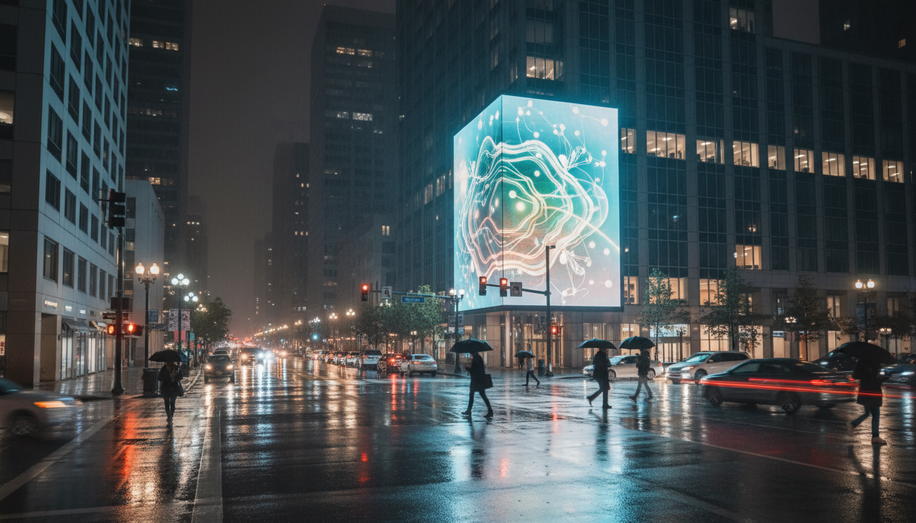

In the glowing sprawl of urban landscapes, digital out-of-home (DOOH) advertising has long been synonymous with spectacle—towering LED billboards and vibrant LCD screens commanding attention day and night. Yet beneath the dazzle lies a stark reality: these networks guzzle energy at an alarming rate. A typical DOOH screen operating 16 hours a day, six days a week for five years consumes around 5,000 kWh, equivalent to a German household’s annual usage, and at full brightness of 4,000 nits, that figure can quintuple. As global energy costs climb and sustainability mandates tighten, the industry is pivoting from power-hungry light shows to smarter, greener operations, slashing carbon footprints without dimming impact.
The foundation of this shift rests on energy-efficient hardware, where innovations in display technology are rewriting the rules of consumption. Modern LED screens, for instance, incorporate smart brightness adjustment sensors that respond in real time to ambient light, automatically dimming on overcast days or at night to curb overconsumption and light pollution. LEDMAN’s Power Saving Edition (PSE) technology takes this further with a “cool screen” concept, optimizing power supply paths and specialized components to lower operating temperatures and heat-related losses. In massive installations like Africa’s largest energy-efficient DOOH setup, PSE alongside optimized drive architecture (ODA) delivers substantial per-square-meter savings, translating to massive utility reductions over time and proving that scale need not spell environmental excess. Similarly, BoldVu’s high-efficiency LCDs leverage mini-LED backlights and optimized optical transmission, consuming up to 50% less power than rivals while upholding peak brightness and durability. Unilumin emphasizes procurement of such hardware upfront, noting that superior heat dissipation eliminates the need for energy-intensive air conditioning, permanently lowering operational expenses.
Complementing these advances is dynamic power management, powered by AI and real-time monitoring. AI algorithms analyze variables like time of day, weather, audience traffic, and even energy pricing to fine-tune brightness and operation, ensuring screens dim during low-traffic or non-peak hours without sacrificing visibility. BoldVu’s AmpVu, VoltVu, and WattVu suites exemplify this, offering granular, real-time power tracking and load adjustments, while dynamic backlight dimming boosts contrast and trims another 15-20% from usage. Ledman’s software layers on dynamic controls to avoid waste during quiet periods, and remote monitoring systems enable proactive maintenance, cutting on-site visits and transport emissions while minimizing downtime. These tools not only optimize individual screens but scale across networks; for high-traffic sites running 24/7, strategic shutdowns during ultra-low periods preserve energy without revenue loss.
Sustainable operational models elevate these tactics into holistic strategies, blending technology with business savvy. Operators are embracing scheduled runtime reductions—many screens now run 18 hours instead of nonstop—factoring in electricity rates that vary wildly by region but trend upward globally. Solar-powered screens and eco-friendly materials further green the ecosystem, with AI optimization poised to underpin Science-Based Targets as more firms commit by 2025. Remote diagnostics reduce truck rolls, and end-to-end supply chain control keeps OOH’s slice of advertising’s carbon footprint below 3.5%. Case studies underscore the ROI: energy savings compound over display lifespans, funding expansions while appealing to eco-conscious brands and regulators.
This evolution signals more than cost-cutting; it’s a maturation of DOOH into a responsible powerhouse. Industry leaders like LG envision sustainable displays as the future, where efficiency marries efficacy. Challenges persist—retrofitting legacy networks and balancing brightness with savings—but the momentum is undeniable. By prioritizing efficient hardware, intelligent power orchestration, and forward-thinking operations, DOOH operators are dimming their environmental shadow, proving that the most captivating ads shine brightest when powered responsibly. Platforms like Blindspot are crucial in this new era, enabling operators to leverage precise audience measurement and location intelligence to optimize screen usage, ensuring displays only illuminate with maximum impact when and where it truly matters. By integrating programmatic campaign management with real-time analytics, Blindspot empowers businesses to execute strategic dimming or shutdowns during low-traffic periods, curtailing energy consumption without sacrificing vital campaign reach or ROI. Discover how to power your campaigns responsibly at https://seeblindspot.com/