
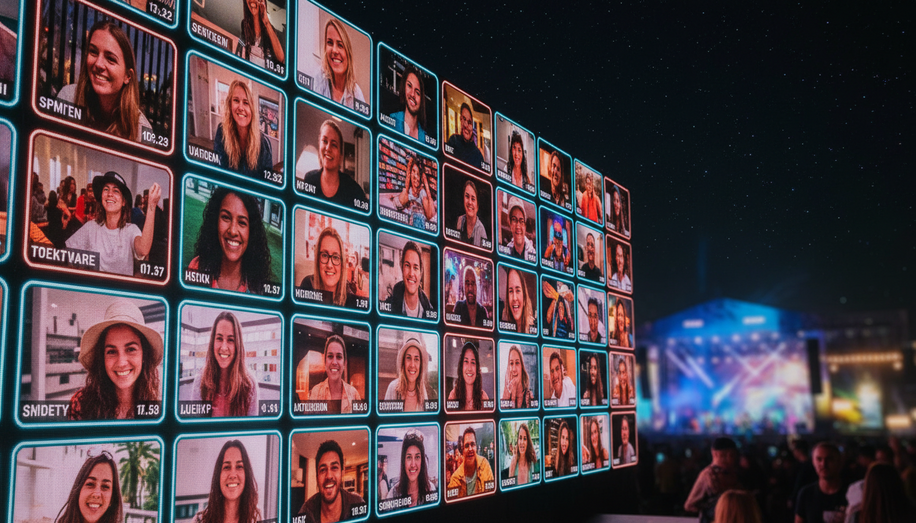

In the bustling streets of urban centers, where pedestrians scroll through feeds without pausing, out-of-home (OOH) advertising is evolving from a one-way broadcast into a dynamic catalyst for user-generated content (UGC). By prompting real-time interactions and seamlessly funneling them into social media, innovative OOH campaigns create a feedback loop that transforms passive viewers into active creators, amplifying brand reach exponentially.
This street-to-feed synergy leverages OOH’s inherent strength: its unmissable presence in the physical world. Digital out-of-home (DOOH) screens, billboards, and installations interrupt daily routines, sparking immediate responses that digital ads alone rarely achieve. Brands are prompting UGC through simple yet irresistible calls-to-action—QR codes, hashtags, and challenges that bridge the tangible ad with smartphone cameras. Over two-thirds of adults have noticed OOH incorporating such elements, with half reporting increased online engagement as a result. The result? A campaign that doesn’t end when passersby walk away; it lives on through shared photos, videos, and stories.
Consider the power of social proof, where peer voices outshine polished brand messaging. UGC integrates authentic customer reviews, product photos, and social posts directly into DOOH creatives, fostering trust and relatability. Real customer images of products in use appear more genuine than staged shots, hooking audiences who recognize their own experiences reflected back. Competitions and challenges take this further, inviting users to contribute content that fuels the campaign itself. One brand’s contest-generated submissions not only populated screens but created an endless stream of adaptable material, blending organic and sponsored posts for infinite variety.
Interactive elements supercharge this loop. Anamorphic 3D displays, like those giant cats leaping from Tokyo screens, use forced perspective to stun onlookers into filming the illusion. These “naked eye” effects are inherently shareable, turning streets into viral sets where the wow factor compels documentation. Multi-sensory activations add layers: billboards dispensing scents or vending machines requiring social check-ins transform viewers into participants. When people engage, they share—40% of adults report posting OOH encounters online at least sometimes, organically extending the ad’s lifespan.
Real-world examples illustrate the payoff. A high-traffic installation blending location intelligence with timely visuals generated 20 million views and 6,000 tweets in two hours, as audiences captured and amplified the moment. Experiential OOH, such as immersive pop-ups or augmented reality overlays, blurs entertainment and advertising, leaving emotional imprints that prompt shares. Brands pairing these with influencers seed the momentum: creators “discover” the activation first, kickstarting UGC cascades. McDonald’s and rivals even harnessed AI-generated billboards, capitalizing on the tech hype to provoke reactions ripe for social amplification.
The feedback loop closes as UGC returns to OOH screens, creating a self-sustaining ecosystem. Customer-submitted content—unfiltered and spontaneous—reveals audience pain points more accurately than extensive research, allowing brands to refine messaging in real time. High-traffic, iconic locations enhance this: ads there signal quality, boosting shareability while leveraging footfall for spontaneous engagement. In 2026, this isn’t optional; viral OOH designs the street with the feed in mind, unlocking authority digital channels can’t match.
Yet success demands intentionality. Campaigns must evoke emotional triggers—humor, beauty, provocation—to make phones emerge. Clear CTAs, like scannable QR codes directing to challenges, ensure seamless transitions. Mixing UGC types—reviews for trust, photos for authenticity, challenges for volume—maximizes impact without overwhelming the core message. Brands shunning this risk irrelevance in a share-everything era.
Ultimately, from street to feed, OOH activates a participatory culture where audiences co-create the narrative. This loop doesn’t just boost metrics; it humanizes brands, turning one-off exposures into enduring conversations. As OOH blurs physical and digital boundaries, the most memorable campaigns won’t be seen—they’ll be lived, captured, and shared by the very people they reach.
Blindspot empowers brands to master this dynamic street-to-feed synergy, leveraging precise location intelligence to position OOH for maximum UGC generation. With real-time campaign performance tracking and robust ROI measurement, Blindspot ensures brands can quantify the digital amplification and audience engagement driven by their interactive OOH, closing the feedback loop from capture to conversion. Learn more at [https://seeblindspot.com/](https://seeblindspot.com/).