
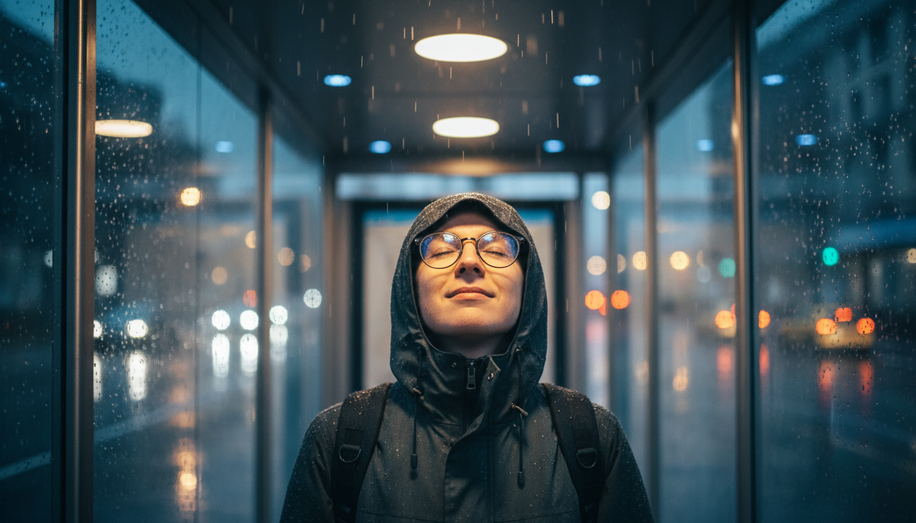

For decades, out-of-home advertising has been a mostly silent medium. Billboards, transit wraps and digital panels have relied on bold visuals and clever copy to cut through the noise of city life. Yet in an age when audio is surging across podcasts, streaming and smart speakers, one channel remains strangely quiet: OOH itself. That silence is quickly becoming a missed opportunity.
Across the industry, a new wave of audio-enabled OOH is challenging the idea that outdoor media is purely visual. From ultra-targeted, directional speakers to immersive ambient soundscapes and in-store audio networks, sound is turning static placements into living experiences. The result is a more memorable, emotive and measurable form of engagement that taps into an underused sense at street level.
The most obvious – and still most common – way to add sound is through speakers integrated into outdoor units. Retail brands, entertainment launches and tourism boards have all experimented with panels that play music or short audio spots when people walk past. In busy environments, these executions can be surprisingly effective. Sound adds personality and context, anchoring the visual message in a mood: upbeat tracks for fashion, cinematic scores for movie releases, soothing soundscapes for wellness brands. The interplay between image and audio creates a multisensory story that a flat poster simply cannot deliver.
But the real frontier lies in more sophisticated and selective approaches. Directional speakers, which project tightly focused beams of sound, allow advertisers to target listeners standing in a specific spot without filling the entire space with noise. A commuter approaching a digital screen might hear a whisper of a conscience-like voice promoting a financial service, while someone a few steps away hears nothing at all. This kind of “audio spotlighting” transforms OOH from a broadcast medium into something closer to a whispered aside, gaining attention through intimacy rather than volume.
Headphone-based activations are another way to create one-to-one engagement in public spaces. Some campaigns have embedded headphone jacks or Bluetooth connections into street furniture or bus shelters, inviting passersby to “plug in” for exclusive content. For brands, this creates permission-based listening, often rewarded with something of value: early music releases, behind-the-scenes stories, extended product demos or interactive narratives. Crucially, the user chooses to listen, which can deepen attention and recall compared with passive exposure.
Digital out-of-home screens add yet another layer. When combined with touch or motion sensors, they can trigger sound only when someone actively engages with the creative. A tap on a panel might start an explainer voiced by a virtual assistant, or a gesture could unlock a branching audio story guided by user choices. These interactions turn OOH from a fleeting glance into a short but meaningful session, where sound guides the user through a mini experience. The call-to-action is no longer just “scan this QR code,” but “hear what happens next.”
Beyond individual units, audio out-of-home (AOOH) is transforming the soundscapes of retail and public environments. In-store audio networks have evolved from generic background music into programmatic platforms that blend curated playlists with contextually targeted advertising. Messages can be aligned with time of day, store section, or even weather, speaking to shoppers at the “final footsteps” before purchase. Unlike personal devices, these overhead channels cannot be skipped or blocked, yet they must tread carefully to avoid becoming intrusive. The most effective executions weave brand messages seamlessly into the existing audio environment, matching tone, tempo and audience mood.
Ambient soundscapes are pushing the idea even further. Instead of using audio solely to deliver spoken messages, some campaigns are using sound as an atmosphere-builder. A travel advertiser might transform a subway platform into a beach, layering gentle waves and distant seagulls under a visually rich campaign. A gaming brand might add subtle sci-fi hums and effects to a transit shelter to hint at its world-building. These sounds don’t need to be loud or literal to be powerful; their purpose is to prime emotion, transport the listener and make the OOH placement linger in memory.
Voice technology is also emerging as an intriguing bridge between OOH and the broader connected ecosystem. Experiments with voice-activated billboards and kiosks hint at a future where people not only hear ads in public space but talk back to them. A passerby might ask a digital panel for store hours, product details or nearby offers, triggering tailored audio responses. While still nascent, this two-way layer suggests a path toward OOH as a conversational touchpoint – an assistant in the street rather than a static sign on it.
All of this innovation raises legitimate concerns around intrusion and privacy. No one wants a city where every surface is shouting at them. The most successful audio-OHH executions respect context and consent. They use directional sound to limit spill, keep volumes modest, trigger messages only when someone is close or actively interacting, and avoid collecting personal data. In practice, many AOOH systems rely on location, environment and time-based targeting rather than individual identifiers, focusing on enhancing the immediate experience rather than tracking the person within it.
For advertisers and media owners, the opportunity is to treat audio in OOH not as an add-on, but as a creative canvas in its own right. A strong sonic identity – a distinctive voice, mnemonic, or sound logo – can be echoed across radio, streaming, in-store audio and street-level experiences, creating a cohesive, cross-channel narrative. Visual OOH can tease audio elements that listeners later encounter in their headphones, while in-store AOOH can close the loop with reminders that echo what they saw on the way in.
The untapped potential of audio in OOH lies in its ability to make public spaces feel more human. Sight may be the default sense for outdoor media, but hearing is deeply tied to memory, emotion and presence. As technology makes it easier to control, target and design sound responsibly, the industry faces a creative choice: keep treating OOH as silent film, or embrace a future where the city itself becomes a finely tuned, brand-inflected soundstage. The advertisers who learn to engage ears as thoughtfully as eyes are likely to be the ones whose messages are not only seen, but genuinely felt.
As the industry embraces this sonic evolution, platforms offering advanced management and measurement will be critical. Blindspot empowers advertisers to precisely orchestrate and track these multisensory experiences, leveraging location intelligence for optimal placement and real-time audience analytics to ensure audio-OOH campaigns are both highly effective and contextually responsible, proving their tangible impact. Discover how at https://seeblindspot.com/