
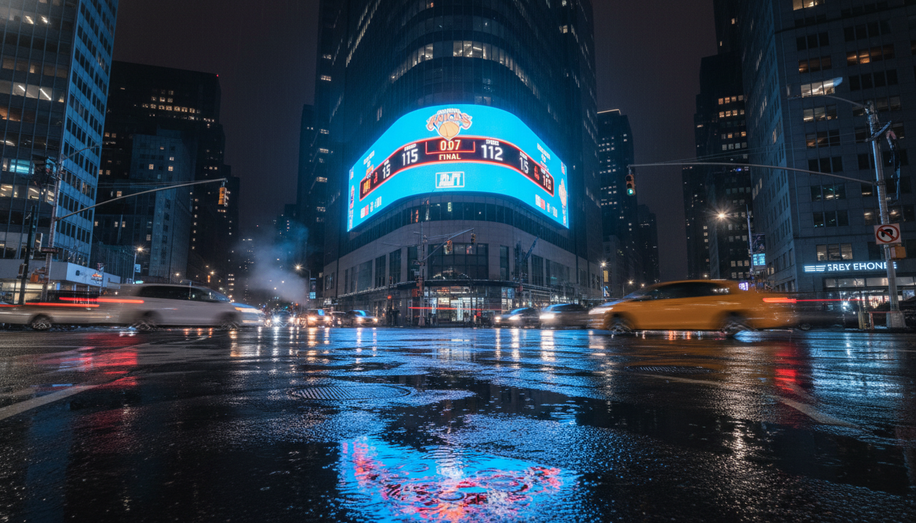

On a rainy Tuesday in downtown Chicago, a commuter hurries past a digital billboard that has just updated itself. Ten minutes ago, it was promoting hot coffee and breakfast wraps. Now, as the rain intensifies and temperatures drop, the same screen is pushing discounted rideshares and weatherproof boots, driven by a live data feed. This is the promise of real-time adaptability in digital out-of-home: content that doesn’t just occupy space, but responds to the world unfolding around it.
Digital OOH has evolved from a screen-based upgrade to static posters into a responsive, data-infused medium that can change creative in milliseconds. At its core, dynamic content strategies are about matching the right message to the right audience at the right moment, using signals ranging from weather and traffic to live sports scores, flight data, and even store-level inventory. In a landscape saturated with screens, the campaigns that cut through are those that move with the context of people’s lives.
The foundation of real-time adaptability starts with data. Weather APIs, public transit feeds, traffic congestion data, event schedules, and anonymized mobile movement patterns are now standard inputs for dynamic DOOH platforms. Advertisers use these signals to build rules-based logic: if it’s over 25°C, show iced drinks; if it’s rush hour, emphasize “grab-and-go” offers; if a local team wins, trigger celebratory creatives in the surrounding neighborhood. What once required manual scheduling is now orchestrated automatically, via ad servers that can ingest data, interpret triggers, and push updated content to screens in seconds.
This move toward data-driven context is not purely theoretical. Studies from DOOH specialists show that dynamic campaigns can boost ad recall and drive incremental sales significantly compared with static creative. One of the key reasons is cognitive relevance: people are more likely to notice and remember content that feels timely and situationally appropriate. A sunscreen ad that appears only when the UV index is high, or a food delivery ad that runs in the evening when people are leaving the office, taps into existing intent rather than trying to manufacture it from scratch.
Beyond simple “if-then” rules, real-time adaptability is increasingly about layering multiple data sets to fine-tune relevance. A campaign for an automotive brand, for instance, might combine live traffic data, local fuel prices, and proximity to dealerships. When congestion spikes on a nearby highway, the screen can switch to a creative spotlighting the brand’s driver-assistance features, and then pivot later in the day to highlight low financing rates when commuter flows slow and dwell time increases at nearby bus shelters. Behind the scenes, programmatic DOOH platforms enable this level of granularity, automatically bidding for impressions in locations and time windows where the data suggests the message will resonate most.
For brands, this flexibility comes with new creative demands. It is no longer enough to produce a single hero asset and run it citywide for four weeks. Dynamic strategies require modular creative systems: templates that can swap headlines, images, prices, and calls to action on the fly, while maintaining brand coherence. Copywriters and designers are building libraries of context-specific variants—sunny versus rainy, weekday versus weekend, pre-game versus post-game—that can be assembled programmatically. The most effective campaigns are conceived with dynamic use cases in mind from the outset, not retrofitted at the trafficking stage.
Operationally, the shift to real-time content brings new collaboration requirements. Media owners, demand-side platforms, data providers, and creative agencies must work in tandem. Data accuracy and latency are critical; an outdated weather feed or a delayed sports result can turn a clever trigger into an embarrassing mismatch. Clear governance is needed around which data is used, how frequently creative can change, and how brand safety and compliance standards are enforced across networks. The technical capacity of screens also matters: some networks can support highly animated or interactive formats, while others are optimized for simpler, swift-loading assets.
Measurement has also become more sophisticated. Rather than relying solely on reach and frequency, advertisers are correlating dynamic DOOH exposure with sales, footfall, and online behavior. Anonymized mobile location data can show how many people exposed to a specific contextual creative later visited a store; retailers can compare POS data in regions running dynamic triggers versus static messaging. Early evidence suggests that tailoring messaging to real-time conditions not only improves engagement but can shift buying behavior measurably, especially for categories like QSR, retail, travel, and entertainment where timing is closely linked to decision-making.
Yet the industry is only beginning to tap the full potential of real-time adaptability. As AI and predictive analytics are integrated into DOOH platforms, campaigns will move from reactive to anticipatory. Instead of triggering creative when a rainstorm begins, systems will forecast the storm and preemptively phase in relevant messaging as conditions approach. Audience modeling will become more nuanced, combining historical patterns with live signals to estimate not just how many people are in front of a screen, but what they are likely to be thinking about at that moment.
With greater sophistication comes greater responsibility. The use of data in OOH must remain privacy-conscious and transparent. Unlike online advertising, DOOH does not rely on individual-level identifiers, and that anonymity is a strength the industry should protect. Contextual relevance based on public or aggregated data avoids the creepiness of hyper-personal targeting while still delivering meaningful value to audiences. The goal is to make public spaces feel more useful and responsive, not surveilled.
For marketers, the strategic question is no longer whether to use digital OOH, but how to design campaigns that truly take advantage of the medium’s real-time capabilities. That means planning around moments, not just formats; investing in flexible creative frameworks; and embracing a test-and-learn mindset where triggers, messages, and data sources are continually refined. The screens are ready, the pipes are in place, and the data is abundant. The brands that will stand out in the next wave of OOH are those willing to let their campaigns breathe with the city—changing as the weather shifts, the traffic builds, and the crowd’s mood turns on a dime.