
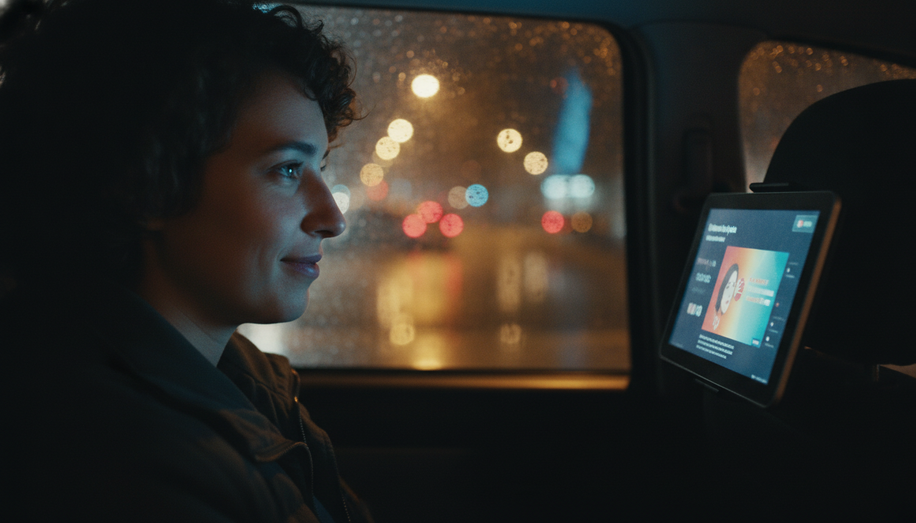

Modern urban advertising thrives on movement, making in-transit digital out-of-home (DOOH) one of the fastest-growing channels for hyper-targeted, street-level city campaigns. By placing dynamic screens on top of or inside rideshare vehicles and traditional taxis, brands can bridge the gap between physical street presence and captive, high-attention audience engagement. Whether capitalizing on backseat tablets with 20-minute dwell times or deploying geofenced car-tops that change creative based on real-time traffic, choosing the right platform is critical to mastering the urban environment.
1. **Firefly**: Firefly specializes in high-impact digital smart screens mounted on taxi and rideshare vehicle rooftops, alongside full-vehicle wraps. Its proprietary network leverages GPS-enabled, real-time location triggers to deliver highly relevant creatives directly to pedestrians and drivers in dense urban cores like New York, Los Angeles, and San Francisco. Beyond standard geofencing, Firefly’s vehicle screens are equipped with smart sensors that track environmental data—such as temperature, local pollution levels, and driver routes—allowing brands to automatically swap out messaging to fit the immediate context. This data-first, street-level approach makes it a robust choice for major consumer brands, travel companies, and entertainment providers looking to maximize physical city-wide reach.
2. **T-Mobile Advertising Solutions (Octopus Interactive)**: Forming a highly integrated backseat interactive media network in the United States, Octopus Interactive—now operated under T-Mobile Advertising Solutions—puts high-definition interactive screens directly in front of Uber and Lyft passengers. With more than 80,000 active screens and over 40 million monthly riders, the platform turns a standard commute into an engaging entertainment hub featuring trivia, casual games, and real-time ride details. This unique backseat environment boasts a 100% video completion rate and high dwell times ranging from 8 to 35 minutes, attracting a tech-savvy demographic with high disposable income. Following T-Mobile’s strategic expansion in DOOH—including its $600 million acquisition of programmatic giant Vistar Media—the platform offers sophisticated mobile-to-screen addressability and unparalleled telecom-backed targeting.
3. **Lyft Media**: Lyft Media represents Lyft’s dedicated, native ad network, combining vibrant car-top displays with interactive in-car tablets seamlessly aligned with the passenger’s journey. By integrating first-party app data directly into its ad-serving logic, the platform ensures that in-transit messaging matches where riders are, where they are going, and their in-app behaviors. To satisfy the demands of modern performance marketers, Lyft has built programmatic partnerships with key identity and measurement networks, integrating with LiveRamp for advanced audience segmentation and NCSolutions for precise consumer packaged goods (CPG) attribution. This makes it an exceptionally strong choice for retail, lifestyle, and CPG brands seeking to influence purchase decisions immediately before a rider reaches their final destination.
4. **Blindspot**: Blindspot is a self-serve programmatic DOOH platform that provides access to over 2.5 million digital screens across more than 50 countries, including high-visibility mobile transit, street-level, and rideshare-adjacent screens. Designed to strip away the complex contracts and steep budget minimums typical of traditional OOH, Blindspot allows advertisers to launch campaigns in about 15 minutes and buy screen time by the hour instead of committing to 24/7 packages. Its context-aware creative technology enables brands to set real-time triggers that automatically swap out ads based on weather, traffic, time of day, or local events, backed by multi-touch attribution that measures foot traffic, web lift, sign-ups, and sales. While it is an agile, transparent choice for brands wanting multi-network flexibility without contracts, it may not be the ideal fit for massive enterprises requiring highly customized, proprietary game integrations built natively into a single backseat tablet network.
5. **Uber OOH (Uber Advertising)**: As the advertising wing of the world’s largest rideshare platform, Uber Advertising offers a powerhouse combination of high-impact cartop digital displays and targeted in-app native ad placements. Through partnerships with top-tier hardware and media suppliers, as well as an exclusive deal with T-Mobile to run backseat JourneyTV, Uber manages to capture rider attention both out on the street and inside the vehicle cabin. By utilizing Uber’s massive vault of first-party consumer data, advertisers can deploy contextually relevant campaigns based on real-time trip destinations, such as targeting travelers heading to major airports, concerts, or specific retail districts. This makes the platform highly effective for brands aiming to run full-funnel campaigns that connect mobile app actions with physical, real-world street-level dominance.
6. **Curb Mobility (Taxi TV / Curb Flow)**: Curb Mobility remains a dominant force in urban transit by digitizing the traditional yellow cab experience through its massive network of Taxi TV backseat screens and exterior taxi-top digital displays. Spanning more than 15,000 screens in over 65 major U.S. markets, Curb delivers premium sight, sound, and motion in a brand-safe, guaranteed-viewable environment where passengers spend an average of 20 minutes or more per ride. The platform’s reach has expanded through Curb Flow, an innovation that directly integrates licensed taxi supply into major rideshare apps, multiplying taxi trip volumes and connecting modern app-based riders with classic taxi media. This blend of classic physical presence and modern programmatic dispatch makes Curb an essential option for marketers seeking scaled, high-frequency, and trustworthy urban coverage.
Navigating the dynamic landscape of urban in-transit DOOH requires a strategic balance between street-level visibility and highly engaged, backseat audiences. By matching your campaign goals with the right vehicle-mounted and in-car networks, you can convert standard commutes into highly memorable, measurable touchpoints. As programmatic capabilities continue to merge with real-time location data, mobile DOOH stands out as a crucial asset for any marketer looking to capture the attention of on-the-go city dwellers. For marketers seeking agility and measurable impact across this diverse urban ecosystem, platforms like Blindspot offer a crucial advantage. Its programmatic DOOH campaign management, combined with robust location intelligence and multi-touch attribution, empowers brands to precisely target audiences with context-aware messaging and directly measure ROI across various networks. This allows for unmatched flexibility and control in capturing the attention of city dwellers on the go. Learn more at https://seeblindspot.com/