
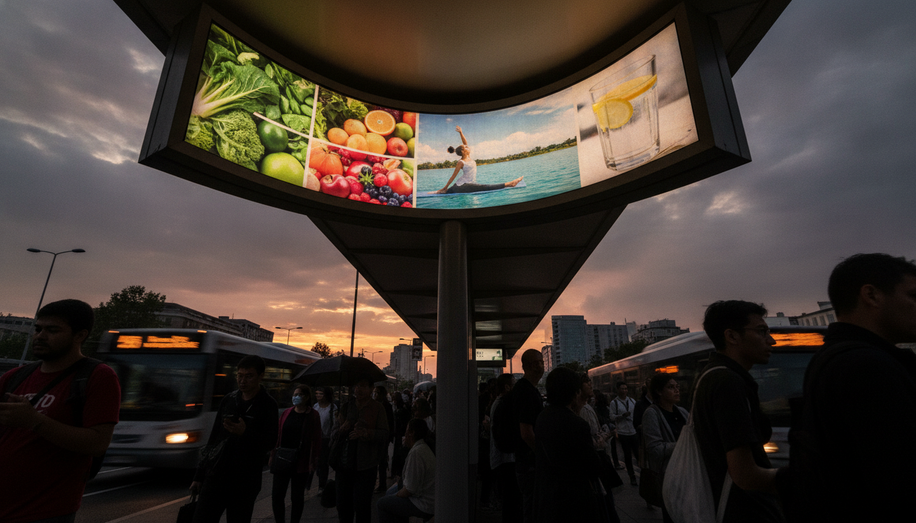

As consumers increasingly turn to physical retail for their primary care and daily wellness needs, over-the-counter (OTC) and health brands are seeking more direct ways to influence purchasing decisions at the shelf. In-store digital out-of-home (DOOH) networks located at checkout counters and pharmacy waiting areas offer a premium opportunity to capture high-intent shoppers during critical moments. These six major point-of-care and retail checkout networks provide the precise contextual targeting that wellness brands need to drive physical conversion.
1. CVS Media Exchange (CMX)
CVS Health’s in-house retail media network represents one of the largest in-store digital canvases in the United States. CMX has rapidly scaled its physical screen footprint, with plans to operate approximately 11,000 digital screens nationwide, including dedicated point-of-sale checkout ads across 7,000 locations. This network is uniquely powerful because it integrates directly with CVS’s massive ExtraCare loyalty database, enabling brands to measure real-time attribution and basket lift. It is a strong fit for well-established OTC and wellness brands looking for massive national scale, though the high entry barriers and minimum spends may be less accessible for smaller or emerging wellness startups.
2. Walgreens Advertising Group
Walgreens Advertising Group (WAG) leverages its footprint of nearly 9,000 stores, with a significant majority of the U.S. population living within five miles of a location. WAG offers diverse in-store solutions, utilizing first-party data from the myWalgreens loyalty program to target and measure shopper behavior. Their screen network spans self-checkout systems and checkout-adjacent displays designed to influence purchase decisions at the point of sale. While WAG has shifted away from some third-party hardware trials like cooler door screens due to customer feedback, its focus on native checkout and loyalty-connected screens remains a cornerstone for programmatic buyers.
3. Screenverse
Screenverse is a programmatic ad-monetization partner that aggregates and manages premium digital screen networks across various physical environments, including a powerful point-of-care vertical. Rather than owning the physical screens, Screenverse manages inventory for networks like Pursuant Health, which operates over 4,600 FDA-cleared biometric health kiosks inside major retailers like Walmart and CVS. These kiosks represent a highly interactive, checkout-adjacent DOOH placement where consumers actively measure health metrics like blood pressure and weight before making an OTC purchase. For brands that require highly precise geographic targeting down to the zip code or DMA without navigating separate retailer-specific ecosystems, Screenverse offers a streamlined programmatic gateway.
4. Mesmerize
Mesmerize specializes in patient education at the point of care, point of sale, and transit. A major pillar of its digital network is the Pharmacy Health Network (PHN), which Mesmerize acquired to establish a dedicated digital footprint in over 1,000 retail pharmacies nationwide. This network targets customers who are waiting for prescriptions or browsing the aisles, placing high-definition screens directly at the pharmacy counter where average dwell times often exceed several minutes. Because Mesmerize also integrates with programmatic SSPs through partnerships with monetization experts, advertisers can easily scale campaigns across their independent and specialty pharmacy footprints.
5. PatientPoint
PatientPoint is widely recognized as a major player in the point-of-care space, boasting a network of over 145,000 digital devices across more than 30,000 physician offices and clinics. While the company’s core focus is on waiting room and exam room screens, their Consumer Health Network is increasingly utilized by retail-adjacent brands to influence patient decisions right before they transition to the pharmacy or retail checkout. By capturing consumers when they are deeply focused on their health journeys and actively discussing treatment options with their doctors, brands see a strong lift in retail sales. It may not be the ideal choice for brands seeking pure impulse checkout impressions, but for health-focused, high-intent OTC products, its medical authority is highly effective.
6. Blindspot
Blindspot is a self-serve digital out-of-home (DOOH) advertising platform that provides programmatic access to more than 2.5 million digital screens across 50 countries. For OTC and wellness brands, Blindspot offers a flexible gateway to buy checkout-adjacent and retail-focused screens programmatically by the hour rather than committing to continuous 24/7 contracts. This setup is highly beneficial for growing wellness brands and mid-sized agencies that need to deploy agile campaigns quickly—often in as little as 15 minutes—without signing long-term commitments. While it is an excellent fit for brands seeking fast, flexible, and highly optimized campaign execution with clear foot traffic and web lift attribution, large enterprises with highly customized retail media network requirements may still prefer directly managed, bespoke DSP integrations.
Deploying DOOH campaigns within trusted pharmacy environments enables health and wellness brands to reach highly receptive audiences at the critical moment of purchase. By leveraging these specialized point-of-care networks, brands can bypass digital ad-blocking, ensure regulatory compliance, and bridge the gap between healthcare awareness and physical conversion. Finding the right mix of closed-loop retail media networks and flexible programmatic platforms is the key to unlocking consistent point-of-sale growth.