
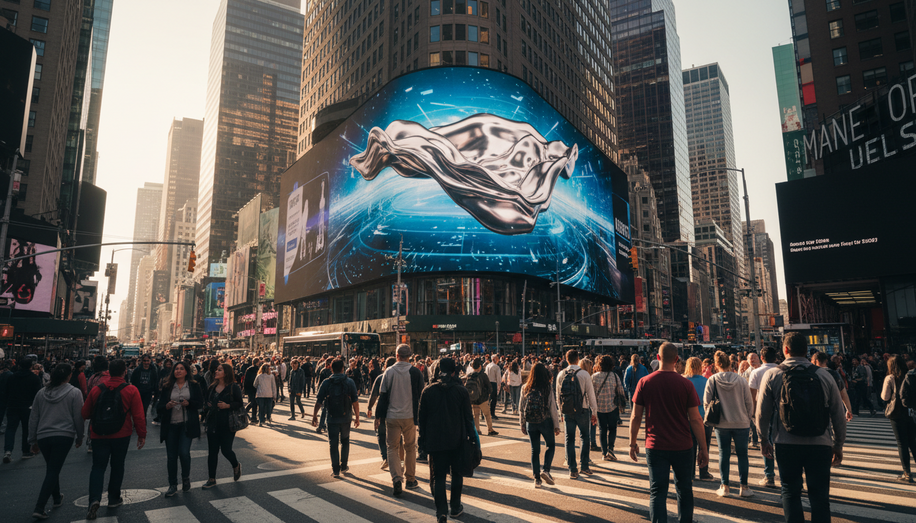

In the bustling heart of urban centers, where skyscrapers pierce the sky and pedestrians weave through throngs of commuters, a quiet revolution is unfolding. Holographic projections leap from building facades, and anamorphic billboards twist flat images into lifelike illusions that halt foot traffic in its tracks. This is the dawn of 3D advertising in urban environments, a technology poised to redefine out-of-home (OOH) campaigns by transforming static displays into immersive spectacles that blend seamlessly with city life.
Gone are the days of two-dimensional billboards vying for fleeting glances. By 2026, 3D anamorphic and holographic displays have surged into mainstream use, their costs plummeting to make high-impact visuals accessible even for mid-tier brands. Picture a McDonald’s campaign where a towering burger appears to sizzle and steam in mid-air at a busy intersection, or Nike’s holographic sneakers that seem to sprint along a subway platform, drawing crowds who snap videos for instant social media virality. These installations create a “stop-and-stare” effect, boosting dwell time by 20 to 40 percent and turning passive viewers into active participants. In high-traffic hubs like airports, EV charging stations, and sports venues, such displays capitalize on moments of high intent, where consumers are primed for engagement amid their daily routines.
Urban landscapes, already densified by rapid urbanization, provide the perfect canvas for this evolution. Strategic placements in city centers, transit nodes, and retail corridors maximize reach to diverse demographics spending ever more time outdoors. Programmatic digital out-of-home (DOOH) platforms amplify the potential, deploying dynamic 3D content in real-time across citywide networks. Ads adapt to audience data—dwell time, demographics, weather, or local events—delivering hyper-local, contextually relevant messaging that feels tailor-made. Imagine a rain-soaked Times Square where a holographic umbrella pops open from a billboard, syncing with live weather feeds to promote a nearby café, or event-tied projections during festivals that overlay brand stories onto historic architecture.
Interactivity elevates these experiences further, blurring the line between advertisement and environment. Gesture-controlled walls respond to passersby’s waves, proximity sensors trigger personalized AR overlays via smartphones, and NFC taps or QR codes unlock exclusive content. In smart cities, IoT-connected screens integrate with traffic flows and real-time analytics, optimizing content for peak moments. A digital corridor in a shopping district might pulse with motion-responsive holograms that invite users to “step into” a virtual product demo, fostering deeper brand connections and shareable moments that ripple across TikTok and Instagram. This convergence of physical and digital realms positions 3D advertising as a bridge to the metaverse, where urban OOH campaigns extend into virtual worlds for omnichannel storytelling.
Sustainability underpins this futuristic vision, aligning immersive tech with eco-conscious urban mandates. Energy-efficient LED backbones power solar-equipped 3D displays, slashing emissions from traditional printing and transport while recyclable materials ensure minimal environmental footprint. European markets lead with stringent green standards, now influencing U.S. metros, where brands like those in fashion and fast food tout carbon-neutral holograms to resonate with values-driven consumers. Forecasts from Statista predict DOOH, including these advanced formats, will claim over 40 percent of total OOH spend by 2026, driven by double-digit revenue growth and proven ROI in awareness and action.
Yet challenges persist in this transformation. High initial setup costs, though dropping, demand precise location strategies to justify investment, while data privacy concerns loom over audience targeting. Regulatory hurdles in densely packed cities—light pollution rules or facade permissions—could temper rollout, though smart city infrastructure eases integration. Still, the momentum is undeniable: OOH revenue is climbing as digital fatigue erodes trust in online ads, shifting budgets toward reliable, frictionless urban presence.
As 2026 unfolds, 3D advertising promises to humanize the concrete jungle, weaving brands into the urban narrative. Holograms dancing over plazas and anamorphic illusions animating alleyways won’t just sell products—they’ll create communal moments, turning commutes into adventures and cities into living canvases. For advertisers, the message is clear: in an era craving authenticity and wonder, those who master 3D immersion will not only capture eyes but redefine how consumers experience the world around them. Urban environments, long symbols of transience, are becoming stages for enduring impact.