
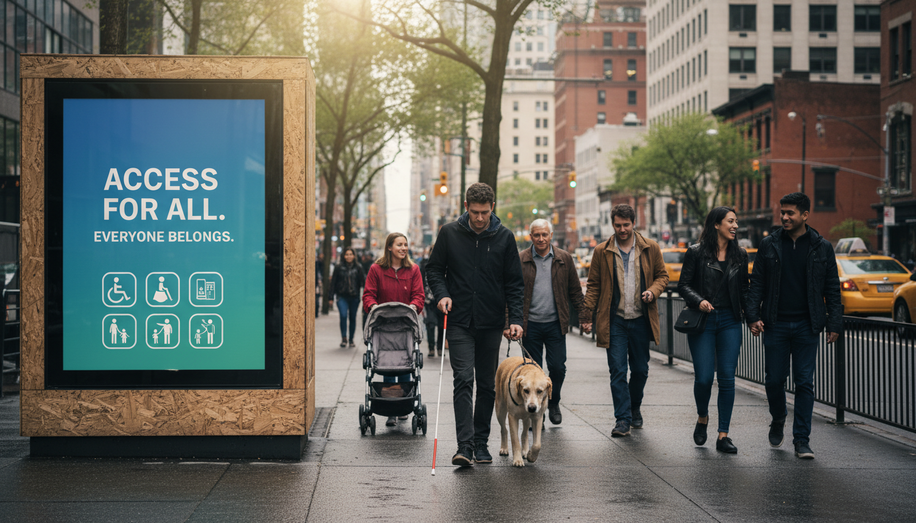

In the bustling streets of urban centers and along highways, out-of-home (OOH) advertising captures the attention of millions daily, but too often it excludes those with disabilities. Brands aiming to reach truly diverse audiences must prioritize accessibility in their designs, incorporating features like high-contrast visuals, larger fonts, and multi-sensory elements to comply with regulations and foster inclusivity. This approach not only meets legal standards such as the Americans with Disabilities Act (ADA) but also enhances engagement and builds a reputation for social responsibility.
Accessibility in OOH begins with understanding the diverse needs of viewers, from visually impaired pedestrians relying on auditory cues to those with hearing loss who depend on clear visual prompts. For digital billboards and signage, integrating screen readers—text-to-speech software that narrates content—allows blind individuals to access messages via connected devices, describing images and navigation prompts for a full auditory experience. Similarly, braille interfaces on interactive touch screens or adjacent buttons enable tactile navigation, essential in high-traffic areas like transit hubs where quick information access is critical. These innovations transform static ads into dynamic, inclusive tools, ensuring no one is left out amid the rush of city life.
Visual design plays a pivotal role, particularly for those with low vision or cognitive challenges. Regulations and best practices demand fonts at least 24 pixels high—or one inch per character for every 35 feet of viewing distance—to guarantee legibility from afar, such as 500 feet for digital billboards. High-contrast color schemes, like black text on white backgrounds, further aid readability, while larger fonts benefit elderly viewers and those with mild impairments by making transit schedules, promotions, or emergency alerts instantly graspable. Static OOH formats, including posters and traditional billboards, should simplify messaging with bold, uncluttered layouts, avoiding fine print that vanishes at speed or distance. Publicity materials must also incorporate recognized accessibility symbols, such as the wheelchair icon for mobility features or hearing loss symbols for assistive aids, signaling compliance and inviting broader participation.
For hearing-impaired audiences, audio-visual synchronization is non-negotiable. When digital OOH displays audio messages, accompanying subtitles, flashing icons, or animated visuals ensure the information lands effectively, as seen in emergency announcements where on-screen text reinforces spoken words. This multi-modal strategy extends to non-digital formats too: strategically placed QR codes linking to audio descriptions or sign language videos can bridge gaps, provided they are large and scannable from 36-inch-wide accessible pedestrian routes with passing spaces every 200 feet. Brands must consider placement carefully—OOH cannot obstruct sightlines or pathways, per zoning rules that mandate minimum heights and distances from roads to prioritize safety for all, including wheelchair users.
Regulatory landscapes reinforce these goals, varying by jurisdiction but converging on core principles. Local zoning often requires OOH to avoid hazards, promote aesthetics, and accommodate disabilities, with some areas mandating sustainable materials that indirectly support accessibility through durable, glare-resistant surfaces. The ADA sets benchmarks for public accommodations, influencing digital signage to feature intuitive interactions like large buttons at accessible heights. In transportation corridors or near sensitive sites like hospitals, restrictions emphasize non-disruptive designs that maintain focus and respect, aligning with broader inclusivity efforts. Non-compliance risks fines or removal, but forward-thinking brands view these as opportunities: accessible OOH boosts public engagement by 20-30% in some studies, as wider audiences interact more freely.
Case studies illuminate success. Eflyn Electronics’ outdoor digital solutions exemplify integration, combining screen readers, braille, and ADA-compliant placements in airports and parks to deliver wayfinding and ads equally to all. National Park Service guidelines similarly urge promotion of accessible features in brochures and media, ensuring visitors know about alternative formats upfront. Brands like these report improved trust—consumers perceive inclusive advertisers as ethical, driving loyalty in competitive markets.
Yet challenges persist. Retrofitting legacy billboards demands investment, and fleeting exposure times—mere seconds for drivers—amplify the need for instant comprehension. Designers counter this with “accessibility-first” principles: test prototypes with diverse focus groups, adhere to WCAG web standards adapted for OOH (like alt-text for linked digital content), and leverage solar-powered displays for eco-friendly reliability. Emerging tech, such as haptic feedback on interactive kiosks, promises even greater inclusion for mobility-impaired users.
Ultimately, inclusive OOH design elevates advertising from mere visibility to meaningful connection. By embedding accessibility into creative briefs—from font sizing to sensory redundancy—brands not only navigate regulations but redefine public spaces as equitable arenas. In an era where 15% of the global population lives with disabilities, this commitment expands reach, mitigates risks, and positions companies as leaders in a more welcoming world. Forward momentum lies in collaboration: media owners, agencies, and regulators partnering to standardize practices, ensuring every billboard whispers—or shouts—its message to all. To truly embrace this inclusive vision, platforms like Blindspot become indispensable, leveraging location intelligence to pinpoint optimal sites that naturally support accessible design requirements and comply with local zoning for non-obstruction. Furthermore, its robust audience measurement and analytics can quantify the expanded reach and enhanced engagement driven by accessible OOH initiatives, providing vital data to prove the tangible benefits of inclusivity for brands. Discover how Blindspot can elevate your OOH strategy at https://seeblindspot.com/