

Out of Home advertising has undergone a fundamental transformation in how it delivers messages to audiences. Rather than relying on static creative alone, today’s most effective OOH campaigns harness the power of contextual factors—particularly time and place—to dramatically amplify their impact. The evidence is compelling: when advertisers align their messaging with where audiences are and when they encounter ads, the results speak for themselves.
The principle underlying this shift is straightforward yet powerful. Audiences exist in specific moments and locations, and their receptiveness to messages varies dramatically based on these contextual conditions. A commuter rushing through a train station in the morning inhabits a fundamentally different mindset than an evening shopper browsing a retail district. Digital Out of Home technology has enabled advertisers to capitalize on these distinctions in ways that were previously impossible, creating what researchers call “smart, context-aware” advertising that anticipates audience needs.
Location serves as perhaps the most obvious contextual variable, yet its influence extends far beyond simple geography. Urban centers demand different messaging strategies than suburban or rural environments. More granularly, research from JCDecaux’s analysis of digital screens in Tesco stores revealed that when campaigns are optimized by time of day—aligning promotions with when customers are most likely to purchase—brand sales effects can reach nearly 50 percent above baseline levels. For seasonal brands, this figure climbs even higher, with seasonal context integrated into creative execution adding an additional 20 percent impact.
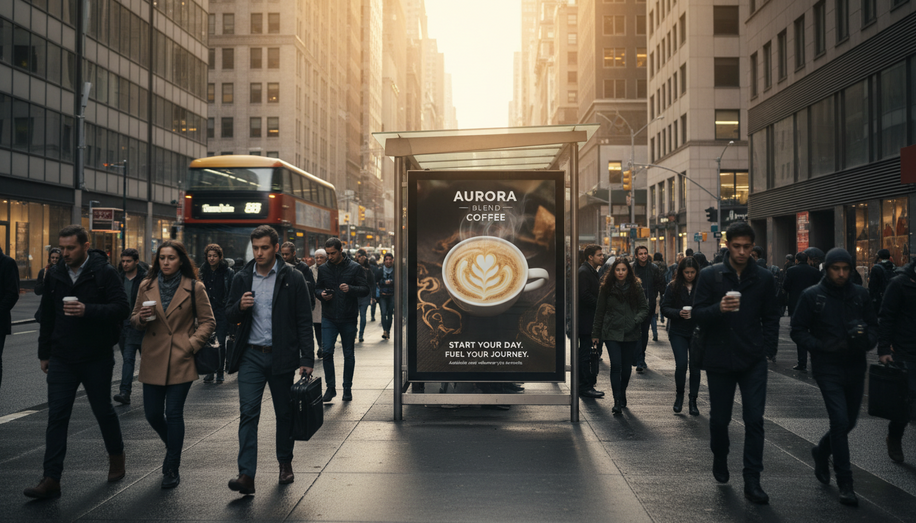
Time of day operates as a silent but omnipresent force shaping message effectiveness. Morning commuters gravitate toward coffee promotions, while evening audiences prove more receptive to dining and entertainment offers. This temporal specificity reflects genuine shifts in consumer psychology and immediate needs. A person actively researching outdoor equipment is demonstrably more receptive to hiking gear advertising in that moment than they would be to unrelated messaging based on past browsing behavior. The immediacy of contextual relevance means audiences encounter messages when their receptiveness peaks.
Weather introduces another dimension of contextual nuance that savvy marketers increasingly exploit. Sunny conditions present natural opportunities for sunscreen promotions, while rainy weather creates ideal moments to showcase umbrella deals. Beyond seeming superficially clever, these alignments reflect genuine shifts in consumer attention and purchasing intent. When external conditions change, consumer priorities shift with them, and contextually aware advertising acknowledges this reality.
The measured impact of combining these contextual factors into cohesive strategies is striking. Research consistently demonstrates effects ranging across all OOH effectiveness measures in the 30 percent range when contextual relevance is applied to campaigns, compared to standard approaches. Notably, the strongest performance emerges in call-to-action and sales measures, which frequently display 40 percent growth factors. Consider the case of Camelot’s lottery scratchcard campaign across London’s transport network, which used dynamic references to winner counts by location. The result was the brand’s biggest sales week in six years and a 50 percent increase in buyer numbers.
These aren’t anomalies. A contextual campaign for a major retailer increased seasonal brand association by 40 percent, with locational relevance emerging as a significant driver for purchase intent. When format innovation was applied to a brand’s summer campaign in London with contextual relevance woven throughout, call-to-action metrics jumped 37 percent compared to standard OOH responses.
What distinguishes modern contextual OOH from earlier advertising approaches is the underlying recognition that audiences don’t exist in a vacuum. They occupy specific locations during specific times, facing particular weather conditions and possessed of immediate, contextually relevant needs. The most effective messages acknowledge these realities rather than ignoring them. As digital OOH technology continues evolving and becoming more sophisticated in its ability to capture and respond to real-time conditions, the competitive advantage belongs increasingly to advertisers who understand that location and time aren’t merely backdrop—they’re central to message effectiveness. In OOH advertising, context has become inseparable from impact.