
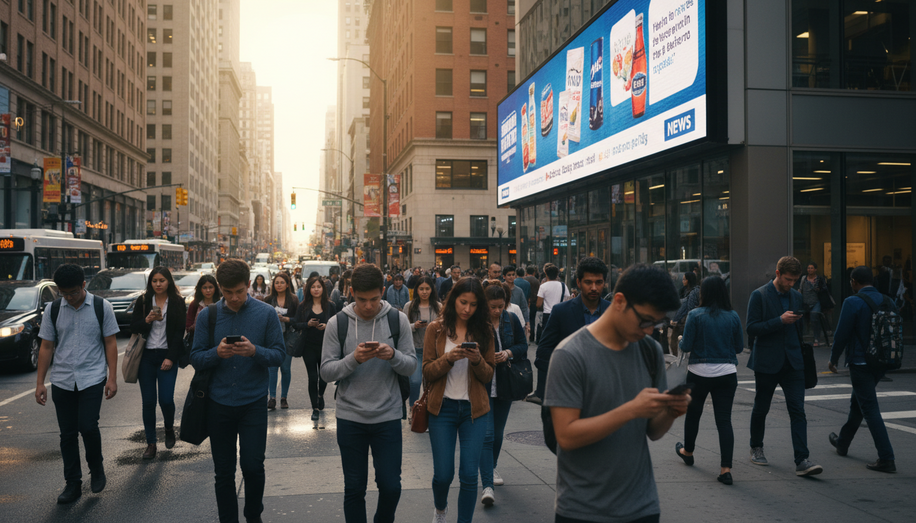

In an era where attention spans have plummeted by 68 percent since 2012, out-of-home (OOH) advertising is evolving to seize what experts call micro-moments—those fleeting, intent-driven bursts when consumers reflexively turn to their devices or surroundings for immediate answers, actions, or decisions. These micro-moments, first popularized by Google, fall into core categories like “I want to know,” “I want to go,” “I want to do,” and “I want to buy,” each lasting mere seconds but carrying outsized influence on brand perception and purchasing behavior. For OOH marketers, the challenge and opportunity lie in crafting ads that infiltrate these real-time life cues, transforming static billboards, bus wraps, and digital screens into dynamic triggers for consumer action.
The power of micro-moments stems from their high-intent nature. A commuter glancing at a digital billboard while waiting for a train isn’t passively scrolling; they’re in a “I want to know” state, seeking quick intel on weather, traffic, or nearby deals. Neuroscience backs this: contextually relevant ads spark a 32 percent increase in brain response and 48 percent greater effectiveness compared to generic messaging. Traditional OOH formats like benches, wall postings, and buses remain potent, but integrating digital elements—such as QR codes, touchless screens, or programmatic delivery—amplifies reach. Programmatic OOH (PrOOH), for instance, enables real-time ad swaps based on weather, events, or location data, capturing situational shifts like sudden summer showers prompting coffee ads at airports or SPF promotions near melting-hot parks.
Consider a hardware store targeting DIY enthusiasts in an “I want to do” micro-moment. A bus ad featuring a QR-linked tutorial video for quick home repairs taps into the 60 percent of internet traffic driven by video, directing users to store locations via integrated maps and social handles. Similarly, a heating and cooling service might deploy posters with website links in neighborhoods buzzing with word-of-mouth chatter, feeding prospects detailed landing pages during their informational itch. These tactics address the fractured customer journey, where smartphone dependence splinters decisions into hundreds of opportunistic flashes, each a chance to build relevance and drive ROI.
Timing and context are paramount, guided by the classic five Ws: who, what, when, where, and why. Demographics and pain points define the “who,” allowing segmentation for hyper-relevant campaigns—night owls at a restaurant might encounter PPC-scheduled digital screens with time-limited coupons, as 92 percent of U.S. consumers clip deals. The “when” exploits temporal precision: summer’s elongated evenings and crowds create ideal conditions for PrOOH, serving live betting odds at pubs pre-kickoff or post-festival recovery ads for food delivery near drop-off zones. Talon benchmarks reveal such contextual OOH yields 63 percent uplift in consideration and 57 percent in ad awareness over broader efforts, slicing through ad fatigue.
Location amplifies this precision. Ultra-localized info reigns in “I want to go” moments, like geofenced ads directing hungry searchers to restaurant hours or directions. High-traffic zones—business districts, malls, transport hubs—host touchless billboards for car showrooms, letting prospects virtually explore models and book test drives on the spot. Programmatic tech extends this to dynamic inventory, pushing wellness products along festival routes or caffeine boosts for early flights. In cultural micro-moments, such as trending events, OOH can fuel spontaneity, turning shared buzz into immediate engagement.
Yet success demands more than tech; content must be snackable and actionable. Short, vertical videos akin to TikTok Reels deliver punchy messages in seconds, predicting needs via real-time signals for tailored experiences. Brands win loyalty by meeting immediacy—90 percent of mobile searchers are brand-agnostic until guided right. Exposure across mediums builds familiarity, while data sharpens relevance, embedding OOH in the customer journey’s critical junctures.
Challenges persist: not every moment suits OOH, and over-reliance on digital integration risks alienating low-tech audiences. Still, hybrid approaches—traditional statics paired with scannable calls-to-action—bridge gaps. Forward-thinking agencies analyze signals to preempt needs, differentiating in an age of mobility and urgency.
Ultimately, micro-moments reposition OOH from broad awareness to intent capture, proving that in a distracted world, the brands interrupting the right split-second triumph. By aligning with consumers’ reflexive needs, OOH doesn’t just advertise—it anticipates, engages, and converts, ensuring fleeting glances yield lasting impact.
To truly master these nuanced micro-moments, OOH strategies demand advanced tools for dynamic execution and precise measurement. Blindspot empowers marketers with programmatic DOOH campaign management and location intelligence to ensure ads are not just present, but perfectly timed and contextually relevant for hyper-targeted engagement. By providing real-time campaign performance tracking and robust ROI measurement, Blindspot transforms fleeting glances into actionable consumer journeys, proving OOH’s decisive impact in a distracted world. Learn more at https://seeblindspot.com/