
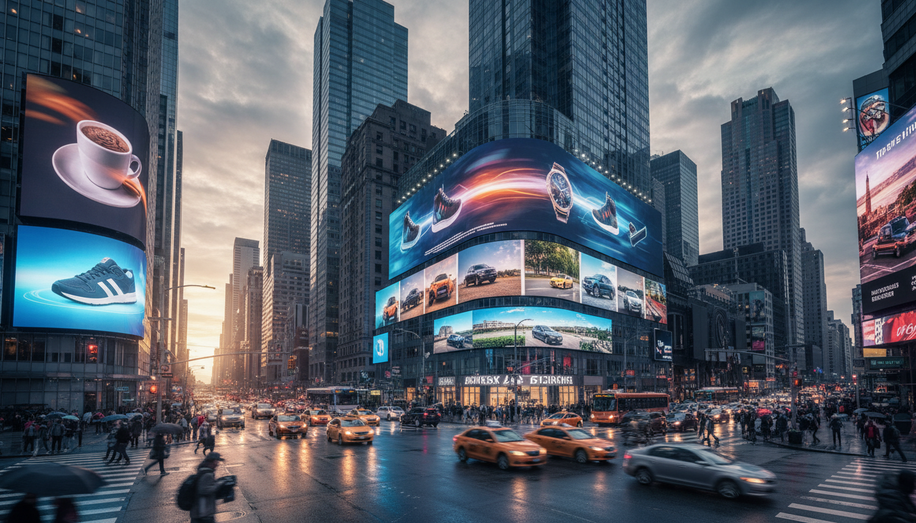

Artificial intelligence has fundamentally transformed how brands understand and reach audiences in the out-of-home advertising space. Where outdoor advertising once relied on static placements in high-traffic locations, AI now enables advertisers to anticipate audience movement, optimize timing, and deliver contextually relevant messages with unprecedented precision.
The shift toward data-driven outdoor advertising represents a departure from traditional approaches that prioritized visibility over relevance. Today’s AI systems analyze mobility patterns, weather conditions, geolocation data, and real-time traffic to predict where and when audiences are most receptive to advertising messages. In major metropolitan areas, this capability has proven transformative. Machine learning models can identify rush-hour peaks and behavioral patterns across commercial corridors, allowing brands to adjust their messaging dynamically rather than relying on a single creative approach throughout the day. A billboard advertising cold beverages might display energy drinks during morning commutes but shift to hydration-focused messaging during afternoon heat waves, all powered by real-time environmental and behavioral triggers.
The predictive power of AI extends beyond simple pattern recognition. Advanced forecasting systems examine historical data, current trends, and external variables like traffic patterns and weather to determine optimal placement timing. This capability allows advertisers to ensure their messages reach target audiences when they are most likely to be receptive, maximizing both impact and return on investment. Brands can now target commuters during morning hours and shoppers during evening windows using the same billboard infrastructure, a level of flexibility that was impossible in the static advertising era.
Measurement and attribution have emerged as critical advantages of AI-powered OOH campaigns. Traditionally, outdoor advertising lacked granular performance metrics, making it difficult to demonstrate ROI. Contemporary AI solutions bridge this gap by linking OOH campaigns with online behavior through sophisticated tracking systems. By analyzing foot traffic, app downloads, website visits, and purchase intent, machine learning algorithms can construct detailed customer journeys showing how OOH exposure contributes to eventual conversions. This measurable approach has elevated outdoor advertising from a broad-reach medium to an accountable channel within omnichannel strategies.
The rise of programmatic digital out-of-home (DOOH) advertising represents the next evolution in this landscape. Programmatic DOOH automates ad buying, scheduling, and optimization across multiple screens simultaneously, allowing agencies to manage nationwide campaigns from unified dashboards. This automation ensures that advertisements adapt based on real-time performance metrics, audience density, and environmental factors, delivering both transparency and operational efficiency. Brands can now launch campaigns with confidence that creative assets and placements will continuously optimize throughout the campaign lifecycle.
Location intelligence capabilities have further enhanced the precision of outdoor advertising. AI systems analyze location data alongside consumer behavior and preference patterns to identify the most effective placement opportunities. For mobile billboard campaigns, this means routes can be optimized based on predicted audience concentrations, ensuring maximum exposure to target demographics. The combination of static and dynamic location intelligence creates opportunities for hyper-personalized advertising moments that feel contextually relevant rather than intrusive.
The impact of AI-driven trend prediction in OOH advertising extends beyond individual campaign performance. According to industry research, AI-powered personalization can increase ad recall by up to 40 percent compared to static formats. This substantial lift reflects how contextual relevance and timing alignment generate stronger audience connections. As markets worldwide adopt AI-enhanced DOOH campaigns, from North America and Europe to Asia-Pacific and emerging markets, outdoor advertising has established itself as an essential component of data-driven marketing strategies.
Looking forward, the integration of AI in outdoor advertising will continue to deepen. Brands that leverage predictive analytics, audience data, and contextual targeting will gain competitive advantages in capturing consumer attention in increasingly crowded advertising environments. The era of static billboards optimized primarily for high-traffic locations has given way to intelligent, responsive media that understands audiences, predicts behaviors, and delivers measurable results. For outdoor advertising professionals, embracing these AI-driven capabilities is no longer optional—it is essential to remaining relevant in an industry fundamentally reshaped by data and machine learning.
This future is already here, with platforms like Blindspot enabling advertisers to fully leverage AI’s transformative power. Through programmatic DOOH campaign management, real-time audience measurement, and precise ROI attribution, Blindspot directly addresses the industry’s need for dynamic adaptability and measurable outcomes, ensuring campaigns are continuously optimized for maximum impact and accountability. Discover how to elevate your OOH strategy at https://seeblindspot.com/