
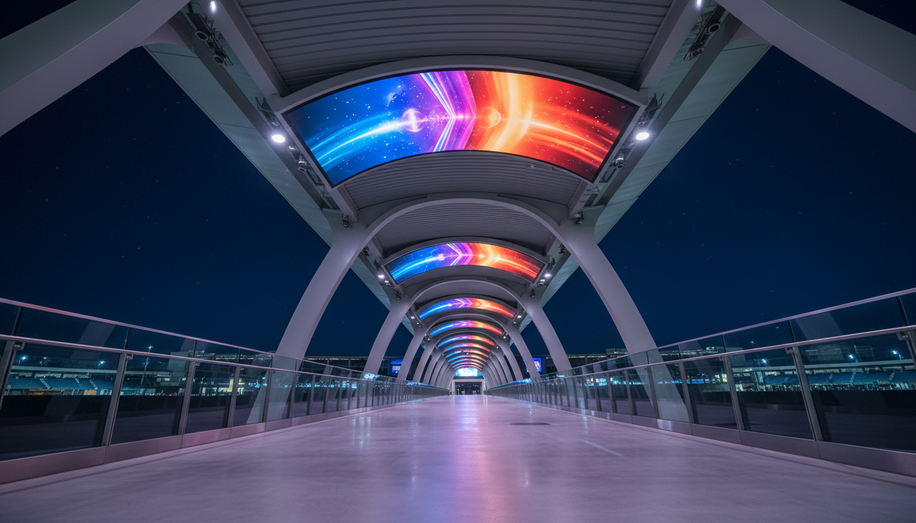

In the evolving landscape of out-of-home (OOH) advertising, brands are venturing far beyond the familiar glow of roadside billboards to capture attention in the uncharted corners of daily life. Airports, gyms, and public restrooms—spaces once overlooked—now serve as prime real estate for innovative campaigns that blend physical presence with digital precision, driving engagement in ways traditional formats never could.
Airports exemplify this shift, transforming transient hubs into immersive brand experiences. With over 55 commercial airports offering advertising opportunities across major U.S. markets, companies like Clear Channel Outdoor enable advertisers to reach high-value travelers during moments of heightened focus and anticipation. Digital out-of-home (DOOH) screens in terminals deliver geo-targeted messages, syncing with flight delays or gate proximity to promote everything from luxury travel gear to quick-service meals. In 2026, as OOH spending surges amid digital fatigue, these placements guarantee unskippable visibility, bypassing ad blockers and fragmented online audiences. Campaigns here capitalize on dwell time—passengers lingering at gates or baggage claims—turning idle minutes into measurable lifts in brand recall and foot traffic, with attribution models linking exposures to post-flight searches and purchases.
Gyms represent another frontier, where sweat and determination create receptive environments for lifestyle-aligned messaging. Static and dynamic screens in fitness centers immerse members during workouts, targeting health-conscious consumers at peak motivation. As DOOH evolves to comprise 45.2% of OOH budgets by 2028, gym placements leverage proximity data for hyper-relevant ads, such as protein shakes timed to post-session recovery or apparel synced with class schedules. This venue diversification extends OOH’s reach into everyday routines, fostering authenticity without the intrusion of algorithmic targeting. Brands report premium lifts of up to 88% in top-of-mind awareness, as these intimate screens blend seamlessly into lifestyle touchpoints, encouraging impulse visits to nearby retailers. Unlike saturated social feeds, gym ads build trust through contextual relevance, resonating with audiences prioritizing wellness amid rising privacy concerns.
Public restrooms, though unconventional, prove surprisingly potent for high-impact, repeated exposure. These ambient spaces—often equipped with motion-activated digital displays—catch users in unguarded moments, delivering bite-sized messages that lodge in memory. Street furniture formats, akin to those on bus shelters or standalone units, adapt to such intimate locales, positioning ads along pedestrian routes in urban areas for targeted local reach. Campaigns like IKEA’s clever Stockholm initiative, which addressed unpredictable weather with outdoor furniture promotions in underutilized seating areas, demonstrate how solving real-world problems in overlooked spots enhances loyalty. Nostalgic or experiential tactics, such as Paramount Pictures’ “Mean Girls” transit extensions into shelters and stations, amplify hype through sheer repetition, turning mundane pauses into cultural conversations. In restrooms, this translates to guerrilla-style activations: QR codes for instant engagement or AR filters that extend the physical ad into social sharing, sparking viral chatter without digital overload.
This push into unconventional spaces underscores OOH’s resilience in 2026, fueled by programmatic buying and real-time data that measure outcomes like store visits and search spikes. Transit ads, for instance, evolve interactively—Sunsilk’s bus campaigns stop commuters in their tracks with storytelling that demands attention—while experiential extensions like Kiehl’s ski resort pop-ups layer billboards with samples and influencers for multi-sensory impact. Britannia’s nature-themed billboards, partially obscured by trees, challenge norms to underscore harmony, proving that defying expectations in non-traditional sites forges deeper connections.
Yet success hinges on strategy: location-based targeting ensures ads speak to surroundings, from airport geo-fencing to gym proximity alerts, while hybrid integrations with digital channels amplify reach. Decathlon’s “Outage? Get outside” leveraged event-driven foot traffic, aligning with cultural moments like the Olympics for outsized relevance. As consumers grow desensitized to online noise, these venues offer tangible trust—physical, verifiable, and independent of eroding metrics.
Advertisers scaling aggressively in this boom era mix massive urban displays with micro-placements in elevators, theaters, and waterways, creating coordinated “swarms” for immersive narratives. Purpose-driven brands thrive by appearing authentically at trailheads or events, prioritizing storytelling over promotions. With DOOH’s 34% growth trajectory and tools for sustainability tracking, OOH in unconventional spaces not only reclaims attention but proves ROI in a fractured media ecosystem.
Ultimately, these innovative locations redefine OOH as a global operating system, blending scale, creativity, and accountability to outpace digital rivals. Brands ignoring them risk ceding ground to competitors who master the art of real-world interruption.