
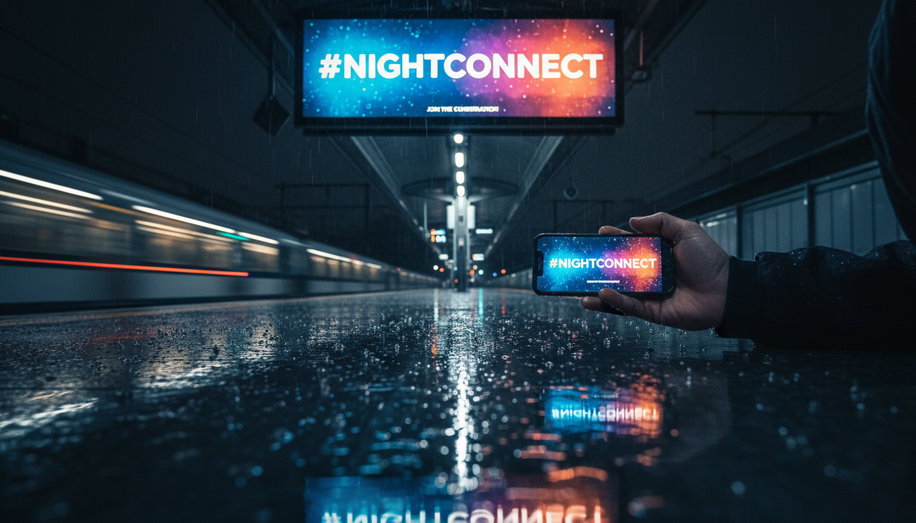

In the bustling intersections of modern marketing, out-of-home (OOH) advertising and social media are no longer solitary performers but dynamic partners in a seamless performance. OOH delivers immediate, unmissable impact in the physical world, while social platforms extend that spark into viral conversations, creating a feedback loop that amplifies brand messaging far beyond initial exposure. This synergy transforms static billboards into conversation starters, driving engagement, recall, and measurable returns.
Consider Netflix’s “Stranger Things” campaign, a masterclass in bridging physical and digital realms. Cryptic billboards emblazoned with intriguing visuals and a simple hashtag invited passersby to decode the mystery online. The result? A flood of user-generated content on social media, turning local sightings into global buzz and boosting the show’s anticipation. Similarly, a reality TV backlash saw fans erect digital billboards to voice outrage, which exploded into 760 million press and social impressions within hours, outranking even the star’s name in Google searches. These examples illustrate how OOH acts as a physical trigger, prompting immediate social shares that extend campaign life.
The power lies in their complementary strengths. OOH commands high visibility—billboards capture eyes in high-traffic zones, reaching audiences at decision-making moments, such as affluent drivers in parking garages eyeing luxury cars. Social media, meanwhile, fosters interaction through likes, shares, and comments, turning passive viewers into active participants. When integrated via media mix strategies, they reinforce consistent messaging across channels. A teaser dropped on Instagram or TikTok builds hype before a major OOH reveal, creating anticipation that spills from screens to streets.
Fashion and retail brands have leaned into this approach with striking success. A fashion label’s “Impossible Sale” campaign used digital OOH screens in strategic spots like parking garages, flashing countdowns and exclusive previews. This not only surged foot traffic to stores but funneled viewers online for more details, blending urgency with digital extension. Hashtag-Vape took it further by linking billboards directly to live social feeds, with clear calls-to-action that spiked interactions and brand visibility on a modest budget. Mr. Charlie’s Chicken Fingers ran a contest blending OOH announcements with social participation, fueling multi-location growth through heightened online engagement.
Advanced technologies supercharge this integration. Digital OOH (DOOH) enables real-time adaptability, syncing with social trends for agile storytelling. Parking garage ads for a retail chain, paired with mobile targeting, drove record sales by hitting audiences twice—once physically, once digitally. Augmented reality (AR) billboards elevate this further. Brands like Nike, HBO, and Adidas have deployed AR-enabled OOH that invites smartphone scans for immersive experiences. Nike’s campaign yielded 1.2 million AR interactions, 680,000 social shares, and a 46% uptick in custom orders, with 42 million organic impressions—a 3.4x ROI over traditional billboards. HBO’s “House of the Dragon” launch used AR to immerse viewers in its world, optimized for Instagram’s visual flair and TikTok’s challenges, proving platform-specific tactics maximize shares.
Metrics underscore the ROI. OOH supported by mobile or social sees up to 15% higher click-through rates, while AR integrations generate 4.7 times more impressions and 342% more social shares than standard DOOH. A regional retailer announcing a store opening via billboards, followed by Instagram behind-the-scenes videos, lifted in-store traffic and online interactions. Even nascent brands benefit: a New York landscape lighting firm, with zero social presence, generated 100 Facebook leads at $15 each over six months by tying OOH-like visibility to targeted digital ads.
Yet success demands thoughtful execution. Consistency in creative—same visuals, taglines, and hashtags—ensures recognition across touchpoints. Placement matters: high-traffic OOH near decision hubs like garages or urban billboards primes social amplification. Calls-to-action must be crystal-clear, urging scans, posts, or tags. Real-time data from social analytics measures lift, allowing mid-campaign tweaks via DOOH’s flexibility.
Challenges persist, from measuring true attribution to navigating platform algorithms. Still, the convergence is imperative. As experts note, forward-thinking brands view OOH not as isolated but as gateways to digital relationships. A luxury car brand’s garage DOOH campaign spiked test drives by targeting ready-to-buy audiences, seamlessly feeding into social remarketing.
In an era of fragmented attention, integrating OOH and social media crafts holistic narratives that resonate physically and digitally. This synergistic approach doesn’t just complement campaigns—it redefines them, turning everyday exposures into enduring brand loyalty. Advertisers who master this blend will not only capture eyes but command conversations, proving that the most effective messaging thrives where worlds collide.