
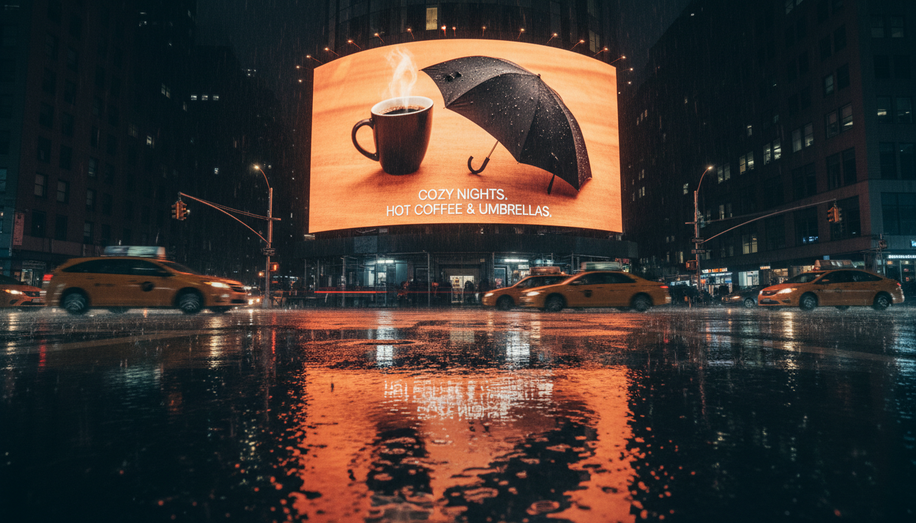

In the bustling streets of Manila, digital billboards flicker to life as rain begins to patter down, seamlessly swapping sunny promotions for Sunsilk haircare ads touting frizz control—perfectly timed to a commuter’s immediate concern. This is the essence of weather-triggered digital out-of-home (DOOH) advertising, where real-time data transforms static screens into responsive storytellers, delivering messages that resonate precisely when consumers need them most. Gone are the days of one-size-fits-all campaigns; today’s OOH strategies harness hyperlocal weather insights to drive engagement, foot traffic, and sales with unprecedented relevance.
At its core, this approach integrates live weather feeds—temperature, humidity, UV index, precipitation—directly into content management systems (CMS) and programmatic platforms. When conditions shift, ads adapt instantly: a sudden heatwave in Atlanta prompts iced coffee promotions on nearby screens, funneling hungry lunchtime crowds to quick-service restaurants. Media owners collaborate with data providers like Spire or The Weather Company for granular, satellite-powered updates that go beyond broad forecasts, pinpointing rain in specific neighborhoods or humidity spikes that trigger deodorant or skincare pitches. This isn’t guesswork; APIs feed the data into demand-side platforms (DSPs), automating triggers without manual intervention, ensuring ads fire exactly when environmental cues align with buyer intent.
The results speak volumes. McDonald’s Philippines campaign, powered by DOOH and live weather data, generated nearly one million impressions in just 10 days, alongside a 9% footfall uplift to stores. Beverage giants like Molson Coors saw click-through rates soar 89% by deploying icy visuals on hot days, while broader industry benchmarks show weather-activated ads achieving 90% recall—45 points higher than static creatives—and up to 22% sales lifts during heatwaves. Pub chains have similarly boosted visits and brand interaction by syncing promotions with rainy evenings, proving that contextual relevance sways behavior in real time. These outcomes stem from weather’s profound influence on psychology: a chill prompts hot drinks, sunshine spurs outdoor gear, turning passersby into customers.
Advanced strategies elevate this further through dynamic creative optimization (DCO), where AI analyzes patterns in vast datasets to predict shifts and refine messaging. Imagine humidity rising in Mumbai—Sunsilk’s screens instantly highlight anti-frizz products, or a UV surge in Houston activates sunscreen ads. Platforms like LMX offer user-friendly CMS for seamless execution, allowing brands to schedule layered triggers: warm beverages at dusk if temperatures drop, beachwear under clear skies. This hyper-personalization, cookie-free and privacy-compliant, minimizes wasted impressions by targeting optimal conditions, optimizing spend, and maximizing ROI.
For OOH media owners, the playbook is clear: partner with reliable weather APIs for accuracy, then layer in audience data or events for compounded impact. Retail, quick-service restaurants, and travel sectors lead adoption, with sports apparel brands spiking engagement on mild, sunny days ideal for workouts. Yet the potential extends to niches—frizz-fighting on humid days, allergy relief amid pollen surges—unlocking nuanced targeting that feels intuitive, not intrusive.
Challenges persist, of course. Data must be hyperlocal and timely; outdated feeds erode trust, while over-reliance on basic triggers like rain risks commoditization. Success demands creative agility: visuals that evoke the moment, copy that sparks impulse. AI’s role grows critical here, forecasting consumer responses to enable proactive campaigns—anticipating a cold snap in Chicago to preload winter gear ads across London to Tokyo.
Looking ahead, weather data will converge with location signals and behavioral insights, fueling fully programmatic DOOH ecosystems. As screens proliferate in smart cities, responsive campaigns will redefine relevance, proving that the best ads don’t interrupt life—they mirror it. In an era of fleeting attention, this real-time synchronization doesn’t just capture eyes; it captures actions, cementing weather-triggered OOH as a cornerstone of modern advertising.
For media owners and brands seeking to harness the full power of this dynamic approach, platforms like Blindspot offer the precision needed. By integrating programmatic DOOH campaign management with real-time performance tracking and ROI measurement, Blindspot empowers advertisers to not only seamlessly execute weather-triggered ads but also attribute their direct impact on sales and footfall, ensuring every impression translates into a measurable return. Discover more at https://seeblindspot.com/