
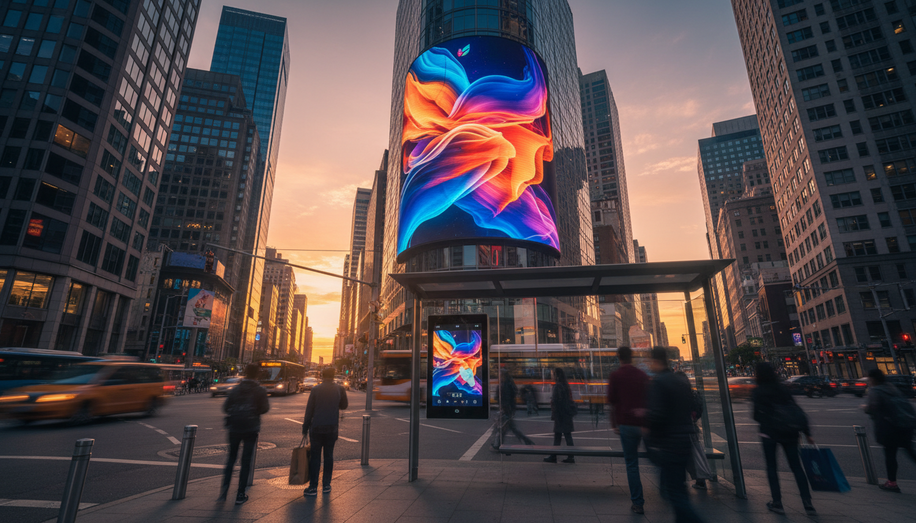

In the rapidly evolving landscape of retail media networks, out-of-home advertising stands as a pivotal force, seamlessly bridging the gap between digital precision and physical consumer encounters to amplify brand visibility and drive sales across online and in-store channels. As retail media spending surges—projected to claim nearly one-fifth of total ad budgets by 2027, with in-store components fueling over half of digital out-of-home growth through 2029—OOH, particularly its digital variant (DOOH), emerges not as a standalone medium but as a dynamic enhancer within this ecosystem. Retailers and brands are increasingly leveraging DOOH’s real-time capabilities to guide shoppers from awareness to action, creating closed-loop campaigns that measure impact from billboard impressions to checkout scans.
This integration begins outside the store, where DOOH acts as a powerful last-mile amplifier. Picture a commuter glancing at a digital billboard near a grocery chain, prompted by location-based ads touting real-time promotions or stock availability. A study by Catalina and GSTV demonstrated this potency: a campaign for a major ice cream brand at fuel pumps delivered a 17% sales lift in nearby stores, with a $5.37 return on ad spend and nearly half of buyers being new to the brand. Mobile location data tracked the journey from exposure to purchase, underscoring DOOH’s role in drawing foot traffic—82% of purchases still occur in-store, often impulsively, with 62% driven by on-the-spot decisions. By surrounding shoppers along their path—via transit hubs, bus shelters, or urban screens—DOOH builds urgency and relevance, prompting 59% of viewers to buy within 30 minutes, according to Talon Outdoor research.
Once inside, the synergy deepens through in-store retail media, where DOOH screens transform from mere displays into strategic engagement hubs. Retail media teams collaborate with merchants to blend advertising with merchandising, avoiding space conflicts by aligning on shared goals like sales uplift and enhanced experiences. Data sharing proves essential: if a merchant runs a promotion, retail media can layer targeted ads to boost awareness, outperforming either tactic alone; conversely, awareness of competitor promotions allows smarter counter-strategies. Screens integrated with loyalty programs or mobile apps deliver hyper-personalized messages, turning generic foot traffic into tailored interactions that bridge physical shelves and online carts. This omnichannel fusion resonates with tech-savvy consumers, fostering loyalty amid immersive environments powered by digital technologies.
The true power lies in OOH’s ability to connect these touchpoints into measurable omnichannel narratives. Brands like Holt Renfrew harnessed geofencing around key markets, deploying 200 DOOH ads across billboards and office buildings to drive over 400,000 store visits in ten weeks. Interactive elements—such as QR codes or time-sensitive offers—prompt 76% of consumers to take mobile actions like app downloads or social shares, feeding data back for optimization. Paired with social media, OOH creates shareable moments that extend reach exponentially, breaking through digital fatigue with unavoidable, high-impact visuals. Platforms like Vistar Media and The Trade Desk enable programmatic buying, infusing DOOH with audience targeting akin to online channels, while ensuring premium inventory quality.
Challenges persist, particularly in balancing merchant priorities—product visibility and immediate sales—with retail media’s push for engaging ad inventory. Tensions arise over creative consistency versus bold messaging, yet collaboration mitigates this: by showcasing ROI from integrated campaigns, teams unify store aesthetics, reassuring brands wary of displaced shelf space. In fast-moving consumer goods, combining media exposure with premium placements eases hesitations, proving mutual benefits. Retailers navigating these dynamics create shopper-friendly environments that blend merchandising art with behavioral science, ultimately driving loyalty and revenue.
Looking ahead, OOH’s role in retail media networks will only expand as consumer habits fluidly shift between screens and storefronts. With 42% of shoppers influenced by OOH in their in-person decisions and 56% buying featured items—65% unplanned—its capacity to convert attention into action is unmatched. In a fragmented media world plagued by ad avoidance, DOOH offers unskippable relevance, amplified by retail data for precision targeting. Brands embracing this ecosystem—layering pre-store DOOH with in-store activations and digital extensions—not only boost visibility but deliver tangible sales lifts, redefining retail media as a holistic journey from street to shelf. As networks mature, OOH will remain the indispensable thread, weaving physical impact into the digital fabric of modern commerce.