
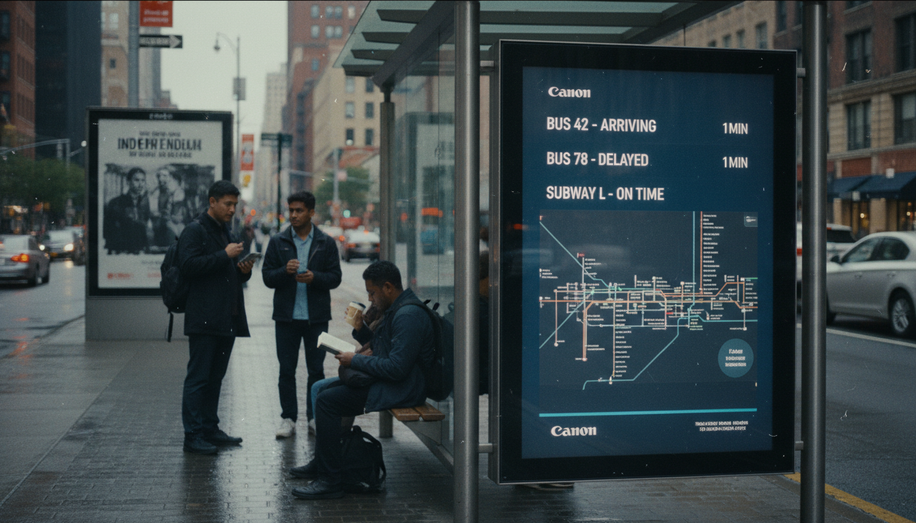

Out-of-home advertising has long been a fixture of urban landscapes, but its role in modern cities is evolving far beyond traditional brand promotion. As municipalities worldwide embrace smart city technologies, digital billboards and outdoor displays are emerging as critical infrastructure components that deliver public value alongside commercial messaging. This integration represents a fundamental shift in how cities can leverage outdoor media to enhance citizen welfare, emergency response, and urban efficiency.
The convergence of artificial intelligence, IoT sensors, and connected city infrastructure is transforming digital displays into multifunctional urban assets. AI-powered billboards now analyze traffic patterns, weather conditions, and demographic data in real time, enabling them to adapt content instantaneously based on immediate environmental conditions and audience needs. This same technological capability that optimizes advertising effectiveness can be redirected toward public service messaging, creating displays that serve dual purposes: generating revenue through targeted advertising while contributing meaningfully to urban operations.
One of the most compelling applications is emergency response integration. In crisis situations, smart city billboards can instantly switch from commercial advertising to critical public safety messages, ensuring rapid information dissemination across entire urban areas. This capability transforms outdoor displays into essential communication infrastructure, providing municipalities with a powerful tool for emergency management that reaches large populations efficiently and without technological barriers.
Beyond emergency services, digital OOH displays are enhancing daily urban life through practical public services. Interactive outdoor advertising installations, such as Samsung’s smartphone charging stations integrated into bus shelters, exemplify how commercial displays can simultaneously address genuine citizen needs. These installations create what researchers describe as “interactive crossing points of people, technology and public space,” where advertising becomes secondary to delivering tangible urban amenities. Similar applications could include real-time transit information, air quality monitoring, wayfinding assistance, or weather alerts—all delivered through displays that also generate advertising revenue.
The economic model supporting smart city integration is particularly significant. Smart city initiatives often require substantial infrastructure investment, and digital OOH advertising is emerging as a funding mechanism for public projects. Cities can leverage the advertising revenue generated by high-traffic digital displays to subsidize public services and infrastructure development. This creates a sustainable cycle where commercial advertising revenue directly supports enhanced urban services, aligning private sector interests with public welfare objectives.
Data-driven placement optimization further strengthens the public value proposition. Using satellite imagery, digital mapping, and AI-driven location analysis, cities can strategically position displays in high-impact locations serving both advertising and public information goals. A display near a transit hub might alternate between transit information and weather alerts during commute hours before shifting to entertainment or commercial content during off-peak periods. This dynamic allocation ensures displays remain maximally useful to residents regardless of time of day or circumstances.
The integration between outdoor displays and mobile devices amplifies these benefits. Technologies like QR codes, geofencing, and NFC enable seamless connectivity between physical billboards and digital devices, allowing citizens to access detailed information about public services, emergency alerts, or civic announcements directly from outdoor displays. This integration bridges the gap between physical and digital infrastructure, creating comprehensive information ecosystems that serve public needs efficiently.
As cities continue evolving into increasingly connected environments, the distinction between advertising infrastructure and public service infrastructure will inevitably blur. The most forward-thinking municipalities are recognizing that outdoor displays can simultaneously generate commercial revenue and deliver essential public value. This dual functionality transforms what has traditionally been considered a commercial advertising medium into critical urban infrastructure that enhances public safety, improves citizen experience, and supports sustainable city operations. The future of OOH advertising in smart cities will be defined not by ad delivery alone, but by its capacity to integrate seamlessly with broader urban systems, creating more responsive, efficient, and citizen-centric cities.