
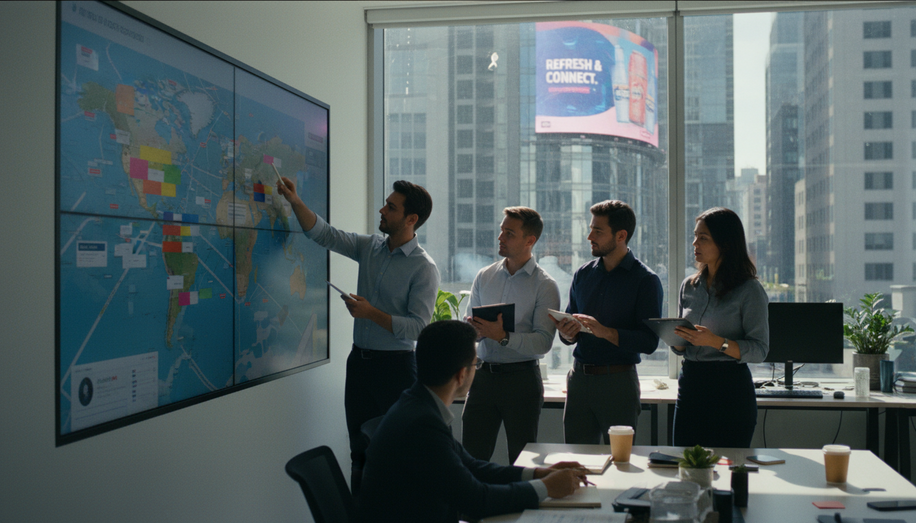

In the evolving landscape of out-of-home (OOH) advertising, the mechanics of buying and selling inventory are undergoing a profound transformation, blending cutting-edge programmatic platforms with enduring direct publisher relationships. As 2026 unfolds, digital out-of-home (DOOH) screens now capture over 40% of total OOH ad spend, enabling advertisers to swap static billboards for dynamic displays that refresh in real time based on weather, traffic, or audience demographics. This shift marks a departure from the rigid, schedule-bound deals of yesteryear, where media buyers negotiated fixed slots with publishers months in advance, toward automated ecosystems that prioritize precision and agility.
Programmatic DOOH has emerged as the linchpin of this revolution, allowing advertisers to purchase inventory through data-driven platforms that optimize campaigns on the fly. Unlike traditional programmatic digital ads, which often rely on open auctions rife with fraud risks, OOH programmatic leans heavily on direct deals—private marketplaces where brands negotiate preferred access to premium screens from trusted publishers. This hybrid model lowers barriers for mid-sized advertisers, who can now launch, pause, or tweak campaigns using real-time performance data, mirroring the efficiency of online retargeting but grounded in physical spaces. For instance, platforms integrate IoT sensors and AI to trigger contextually relevant creatives, such as promoting umbrellas during rainstorms or event tie-ins near stadiums, boosting engagement without the guesswork of broad-reach static buys.
Yet, direct publisher deals remain a cornerstone, particularly for high-stakes campaigns demanding exclusivity or prime locations. Major brands still favor these bespoke arrangements with operators like Clear Channel or JCDecaux, securing guarantees on impression volumes, creative control, and premium placements in urban hubs, transit nodes, or experiential zones. Publishers value this stability, as it offsets the volatility of programmatic auctions and fosters long-term partnerships built on mutual data sharing—think joint attribution studies linking OOH exposure to foot traffic or sales lifts. In 2026, these relationships are evolving too, incorporating programmatic wrappers that allow direct-sold inventory to plug into automated buying tools, creating a seamless blend of human negotiation and machine execution.
This duality—programmatic scale meets direct precision—is reshaping the OOH marketplace amid broader media fragmentation. Digital channels like social media and TV face eroding trust and saturation, prompting a budget pivot to OOH’s unskippable, real-world impact: 71% of consumers glance at roadside billboards, 26% visit brand sites post-exposure, and 56% share standout creatives organically. Programmatic spending in U.S. DOOH is on track to hit 65% by 2029, fueled by omnichannel integration where OOH amplifies CTV or mobile retargeting. Agencies are deploying data-driven playbooks, leveraging location analytics, AR overlays, and gamified screens to extend dwell times by 20-40%, turning passive views into interactive encounters.
Looking ahead, the future of OOH sales points to programmatic dominance as the default, not the exception, with AI agents automating even direct deals through predictive bidding and carbon-aware optimization. By 2030, expect hyper-local ecosystems where smart city infrastructure feeds real-time data into global platforms, enabling cross-border programmatic buys while direct relationships focus on narrative-driven, culturally resonant campaigns—think purpose-led messaging that drives 6% higher action rates via emotional authenticity. Sustainability will mandate transparent carbon tracking in programmatic transactions, favoring publishers with green-certified screens. Interactive mobile billboards, weaving through events with AR tie-ins, will further blur lines between DOOH and experiential marketing.
Challenges persist, from regulatory hurdles on screen placements to measurement standardization across fragmented supply paths. Yet, as OOH evolves into a “global operating system,” blending programmatic efficiency with direct trust, it positions itself as the growth engine for brands seeking measurable impact in a post-digital-trust era. Advertisers who master this hybrid model—harnessing data for programmatic precision while nurturing publisher ties for premium storytelling—will command the most compelling real-world narratives, ensuring OOH’s resurgence as advertising’s most vital frontier.