
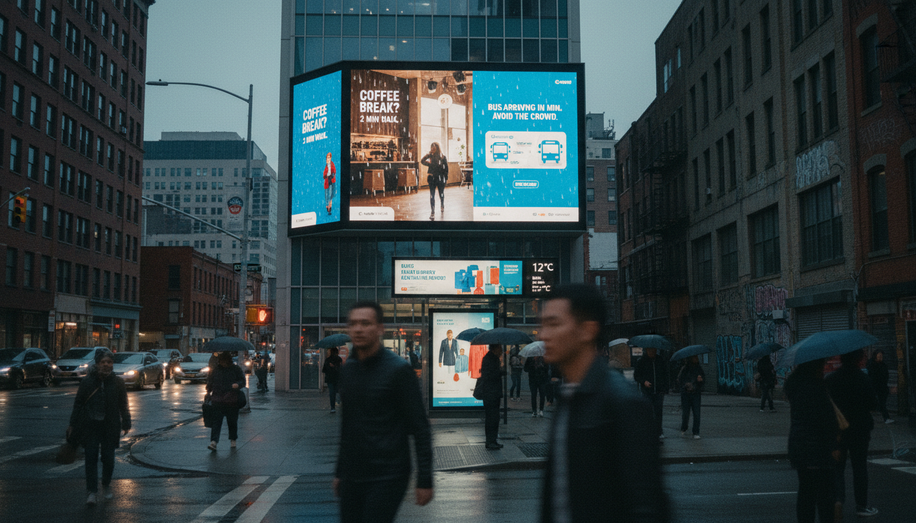

In the bustling urban landscapes where digital out-of-home (DOOH) screens dominate skylines and transit hubs, a quiet revolution is reshaping advertising: Dynamic Creative Optimization (DCO). This technology harnesses real-time data triggers—weather patterns, traffic congestion, breaking news, and local events—to dynamically tailor ad messages, delivering hyper-relevant content that captures fleeting attention and drives measurable action.
Gone are the days of static billboards broadcasting one-size-fits-all promotions. DCO empowers screens to adapt instantaneously, swapping headlines, images, and calls-to-action based on live inputs. Picture a scorching summer day in Qatar, where McDonald’s screens flickered to life with promotions for icy Summer Coolers, triggered solely by peak heat readings. Partnering with platforms like Splicky DSP and Broadsign, the campaign marked the region’s first weather-responsive programmatic DOOH effort, proving how environmental cues can ignite consumer desire precisely when it’s most palpable.
Weather remains a cornerstone trigger, but its applications extend far beyond beverages. During sudden downpours, apparel brands might pivot to showcase umbrellas or raincoats, while retailers push hot soups and cozy layers in unexpected chills. Research underscores the potency: Clear Channel UK’s study revealed that contextually attuned DOOH messaging boosts campaign effectiveness by 17% on average, with creative decisions accounting for 41% of potential return on investment. Analytic Partners echoed this, finding dynamic tailoring yields 2.5 times higher returns compared to rigid formats.
Traffic data unlocks even sharper precision, especially in commuter-heavy zones. Rush-hour jams near subway exits could prompt ride-sharing apps to advertise surge pricing alternatives or coffee chains to lure fatigued drivers with quick pick-me-up offers. Integrating bus schedules or flight delays via custom APIs allows campaigns to respond nimbly—imagine screens at airports flashing tailored lounge promotions to grounded passengers, complete with real-time wait times.
Local events and news amplify this relevance further. Live sports scores can spur betting apps to highlight odds during nail-biting matches, while stock market dips trigger financial services ads promising stability. Trending topics, pulled from social feeds, enable brands to weave cultural moments into narratives; a viral local festival might inspire nearby screens to promote event tickets or themed merchandise. Audience layers add depth: crowd density sensors detect peak footfall, serving high-energy promotions to bustling sidewalks, while demographic insights via programmatic platforms refine messaging for families, professionals, or tourists.
At its core, DCO thrives on modular templates—interchangeable creative elements assembled by algorithms in milliseconds. Marketers upload base assets into supply-side platforms (SSPs) or demand-side platforms (DSPs), define rules like “if temperature exceeds 30°C, display cooling products,” and let automation handle the rest. This fluidity eliminates the drudgery of pre-building dozens of variants, slashing production costs and accelerating launches. Mid-campaign tweaks become effortless: underperforming creatives fade, while winners scale across networks.
The advantages cascade for brands. Agility reigns supreme—campaigns evolve with market shifts, such as pivoting travel ads from international getaways to “staycations” amid volatility. Sequencing builds narratives: morning commutes tease breakfast deals, lunch hours spotlight meal combos, and evenings nudge happy hours, fostering funnel-like engagement across a single screen’s day. Real-world behaviors bend to these nudges; transit delays might boost shared rides, while sales events drive foot traffic with proximity-based store locators showing exact distances to the nearest outlet.
Performance insights emerge as a hidden gem. Platforms track which triggers and variants excel, feeding data back for real-time optimization and cross-channel strategies—informing social, CTV, or mobile buys with DOOH-proven winners. For media owners, DCO monetizes inventory anew: one screen juggles multiple campaigns daily, offering flexible packages that attract premium advertisers eyeing innovation.
Yet success demands strategic groundwork. Beyond basic digital screens, robust tech stacks are essential—HTML5 support for fluid rendering, live data feeds for weather or traffic, dynamic authoring tools, and CMS for approvals. Marketers must audit partners: Do SSPs handle high-volume variations? Can DSPs integrate niche APIs like lottery jackpots or match odds?
Experts like Montana Accavallo, Vice President of Client Success at Screenverse, champion DCO’s scale: “It unlocks personalized storytelling across diverse out-of-home environments, making DOOH a powerful strategic channel.” As programmatic DOOH matures, brands ignoring these tools risk irrelevance in a data-drenched world. From heatwaves to headlines, DCO doesn’t just advertise—it anticipates, engages, and converts in the moment that matters most.